¡Acompáñanos a viajar por el mundo de los libros!
Añadir este libro a la estantería
Grey
Escribe un nuevo comentario Default profile 50px
Grey
Suscríbete para leer el libro completo o lee las primeras páginas gratis.
All characters reduced
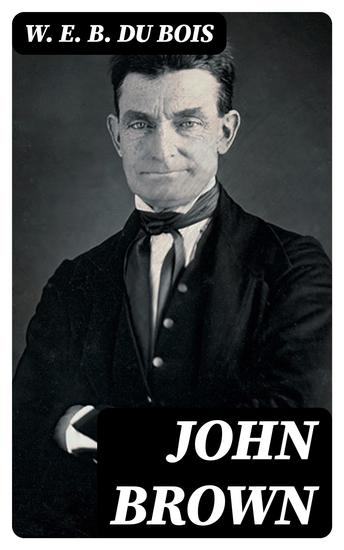
John Brown - cover

John Brown

W.E.B. DuBois

Editorial: DigiCat

  • 0
  • 0
  • 0

Sinopsis

In "John Brown," W. E. B. Du Bois presents a compelling biography that merges historical narrative with philosophical introspection. The text delves into the life of the fierce abolitionist John Brown, situating his radical actions against the backdrop of America's tumultuous struggle over slavery. Du Bois employs a lyrical style, interweaving vivid descriptions with profound reflections on morality, justice, and the complexities of race in America. Written during a period when the American socio-political landscape was fraught with racial tensions, the work serves both as a tribute to Brown's revolutionary spirit and a critique of the inadequacies of his contemporaries. W. E. B. Du Bois, a prominent sociologist and civil rights activist, was profoundly influenced by his own experiences of racism and his relentless quest for racial equity. His scholarly background, particularly in social sciences, informed his exploration of Brown's unwavering commitment to abolition. Du Bois's engagement with historical figures like Brown reflects not only his admiration for their sacrifices but also his belief that profound change often arises from radical action. I highly recommend "John Brown" to readers seeking an insightful exploration of one of America's most controversial figures in the fight against slavery. Du Bois's masterful narrative not only provides historical context but also invites reflection on the enduring themes of justice and morality in contemporary society.
Disponible desde: 21/07/2022.
Longitud de impresión: 254 páginas.

Otros libros que te pueden interesar

  • Apple Blossom in Brittany - From their pens to your ears genius in every story - cover

    Apple Blossom in Brittany - From...

    Ernest Dowson

    • 0
    • 0
    • 0
    The bookshelves of British literature are incredible collections that have gathered together centuries of very talented authors.  From these Isles their fame spread and whilst among their number many are now forgotten or neglected their talents endure.  Among them is Ernest Dowson.
    Ver libro
  • The Happy Hooker - My Own Story - cover

    The Happy Hooker - My Own Story

    Robin Moore, Xaviera Hollander,...

    • 1
    • 7
    • 0
    The thirtieth anniversary edition of one of the modern classics of the sexual revolution—with a new Afterword by the author. 
     
    How did you first learn about sex? If you grew up in the 1970s, it may have been from a gleefully lusty tour guide named Xaviera Hollander. 
     
    In the late 1960s—that era of sexual chaos, when Playboy Clubs and love-ins were competing for national attention—a beautiful, intelligent young Dutch secretary named Xaviera de Vries moved to New York, grew swiftly tired of her desk job . . . and soon became the most visible and glamorous madam the city had ever seen. As Xaviera Hollander, she published a shockingly candid account of her life behind the brothel door. The Happy Hooker shot straight to the top of the bestseller lists, sold more than fifteen million copies, and made this enterprising young woman an international phenomenon. 
     
    Thirty years later, these delightfully explicit tales of the ’60s and ’70s swingers’ scene—including countless jaw-dropping stories of lesbianism, bondage, fetishism, and more—remain as titillating as ever, charged with the mix of shrewd observation and uninhibited appetite that made Hollander an irresistible storyteller. The Happy Hooker is a classic: the world’s greatest book on the world’s oldest profession.
    Ver libro
  • Charles Manson - The Man Who Murdered the Sixties - cover

    Charles Manson - The Man Who...

    David J. Krajicek

    • 0
    • 0
    • 0
    Charles Manson was an unlikely messiah. Freshly paroled, he stumbled into San Francisco in 1967 just as thousands of impressionable young people were streaming into town for the Summer of Love. 
     
    Posing as a musician-come-guru-come-Christ-figure, Manson built a commune cult of hippies, consisting mainly of troubled young women. But what made this group set out on the four-week killing spree that claimed seven lives? Former Journalism Professor, David J Krajicek, seeks to discover just that. 
     
    This book includes: 
     
    Introduction into the counterculture of the sixtiesIn-depth profiles of Manson's followersBreakdowns of each murder, including diary accounts, interviews and legal testimonies from the killers themselvesAn account of the events in Manson's own wordsInsight into Manson's manipulations and psychology 
     
    Set against events of the time - the sexual revolution, the civil rights movement, race riots, space exploration, rock music -this is the story of Flower Power gone to seed.
    Ver libro
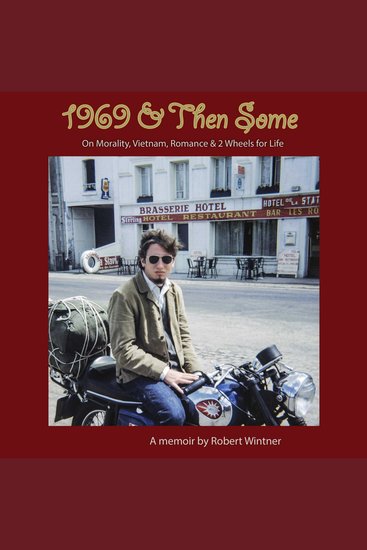
  • 1969 & Then Some - On Morality Vietnam Romance & 2 Wheels for Life - cover

    1969 & Then Some - On Morality...

    Rober Wintner

    • 0
    • 0
    • 0
    1969 was pivotal for baby boomers, young, innocent and facing a needless war. On a grand tour, youth united for peace, resisting war, living the parables of high time. Some will remember. Some can’t. All bore witness to a time like none before or ever since, when a few seasons defined the difference between right and wrong. 
    The profit motive gave way to greed. Truth twisted to propaganda. National interest got bent for defense contractors. Democracy buckled on a war of attrition, and a cloud of smoke got toxic: napalm. Other clouds formed phantoms of complacency, security and atrophy. Sustained on smoke and stoned to the gills, we resisted, as no generation has done. 
    Youth is time for development within. Boomers formed lasting values that linger in truth and giving, peace and sharing. 1969 was a benchmark for the future, on a worldview and lyrics echoing down the decades.
    Ver libro
  • Six Women In A Cell - cover

    Six Women In A Cell

    Diana Tokaji

    • 0
    • 0
    • 0
    1Night. 6 Women. 1 Jail cell. In this lyrical masterpiece by 2020 Sonia Sanchez-Langston Hughes award- winner Diana Tokaji, we hear the intimate stories of strangers, locked together for one long night. Meet: Baby, Alexa, Richmond, The Social Worker, Mudd - a teen, a divorcee, a sex worker, a social worker, a pregnant mom - and our grey-haired narrator who was just assaulted by the police.  This book is about a harsh reality Americans should know: "Up the hall wall for pat down, handcuffed through the succession of locking doors, and now this: I am told to sit... my left handcuff is clicked with the spin of a key into a tight iron ring on the metal desk. I'm not going anywhere unless I haul the table too." This book is about love: "The eyes of each woman remain in my mind like the nurse whose eyes I bored through to stay sane in my last child-birthing, whose name I never learned, whose actual face I never took in, only the eyes, not even their color, just the saving connection of them." 
    "Breathtaking. Raw, Brilliant. And beautifully crafted." - Deborah King, creator of regrowing our wings: Yoga for healing trauma 
    "Not just words on pages - this is a taste of what life is for many." - Debra Bennett, Executive Director, Change comes now 
    "I couldn't put it down." - Maria Washington, founder, mothers for justice united 
    "I laughed, cried, and truly connected with this story of injustice and humanity." - Nadia Salazar, community and labor organizer 
    "Tokaji has produced a mirror- everyone should read this necessary work." - Devi S. Laskar, Author, The Atlas Of Reds And Blues
    Ver libro
  • Herod the Great - Jewish King in a Roman World - cover

    Herod the Great - Jewish King in...

    Martin Goodman

    • 0
    • 0
    • 0
    A vivid account of the political triumphs and domestic tragedies of the Jewish king Herod the Great during the turmoil of the Roman revolution 


    Herod the Great (73–4 BCE) was a phenomenally energetic ruler who took advantage of the chaos of the Roman revolution to establish himself as a major figure in a changing Roman world and transform the landscape of Judaea. Both Jews and Christians developed myths about his cruelty and rashness: in Christian tradition he was cast as the tyrant who ordered the Massacre of the Innocents; in the Talmud, despite fond memories of his glorious Temple in Jerusalem, he was recalled as a persecutor of rabbis. 


    The life of Herod is better documented than that of any other Jew from antiquity, and Martin Goodman examines the extensive literary and archaeological evidence to provide a vivid portrait of Herod in his sociopolitical context: his Idumaean origins, his installation by Rome as king of Judaea and cultivation of leading Romans, his massive architectural projects, and his presentation of himself as a Jew, most strikingly through the rebuilding of the Jerusalem Temple. Goodman argues that later stories depicting Herod as a monster derived from public interest in his execution of three of his sons after dramatic public trials foisted on him by a dynastic policy imposed by the Roman emperor.
    Ver libro