¡Acompáñanos a viajar por el mundo de los libros!
Añadir este libro a la estantería
Grey
Escribe un nuevo comentario Default profile 50px
Grey
Suscríbete para leer el libro completo o lee las primeras páginas gratis.
All characters reduced
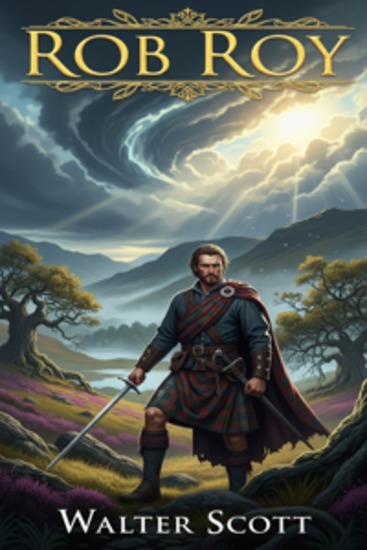
Rob Roy - cover

Rob Roy

Walter Scott

Editorial: Bu Classics Books

  • 0
  • 0
  • 0

Sinopsis

Journey into the rugged Scottish Highlands where the law of the clan clashes with the encroaching civilization of the south. The protagonist, an Englishman banished to the north, finds himself entangled with the legendary outlaw and folk hero who gives the book its name. Against a backdrop of the Jacobite rising of 1715, the novel explores themes of historical change, economic progress, and the romantic allure of a vanishing way of life. It is a spirited adventure that balances political realism with the mythic power of the wild landscape.
Disponible desde: 29/01/2026.
Longitud de impresión: 783 páginas.

Otros libros que te pueden interesar

  • Blue Masquerade - cover

    Blue Masquerade

    T.K. Blackwood

    • 0
    • 0
    • 0
    The year is 1992. Over twenty years have passed since Soviet General Secretary Leonid Brezhnev was assassinated by a crazed gunman. Since that time, the Soviet Union has been put on a course toward economic success—and war. 


    In the Balkans, Yugoslavia's collapse into ethnic violence draws NATO and the Warsaw Pact to the brink of Armageddon. Armies deploy and fleets maneuver. Political intrigue engulfs Moscow and Washington, and paranoia radiates from the Iron Curtain. In the zero-sum game of Cold War, neither side can afford to blink or back down. 


    A conflict nearly fifty years in the making spills from boardrooms and back alleys and explodes into open battle on land, air, and sea. The showdown of the century is here: East versus West with the future of mankind at stake.
    Ver libro
  • Making the Marquess Mine - cover

    Making the Marquess Mine

    Karla Kratovil

    • 0
    • 0
    • 0
    Miles Weston, the Marquess of Hawksridge, longs for a holiday from his life. He is tired of all the politics in and out of the ballrooms. Ever since his aborted wedding, his aunt has tried to match him with blank-faced debutants at every turn. The only entertaining thing in his overscheduled life is observing the antics of Lady Susanna Ashby, whose beauty and vibrancy brighten the greyest day. 


    Susanna's spirit for adventure is matched only by her loyalty to her friends. Determined to help the distractingly handsome, but overwhelmingly serious, marquess, Susanna concocts a plan to distract his matchmaking Aunt Diana. She'll reunite Diana with her long-lost lover who wrote her passionate letters of love and longing. If only Susanna could discover the whereabouts of the mysterious James Marlow. 


    As Susanna launches her ill-fated plan, heedless of the danger, her worried friends send Miles to fetch her home. But Susanna has no intention of letting anything derail her quest to find the man from the letters. Not bad weather, broken carriage wheels, or highwaymen. Not even a sexy, managing marquess. 


    Contains mature themes.
    Ver libro
  • The Accidental Suffragist - cover

    The Accidental Suffragist

    Galia Gichon

    • 0
    • 0
    • 0
    It's 1912, and protagonist Helen Fox is a factory worker living in New York's tenements. When tragedy strikes in the Triangle Shirtwaist Factory fire, Helen is seduced by the Suffragist cause and is soon immersed, working alongside famous activists. 


    As Helen's involvement with the cause deepens, she encounters myriad sources of tension that test her perseverance: estrangement from her husband, who is blindsided by his wife's sudden activism; ostracization by neighbors; unease at working side by side with wealthier suffragettes; and worry about her children as she leaves them to picket the White House in Washington. 


    The narrative spans World War One and concludes with the triumph of 1919. In a time when the obstacles for women, from any background, were insurmountable, Helen discovers her voice as an independent woman and dreams of equality in a male-dominated society.
    Ver libro
  • The Proxy Bride - cover

    The Proxy Bride

    Zoe Boccabella

    • 0
    • 0
    • 0
    In 1939, Giacinta sets sail from Italy to Australia. Decades later, a granddaughter discovers the true story of her family. 
    Imagine marrying someone you've never met ... 
     
    When Sofie comes to stay with her grandmother in Stanthorpe, she knows little of Nonna Gia's past. In the heat of that 1984 summer, the two clash over Gia's strict Italian ways and superstitions, her chilli-laden spaghetti and the evasive silence surrounding Sofie's father, who died before she was born. Then Sofie learns Gia had an arranged marriage. From there, the past begins to reveal why no-one will talk of her father. 
     
    As Nonna Gia cooks, furtively adding a little more chilli each time, she also begins feeding Sofie her stories. How she came to Australia on a 'bride ship', among many proxy brides, knowing little about the husbands they had married from afar. Most arriving to find someone much different than described. 
     
    Then, as World War II takes over the nation, and in the face of the growing animosity towards Italians that sees their husbands interned, Gia and her friends are left alone. Impoverished. Desperate. To keep their farms going, their only hope is banding together, along with Edie, a reclusive artist on the neighbouring farm and two Women's Land Army workers. But the venture is made near-impossible by the hatred towards the women held by the local publican and an illicit love between Gia and an Australian, Keith. 
     
    The summer burns on and the truth that unfolds is nothing like what Sofie expected ... 
     
    The author of Mezza Italiana brings to life a unique point of migrant women's untold experience, in a resonant novel of family, food and love.  
     
    'A deeply engrossing and authentic story, with such passionate realism you must keep reading.' - JACKIE FRENCH 
     
    'An authentic and heartfelt read that examines the connections we make when faced with hardship ... It's an inspiring look at women coming together to form their own community.' - BETTER READING
    Ver libro
  • Forgotten Authors The - Men - Volume 6 - Morgan Robertson to Francis Brett Young - cover

    Forgotten Authors The - Men -...

    Morgan Robertson, Sax Rohmer,...

    • 0
    • 0
    • 0
    Throughout the long centuries of human history is the want, and the need, to share information, to exchange ideas and for that knowledge and experience, for curiosity and learning, to be the basis of a civil society. 
    In literature the ambition is much narrower.  In order to be known, to be popular, you had to be published.  And for that people had to know you existed and your ideas worth reading.  Obviously for most of humanity’s time people couldn’t read and texts couldn’t be published in any great number. 
    In the 15th Century Gutenberg’s printing press began the revolution to address the second and by the 19th century had gathered pace with startling speed and mass distribution.  Education for the many was brought in to help people understand more of their world and, with new skills, how to have a better place within it.  Now, if the powers that owned the presses and means of distribution agreed an audience would now be able to avail themselves of your ideas, your printed words.  
    Sadly, in the thirst for the new, the recent and the past fell from sight, relegated to dark corners and dusty shelves.   
    But the printed word is rarely without someone, somewhere busying themselves through piles of papers and books rediscovering what a good story is, whatever its age. 
    In this volume we offer up a small selection of those talents whose time has now come again.
    Ver libro
  • Silas Marner - cover

    Silas Marner

    George Eliot

    • 0
    • 0
    • 0
    Silas Marner by George Eliot is a deeply moving tale of loss, betrayal, redemption, and the transformative power of love. First published in 1861, this enduring classic weaves together rural life, moral reflection, and emotional renewal in a story that continues to resonate across generations.
    
    The novel centers on Silas Marner, a solitary weaver who once lived within a close-knit religious community. Falsely accused of a crime he did not commit, Silas is cast out and left spiritually shattered. Seeking refuge in the quiet village of Raveloe, he withdraws from society and devotes himself entirely to his craft. Over time, his hard-earned gold becomes his only comfort and companion, replacing human connection with cold, glittering coins.
    
    Yet fate intervenes in unexpected ways. On a winter's night, a small child wanders into Silas's cottage, bringing with her a new kind of treasure—one that cannot be measured in gold. This child, later named Eppie, awakens within Silas a long-dormant capacity for love and belonging. Through raising her, he gradually reconnects with the community he once avoided, discovering that true wealth lies not in isolation or material possessions but in relationships and shared life.
    
    Running parallel to Silas's story is that of Godfrey Cass, a young man burdened by secrets and difficult choices. His actions intertwine with Silas's destiny, creating a narrative rich with moral complexity. Eliot examines themes of responsibility, integrity, and the long shadow of past decisions. The contrast between characters highlights the consequences of selfishness and the quiet heroism found in patience and devotion.
    
    Set against the pastoral backdrop of an English village, the novel captures the rhythms of rural existence—its customs, celebrations, and close-knit social fabric. Eliot's detailed observations bring warmth and authenticity to the setting, portraying both its simplicity and its subtle tensions. Through her insightful narration, she explores the inner lives of her characters with compassion and psychological depth.
    
    At its heart, Silas Marner is a story of second chances. It reflects on how suffering can harden the spirit, but also how unexpected grace can restore faith in humanity. Eliot's prose balances realism with gentle symbolism, crafting a narrative that feels both grounded and timeless.
    
    Beloved for its emotional richness and moral clarity, Silas Marner remains one of George Eliot's most accessible and poignant works. It is a novel about transformation—about how love can mend a broken heart, how community can replace loneliness, and how even the most isolated soul can find renewal through kindness and connection.
    Ver libro