Rejoignez-nous pour un voyage dans le monde des livres!
Ajouter ce livre à l'électronique
Grey
Ecrivez un nouveau commentaire Default profile 50px
Grey
Abonnez-vous pour lire le livre complet ou lisez les premières pages gratuitement!
All characters reduced
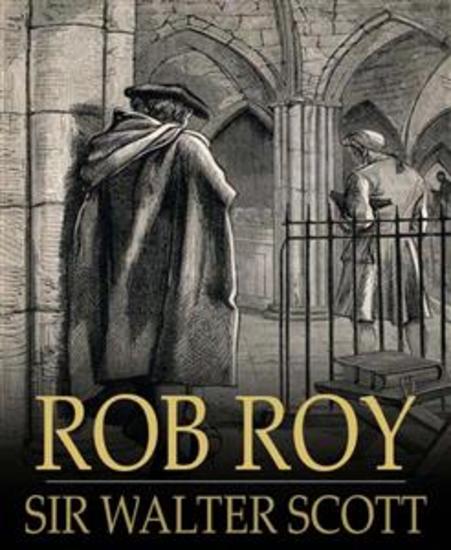
Rob Roy - cover

Rob Roy

Walter Scott

Maison d'édition: BookRix

  • 0
  • 0
  • 0

Synopsis

Rob Roy is a historical novel by Walter Scott. It is narrated by Frank Osbaldistone, the son of an English merchant who travels first to the North of England, and subsequently to the Scottish Highlands, to collect a debt stolen from his father. On the way he encounters the larger-than-life title character, Rob Roy MacGregor. 

The story takes place just before the 1715 Jacobite Rising, with much of Scotland in turmoil. Frank Osbaldistone, the narrator, quarrels with his father and is sent to stay with an uncle, Sir Hildebrand Osbaldistone, in Northumberland. Frank falls in love with Diana Vernon, Sir Hildebrand's niece, whose father has been forced to go into hiding because of his Jacobite sympathies. Frank's cousin, Rashleigh, steals important documents vital to the honour and economic solvency of Frank's father, William, and Frank pursues Rashleigh to Scotland. Several times his path crosses the mysterious and powerful figure Rob Roy MacGregor, known as Rob Roy, an associate of Sir Hildebrand. There is much confusion as the action shifts to the beautiful mountains and valleys around Loch Lomond. A British army detachment is ambushed and there is bloodshed. The eponymous Rob Roy is badly wounded at the Battle of Glen Shiel in 1719, in which a British army of Scots and English defeat a Jacobite and Spanish expedition that aimed to restore the Stuart monarchy. All of Sir Hildebrand's sons but Rashleigh are killed in the Jacobite Rising, and Rashleigh, too meets a bloody end. Following this, Frank inherits Sir Hildebrand's property and marries Diana. The novel is a brutally realistic depiction of the social conditions in Highland and Lowland Scotland in the early 18th century.

Robert Louis Stevenson loved the novel from childhood, regarding it as the best novel of the greatest of all novelists.
Disponible depuis: 19/12/2023.
Longueur d'impression: 760 pages.

D'autres livres qui pourraient vous intéresser

  • Soothing Music for Babies and Small Children - Gentle Sounds and Melodies for a Restful Sleep - cover

    Soothing Music for Babies and...

    Soothing Music for Babies and...

    • 0
    • 0
    • 0
    - Does your baby have a hard time falling asleep?- Are you looking for peaceful, soothing music your baby can fall asleep to ...-... but don't want to hear "Rock-a-Bye Baby" for the thousandth time?Enjoy modern lullabies that will reliably soothe you and your baby gently to sleep. To fall asleep, children need to feel safe. The soothing sleep music composed especially for babies and their parents helps you create a snug, secure atmosphere.The unique soundscapes (piano, keyboard, guitar) satisfy our human need for security and relaxation. They are based on scientific studies that demonstrate the positive effects of music on our sleeping habits. In combination with the music, you will also hear the sound of ocean waves gently lapping at the shore. Ocean sounds are well loved by babies as they simulate their pre-birth experience in the womb, which babies remember fondly. The sound of the waves comforts them and promotes even, harmonious breathing.This premium audiobook contains:Eleven unique sleep tracks with a running time of over 120 minutes, composed by certified music therapists and played at the same rhythm as the resting heart rate. In addition, there are comforting nature sounds that satisfy our human need for security and relaxation.Can't wait to play the music? Then download it now!**** NOTE: SEVERAL of the tracks on the audiobook are played briefly in the audio sample. ****
    Voir livre
  • Chimú Empire - The Kingdom of Chan Chan and the Lords of the Northern Coast - cover

    Chimú Empire - The Kingdom of...

    Rolf Hedger

    • 0
    • 0
    • 0
    The Chimú Empire, one of the most prominent pre-Columbian civilizations of the northern coast of Peru, flourished between the 9th and 15th centuries. This advanced civilization is known for its impressive urban centers, most notably the capital city of Chan Chan, which remains the largest adobe city in the world. At its height, the Chimú Empire controlled vast territories, from the southern border of the Moche Valley to the northern regions of present-day Ecuador. The empire was characterized by its highly structured society, advanced technology, and unique artistic traditions, which helped shape the cultural landscape of the Andean region. 
    The roots of the Chimú Empire trace back to the Moche culture, which had a significant influence on the development of the Chimú. However, the Chimú people took the foundational knowledge of their predecessors and expanded upon it, creating a powerful and sophisticated society. They established a series of city-states along the coast, which were eventually unified under the leadership of a single ruler, the Chimú king, who governed from Chan Chan. 
    The Chimú Empire’s political structure was highly organized, with a well-defined hierarchy that ranged from the elite rulers to the common people. The king, or "Sapa Chimú," was considered the most powerful figure, acting as both a political and spiritual leader. The empire was divided into regions, each overseen by local lords who managed administrative and religious duties within their territories. This hierarchical structure helped maintain control over the vast lands and resources of the empire.
    Voir livre
  • Speak of It - A Memoir - cover

    Speak of It - A Memoir

    Marcos McPeek Villatoro

    • 0
    • 0
    • 0
    In Speak of It, Marcos McPeek Villatoro explores how he channeled his Latino roots to come to terms with the childhood sexual abuse he suffered at the hands of a relative in his home in Appalachia, and he recounts his ensuing struggle with trauma and mental illness. 


    The son of a Salvadoran mother and Scotch Irish mechanic father, Marcos spent much of his life trying to break away from his Southern Appalachian past and the trauma experienced there and striving to get closer to his Salvadoran heritage. His journey includes steeping himself in the Spanish language and Latin American literature, especially the work of Gabriel García Marquez; a stint in Nicaragua with Witness for Peace, followed by missionary work in Guatemala; and social-justice work with Mexican migrant farmworkers in Alabama. Each experience brought him closer to understanding where he came from and to forging an identity as a whole self in the wake of trauma. 


    Riveting, horrifying, moving, and inspiring, Speak of It is a testament to the healing power of language, books, and identity.
    Voir livre
  • Narrative Therapy - Rewriting Your Life's Story - cover

    Narrative Therapy - Rewriting...

    Vivian Westlake

    • 0
    • 0
    • 0
    Narrative therapy is a therapeutic approach that views individuals as the authors of their own stories. This perspective emphasizes that people are not defined by their problems, but rather by the way they relate to and interpret their experiences. The central premise of narrative therapy is that we can rewrite our stories, even the ones shaped by challenges, in ways that empower us to lead fulfilling lives. 
    In narrative therapy, the idea of the "story" is both a literal and symbolic concept. We all live our lives through the stories we tell ourselves and others. These stories shape our sense of identity, how we make sense of our past, and how we envision our future. However, many people live with dominant narratives that are limiting, shaped by external pressures like family expectations, societal norms, or personal traumas. These dominant narratives often serve to reinforce negative beliefs about oneself, leading to feelings of helplessness or disempowerment. 
    The approach of narrative therapy seeks to externalize the problem—viewing the problem as separate from the person. This allows clients to step back and reflect on their issues from a more objective standpoint. For example, someone struggling with anxiety may learn to see their anxiety as a separate entity rather than an intrinsic part of their identity. By doing so, the person can begin to engage with the problem in a healthier, more manageable way.
    Voir livre
  • Puerto Rico - What Everyone Needs to Know® 2nd Edition - cover

    Puerto Rico - What Everyone...

    Jorge Duany

    • 0
    • 0
    • 0
    Acquired by the United States from Spain in 1898, Puerto Rico has a peculiar status among Latin American and Caribbean countries. Though they are US citizens, Puerto Ricans do not have their own voting representatives in Congress and cannot vote in presidential elections (although they are able to participate in the primaries). In recent years, Puerto Rico's colossal public debt sparked an economic crisis that catapulted it onto the national stage and intensified the exodus to the US, bringing to the fore many of the unresolved remnants of its colonial history. 


    Beginning with a historical overview of Puerto Rico, Duany covers the Spanish colonial period (1493-1898) and the first five decades of the US colonial regime. He then delves into the demographic, economic, political, and cultural features of contemporary Puerto Rico. New material examines the multiple issues affecting Puerto Rico in the last decade, including a prolonged recession, the devastating impact of two hurricanes, and the largest migrant wave ever recorded from Puerto Rico. 


    While a popular tourist destination, few beyond Puerto Rico's shores are familiar with its complex history and diverse culture. Duany takes on the task of educating readers on the most important facets of the unique, troubled, but much beloved isla del encanto.
    Voir livre
  • The Ashtray - (Or the Man Who Denied Reality) - cover

    The Ashtray - (Or the Man Who...

    Errol Morris

    • 0
    • 0
    • 0
    In 1972, philosopher of science Thomas Kuhn threw an ashtray at Errol Morris. This book is the result. At the time, Morris was a graduate student. Now we know him as one of the most celebrated and restlessly probing filmmakers of our time, the creator of such classics of documentary investigation as The Thin Blue Line. Kuhn was—and, posthumously, remains—a star in his field and author of The Structure of Scientific Revolutions, a landmark book that introduced the concept of "paradigm shifts" to the larger culture. And Morris thought the idea was bunk. 


    The Ashtray tells why—and in doing so, it makes a powerful case for Morris's way of viewing the world, and the centrality to that view of a fundamental conception of the necessity of truth. "For me," Morris writes, "truth is about the relationship between language and the world: a correspondence idea of truth." He has no patience for philosophical systems that aim for internal coherence and disdain the world itself. Morris wants to establish as clearly as possible what we know and can say about the world, reality, history, our actions, and interactions. It's the fundamental desire that animates his filmmaking. Truth may be slippery, but that doesn't mean we have to grease its path of escape through philosophical evasions. Rather, Morris argues, it is our duty to do everything we can to establish and support it.
    Voir livre