Junte-se a nós em uma viagem ao mundo dos livros!
Adicionar este livro à prateleira
Grey
Deixe um novo comentário Default profile 50px
Grey
Assine para ler o livro completo ou leia as primeiras páginas de graça!
All characters reduced
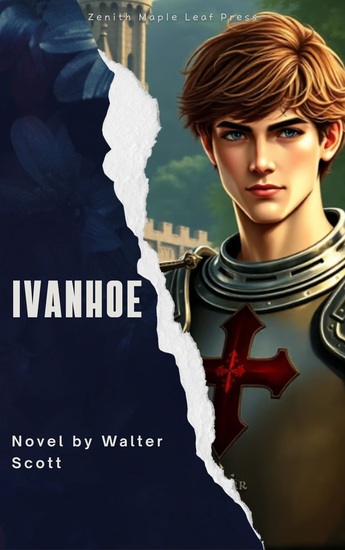
Ivanhoe - cover
LER

Ivanhoe

Walter Scott, Zenith Maple Leaf Press

Editora: Zenith Maple Leaf Press

  • 0
  • 0
  • 0

Sinopse

⚔️ What happens when loyalty to king and love for country collide with forbidden passion?

Sir Walter Scott's Ivanhoe is one of the greatest historical romances ever written, a novel that shaped the way the world imagines the Middle Ages. Set in 12th-century England during the reign of Richard the Lionheart, the story follows the disinherited knight Wilfred of Ivanhoe as he seeks to reclaim his honor, his inheritance, and his beloved Lady Rowena.

Caught in the conflicts between Normans and Saxons, Christians and Jews, loyalty and betrayal, Ivanhoe's journey is filled with grand tournaments, daring rescues, and unforgettable characters—including Robin Hood, the gallant outlaw, and the noble Rebecca, whose courage and compassion have touched readers for generations.

🔥 With its thrilling battles, political intrigue, and romantic tensions, Ivanhoe is more than a tale of knights and castles—it is a story about justice, courage, and the timeless fight for freedom.

👉 Click Buy Now and step into the world of medieval England's greatest legend!
Disponível desde: 20/08/2025.
Comprimento de impressão: 322 páginas.

Outros livros que poderiam interessá-lo

  • That Christ Is One - cover

    That Christ Is One

    Cyril of Alexandria

    • 0
    • 0
    • 0
    Cyril of Alexandria was the leading voice of Nicene orthodoxy in the Christological controversies between Constantinople (381) and Chalcedon (451). Assuming the mantle of the Cappadotian fathers, he answered the auguments of Nestorius who had changed the liturgy of Constantinople by altering the prayer which referred to Mary as the Mother of God. Although he died seven years before the Council of Chalcedon, his writings and formulations heavily influenced not only Chalcedon, but the entire trajectory of orthodox christological thought. (Summary by Jonathan Lange)
    Ver livro
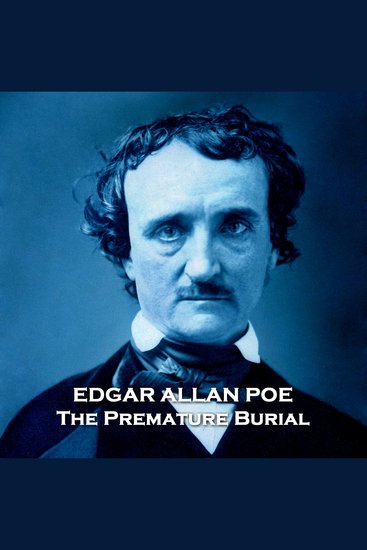
  • The Premature Burial - From their pens to your ears genius in every story - cover

    The Premature Burial - From...

    Edgar Allan Poe

    • 0
    • 0
    • 0
    Edgar Poe was born in Boston Massachusetts on 19th January 1809. His father abandoned his family the following year and within a year his mother had died leaving him an orphan.   
    He was taken in by the Allan family but never formally adopted although he now referred to himself as Edgar Allan Poe.  His father alternatively spoiled or chastised him and tension was frequent over gambling debts and monies for his education.  His university years to study ancient and modern languages was cut short by lack of money and he enlisted as a private in the army claiming he was 22, it is more probable he was 18. After 2 years he obtained a discharge in order to take up an appointment at the military academy, West Point, where he failed to become an officer. 
    Poe had released his 1st poetry volume in 1827 and after his 3rd turned to prose and placing short stories in several magazines and journals.  At age 26 he obtained a licence to marry his cousin.  She was a mere 13 but they stayed together until her death from tuberculosis 11 years after. 
    In January 1845 ‘The Raven’ was published and became an instant classic.  Thereafter followed the prose works for which he is now so rightly famed as a master of the mysterious and the macabre. 
    Edgar Allan Poe died at the tragically early age of 40 on 7th October 1849 in Baltimore, Maryland. Newspapers at the time reported Poe's death as ‘congestion of the brain’ or ‘cerebral inflammation’, common euphemisms for death from disreputable causes such as alcoholism but the actual cause of death remains a mystery. 
    Poe is also one of a number of authors credited with inventing the detective genre with his Parisian sleuth C. Auguste Dupin.  He featured in three stories including the legendary ‘Murders in the Rue Morgue’ and by sheer deduction, logic and a touch of Gallic arrogance revealed what was hidden to the rest of us.
    Ver livro
  • The Domain of Arnheim - cover

    The Domain of Arnheim

    Sampi Books, Edgar Allan Poe

    • 0
    • 0
    • 0
    In "The Domain of Arnheim", Edgar Allan Poe explores the aesthetics and power of nature through Ellison, a wealthy man who creates an impressive landscaped garden. This tale discusses themes of beauty, art and idealism, as Ellison uses his fortune to shape a perfect earthly refuge.
    Ver livro
  • Sanditon - Fragment of a Novel - cover

    Sanditon - Fragment of a Novel

    Jane Austen

    • 0
    • 0
    • 0
    In January 1817, Jane Austen commenced work on a new novel, to which she never assigned a name. By mid-March, she had completed twelve chapters, at which time she ceased working due to illness. The unfinished work was eventually published in 1925 under its working title: Fragment of a Novel Written by Jane Austen, January–March 1817. It has since become known simply as Sanditon, and a number of completions by other authors have since been published. 
    Mr. and Mrs. Parker are visiting Sanditon, a village on the coast of Sussex. Unfortunately, Mr. Parker suffers an injury but he receives assistance from a local farmer, Mr Heywood. The latter’s daughter, Charlotte, is of marriageable age and has three eligible suitors, including the son of local patron, Lady Denham.  
    Lady Denham is very keen to find a suitable match for her son Sir Edward—one of Charlotte’s suitors. Accordingly, she seeks an introduction with a Miss Lambe, a wealthy young heiress from the West Indies who is to take lodgings at Sanditon. Meanwhile, Charlotte finds herself attracted to the witty and debonair Sydney. 
    The narrative ceases at this point, with little indication about the final results of the various romantic encounters. However, it appears clear that Charlotte is intended to be the heroine of the story.
    Ver livro
  • The Murder of Roger Ackroyd - cover

    The Murder of Roger Ackroyd

    Agatha Christie

    • 0
    • 0
    • 0
    The term “sour grapes” is often used in reference to an instance in which someone adopts an attitude to something because they can’t equal it themselves. That was certainly the case when a 20th century critic wrote a derogatory article in the New York Magazine, stating:  
    “Who cares Who Killed Roger Ackroyd?”—Edmund Wilson 
    He added: “Wasteful of time and degrading to the intellect.” 
    We learn that Wilson was long since misguided when he said he had outgrown detective stories by the time he was twelve-years-old. His comment was degraded by publisher, editor, and critic, Howard Haycraft. He called this story: 
    “One of the most influential crime novels ever written.” 
    In Great Britain, in 2013, the Crime Writer’s Association listed it as the best crime novel ever, just one of the many accolades accorded Agatha Christie, the bestselling author in history. Her works have always achieved vast audiences, ignoring any criticism. Some critics consider this to be the masterpiece of all the stand-alone novels written by Christie. 
    As you listen with us, you will inevitably agree that there is an innovative ending with a highly unusual twist. You can now hear that for yourself.
    Ver livro
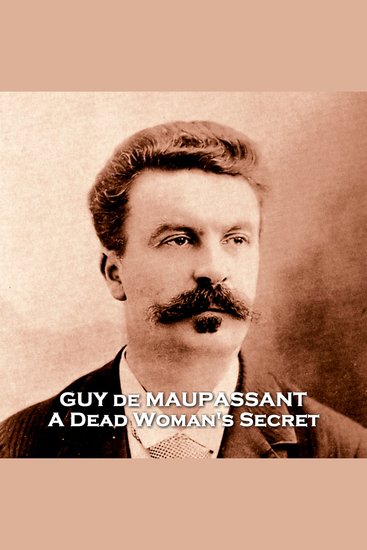
  • A Dead Woman's Secret - From their pens to your ears genius in every story - cover

    A Dead Woman's Secret - From...

    Guy de Maupassant

    • 0
    • 0
    • 0
    Henri René Albert Guy de Maupassant was born on August 5th, 1850 near Dieppe in France.  
    Maupassant’s early life was badly torn when at age 11 (his younger brother Hervé was then five) his mother, Laure, a headstrong and independent-minded woman, risked social disgrace in order to obtain a legal separation from her husband. 
    After the separation, Laure kept custody of her two boys. With the father now forcibly absent, Laure became the most influential and important figure in the young boy's life.   
    Maupassant’s education was such that he rebelled against religion and other societal norms but a developing friendship with Gustave Flaubert began to turn his mind towards creativity and writing. 
    After graduation he volunteered for the Franco-Prussian war. With its end he moved to Paris to work as a clerk in the Navy Department.  Gustave Flaubert now took him under his wing.  Acting as a literary guardian to him, he guided the eager Maupassant to debuts in journalism and literature.  For Maupassant these were exciting times and the awakening of his creative talents and ambitions. 
    In 1880 he published what is considered his first great work, ‘Boule de Suif’, (translated as as ‘Dumpling’, ‘Butterball’, ‘Ball of Fat’, or ‘Ball of Lard’) which met with a success that was both instant and overwhelming.  Flaubert at once acknowledged that it was ‘a masterpiece that will endure.’ Maupassant had used his talents and experiences in the war to create something unique.  
    This decade from 1880 to 1891 was to be the most pivotal of his career.  With an audience now made available by the success of ‘Boule de Suif’ Maupassant organised himself to work methodically and relentlessly to produce between two and four volumes of work a year.  The melding of his talents and business sense and the continual hunger of sources for his works made him wealthy. 
    In his later years he developed a desire for solitude, an obsession for self-preservation, and a fear of death as well as a paranoia of persecution caused by the syphilis he had contracted in his youth.  
    On January 2nd, 1892, Maupassant tried to commit suicide by cutting his throat.  Unsuccessful he was committed to the private asylum of Esprit Blanche at Passy, in Paris.  It was here on July 6th, 1893 that Henri René Albert Guy de Maupassant died at the age of only 42.
    Ver livro