Begleiten Sie uns auf eine literarische Weltreise!
Buch zum Bücherregal hinzufügen
Grey
Einen neuen Kommentar schreiben Default profile 50px
Grey
Jetzt das ganze Buch im Abo oder die ersten Seiten gratis lesen!
All characters reduced
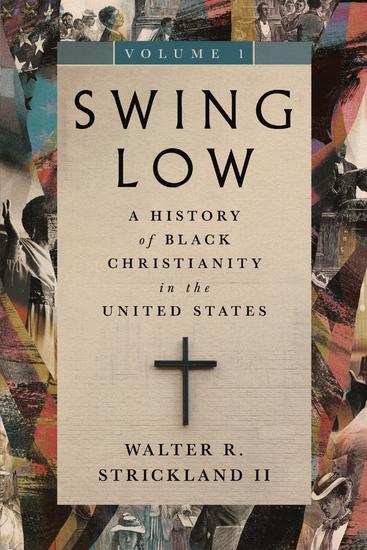
Swing Low volume 1 - A History of Black Christianity in the United States - cover

Swing Low volume 1 - A History of Black Christianity in the United States

Walter R. Strickland

Verlag: IVP Academic

  • 0
  • 0
  • 0

Beschreibung

Foreword INDIES Book of the Year Award Finalist
A Groundbreaking Portrait of African American Christianity
The history of African American Christianity is one of the determined faith of a people driven to pursue spiritual and social uplift for themselves and others to God's glory. Yet stories of faithful Black Christians have often been forgotten or minimized. The dynamic witness of the Black church in the United States is an essential part of Christian history that must be heard and dependably retold.
In this groundbreaking two-volume work, Walter R. Strickland II does just that through a theological-intellectual history highlighting the ways theology has formed and motivated Black Christianity across the centuries. Through his original research he has identified five theological anchors grounding African Americans in Christian orthodoxy:

- Big God
- Jesus
- Conversion and walking in the Spirit
- The Good Book
- Deliverance
In volume 1, a narrative history, Strickland tells the story of these themes from the 1600s to the present. He explores the crucial ecclesiastical, social, and theological developments, including the rise of Black evangelicalism as well as broader contributions to politics and culture.
Swing Low offers a defining rubric under which to observe, understand, and learn from the diverse and living entity that is African American Christianity. Volume 2, a companion anthology, covers the breadth of these historical developments by presenting primary-source documents so we can listen to Black Christianity in its own words.
Verfügbar seit: 29.10.2024.
Drucklänge: 272 Seiten.

Weitere Bücher, die Sie mögen werden

  • Rehabilitation Therapy - Restoring Health and Wellness after Trauma - cover

    Rehabilitation Therapy -...

    Vivian Westlake

    • 0
    • 0
    • 0
    Rehabilitation therapy is a cornerstone of recovery for individuals who have experienced trauma, injury, or illness, providing a structured and supportive path to restoring physical, emotional, and social well-being. It is a multidisciplinary approach that focuses on helping individuals regain independence and improve their quality of life, tailored to their unique needs and circumstances. 
    At its essence, rehabilitation therapy seeks to address the diverse challenges that arise from trauma. Whether the trauma is physical, such as a broken bone or a neurological injury, or psychological, such as the aftermath of emotional distress, rehabilitation offers a comprehensive strategy for recovery. By emphasizing both short-term and long-term goals, it provides a clear framework for progress, helping individuals reclaim their ability to participate in daily activities and achieve a sense of normalcy. 
    One of the defining aspects of rehabilitation therapy is its reliance on collaboration. It brings together a team of professionals—physical therapists, occupational therapists, speech-language pathologists, psychologists, and medical specialists—who work in unison to create personalized care plans. These plans are designed to address the specific needs of the individual, recognizing that no two recovery journeys are alike. Family members and caregivers also play a crucial role, providing support and encouragement that can significantly enhance the healing process.
    Zum Buch
  • Bye Bye I Love You - The Story of Our First and Last Words - cover

    Bye Bye I Love You - The Story...

    Michael Erard

    • 0
    • 0
    • 0
    With our earliest utterances, we announce ourselves—and are recognized—as persons ready for social life. With our final ones, we mark where others must release us to death's embrace. In Bye Bye I Love You, linguist and author Michael Erard explores these phenomena, commonly called "first words" and "last words," uncovering their cultural, historical, and biological entanglements and honoring their deep private significance. Erard draws from personal, historical, and anthropological sources to provide a sense of the breadth of beliefs and practices about these phenomena across eras, religions, and cultures around the world. 


    What do babies' first words have in common? How do people really communicate at the end of life? In the first half of the book, Erard tells the story of first words in human development and evolution, and how the attention to children's early language—a modern phenomenon—arose. In the second half, he provides a groundbreaking overview of language at the end of life and the cultural conventions that surround it. Throughout he reveals the many parallels and asymmetries between first and last words and asks whether we might be able to use a linguistic understanding of end of life to discover what we truly want.
    Zum Buch
  • The Journey Begins - Tales of the Sea (Book One) - cover

    The Journey Begins - Tales of...

    Cynthia Elder

    • 0
    • 0
    • 0
    The year is 1830. In the small seafaring town of West Barnstable, Massachusetts, young James Jenkins follows the sailor’s life. Ruth Fish, the daughter of a ship’s captain, bristles with passion to see the world and escape the confines of her small town. Separated for years at a time from home and family, James binds himself to them through letters that span the vastness of oceans and time. Torn between the competing desires of her heart, Ruth imagines a life on the sea, going as far as any man might go.
    Zum Buch
  • Military Psychology - Understanding the Mind in Defense and Combat Environments - cover

    Military Psychology -...

    Virversity Online Courses

    • 0
    • 0
    • 0
    This course offers a comprehensive introduction to Military Psychology, highlighting the vital role of psychological principles within military settings. Students will explore human behavior in combat, mental health challenges like PTSD, and leadership strategies that enhance team cohesion and decision-making.Key topics include the history and evolution of military psychology, stress and trauma management, resilience-building techniques, leadership psychology, and decision-making under pressure. The course also covers psychological assessment tools, strategic methods such as PSYOPS and behavioral profiling, and ethical considerations in military contexts.Participants will gain insight into group dynamics, mental health support for service members and their families, and rehabilitation and reintegration strategies for veterans. Emphasizing the multidisciplinary nature of military psychology, this course equips learners with practical knowledge and skills to support mental health, improve leadership effectiveness, and promote ethical military practices.By the end, students will be prepared to contribute meaningfully in military, academic, or support roles focused on the psychological well-being of those who serve.
    Zum Buch
  • We Uyghurs Have No Say - An Imprisoned Writer Speaks - cover

    We Uyghurs Have No Say - An...

    Ilham Tohti

    • 0
    • 0
    • 0
    The words of China's most famous political prisoner 


    In Xinjiang, the large northwest region of China, the government has imprisoned more than a million Uyghurs in reeducation camps. One of the incarcerated—whose sentence, unlike most others, has no end date—is Ilham Tohti, an intellectual and economist, a prolific writer, and formerly the host of a website, Uyghur Online. In 2014, Tohti was arrested; accused of advocating separatism, violence, and the overthrow of the Chinese government; subjected to a two-day trial; and sentenced to life. Nothing has been heard from him since. 


    Here are Tohti's own words, a collection of his plain-spoken calls for justice, scholarly explanations of the history of Xinjiang, and poignant personal reflections. While his courage and outspokenness about the plight of China's Muslim minorities is extraordinary, these essays sound a measured insistence on peace and just treatment for the Uyghurs. 


    Winner of the PEN/Goldsmith Freedom to Write Award and the Sakharov Prize for Freedom of Thought while imprisoned, this book is the only way to hear from a man who has been called "a Uyghur Mandela."
    Zum Buch
  • Islamic Golden Age - A History of Economic Cultural and Artistic Growth - cover

    Islamic Golden Age - A History...

    Kelly Mass

    • 0
    • 0
    • 0
    The Islamic Golden Age, a period marked by extraordinary cultural, economic, and scientific prosperity, spanned roughly from the 8th to the 14th century. This era is often considered to have begun during the reign of the Abbasid caliph Harun al-Rashid (786–809), particularly with the establishment of the House of Wisdom in Baghdad. At this time, Baghdad was the world's largest city, serving as the epicenter of intellectual activity. The House of Wisdom became a hub for scholars and polymaths from a diverse range of backgrounds who were tasked with gathering, translating, and preserving the classical knowledge of the ancient world. Key works from Greek, Syriac, Middle Persian, and Sanskrit texts were translated into Arabic and Syriac, with some later making their way into Latin and Hebrew. This immense intellectual undertaking played a significant role in preserving and expanding upon the knowledge that would later form the foundation of the Renaissance in Europe. 
    The decline of the Abbasid caliphate, culminating in the Mongol invasions and the Siege of Baghdad in 1258, is commonly regarded as marking the end of this flourishing period. However, the exact timeline of the Golden Age’s conclusion is debated among scholars. Some place the end around 1350, coinciding with the Timurid Renaissance, while others extend it until the 15th or even the 16th century, linking it with the rise of the Islamic Gunpowder Empires. 
    One of the driving forces behind the Islamic Golden Age was the emphasis placed on learning within Islamic teachings. The Quran and Hadiths, which contain numerous references to the pursuit of knowledge, were fundamental in motivating Muslims during this period to engage in scientific, philosophical, and literary endeavors.
    Zum Buch