¡Acompáñanos a viajar por el mundo de los libros!
Añadir este libro a la estantería
Grey
Escribe un nuevo comentario Default profile 50px
Grey
Suscríbete para leer el libro completo o lee las primeras páginas gratis.
All characters reduced
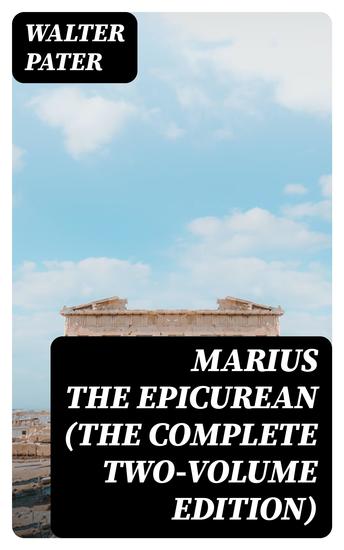
Marius the Epicurean (The Complete Two-Volume Edition) - cover

Marius the Epicurean (The Complete Two-Volume Edition)

Walter Pater

Editorial: DigiCat

  • 0
  • 0
  • 0

Sinopsis

In "Marius the Epicurean," Walter Pater crafts a rich, philosophical narrative set in the decline of the Roman Empire, exploring the life of a sensitive and introspective youth grappling with the complexities of pleasure, spirituality, and the pursuit of beauty. This two-volume edition showcases Pater's masterful prose, characterized by his distinctive aestheticism and deep psychological insight. The novel unfolds in a series of lyrical vignettes, blending historical context with a modern sensibility that articulates the tensions between hedonism and moral introspection, all within a lushly described sensory landscape that invites readers to contemplate the essence of existence itself. Walter Pater, a prominent figure of the Victorian literary scene and an influential critic, was known for his advocacy of art for art's sake. His own struggles with the conventions of society and a deep-seated appreciation for beauty and culture undoubtedly informed the philosophical underpinnings of Marius's journey. Pater's extensive engagements with classical literature and philosophy are woven throughout the text, reflecting his fascination with the Epicurean ideals that permeated his academic and personal pursuits. For readers seeking a profound exploration of human experience and the quest for meaning against the backdrop of a fading empire, "Marius the Epicurean" serves as both a philosophical treatise and an exquisite literary work. Pater's eloquence and mastery make this novel an essential addition to the library of those interested in aesthetics, philosophy, or the intricacies of the human condition.
Disponible desde: 13/11/2022.
Longitud de impresión: 292 páginas.

Otros libros que te pueden interesar

  • The Jew - Turgenev's heartbreaking story gives us a rare insight into anti-semitism in Russian society - cover

    The Jew - Turgenev's...

    Ivan Turgenev

    • 0
    • 0
    • 0
    Ivan Sergeyevich Turgenev was born on 9th November 1818 in Oryol, Russia to parents from the nobility.  He and his two brothers were raised by their mother on the family estate.  Surrounded by foreign governesses he became fluent in French, German, and English.  Their father spent little time with them and this undoubtedly had an effect on him and his brothers.  When he was nine the family moved to Moscow to give their children a better education. 
     
    Turgenev studied for a year at the University of Moscow and then at the University of St Petersburg to study Classics, Russian literature, and philology.  During that time his father died from kidney stone disease.  In 1838 Turgenev studied philosophy and history at the University of Berlin for 3 years before returning to St Petersburg for his master's. 
     
    He started his career with the Russian Civil Service and it was only in 1852, after several earlier publications, that he made his name with his short story collection, ‘A Sportsman's Sketches’, based on his observations of peasant life and nature. 
      
    That same year he wrote an obituary for Nikolai Gogol: "Gogol is dead!... What Russian heart is not shaken by those three words?... He is gone, that man whom we now have the right (the bitter right, given to us by death) to call great."  The St Petersburg censor banned publication but the Moscow censor allowed it.  He was dismissed but Turgenev was held responsible and imprisoned for a month, and then exiled to his country estate.  
     
    Along with many other intellectuals Turgenev left Russia and settled in Paris in 1854.  During this period he wrote his finest stories and four novels.  
     
    Alexander II ascended the Russian throne in 1855, and the political climate relaxed.  Turgenev returned home.  
     
    ‘Fathers and Sons’, Turgenev's most famous and enduring novel, appeared in 1862. Its leading character is considered the first ‘Bolshevik’ in Russian literature. But the hostile reaction prompted Turgenev's decision to again leave Russia.  
     
    His health declined during his later years.  In January 1883, an aggressive malignant tumor was removed but by then it had metastasized in his upper spinal cord, causing him intense pain in his final few months of life.  
     
    Ivan Turgenev died on 3rd September 1883 of a spinal abscess, a complication of the metastatic liposarcoma, in his house near Paris.  He was buried in St Petersburg.  
     
    In ‘The Jew’ Turgenev explores a subject that is often treated abrasively by Russian authors.  In this heartbreaking tale an officer is begged by a Jew to help him.  He is even prepared to offer, with tragic consequences, a young girl as part of the bargain.
    Ver libro
  • The Horse Dealer's Daughter - cover

    The Horse Dealer's Daughter

    D H Lawrence

    • 0
    • 0
    • 0
    ‘The Horse Dealer's Daughter’ is a story, gripping in its content. It encompasses the terror of death and disgrace which is  redeemed by passion and sexuality. The question Lawrence leaves open is whether the doctor's avowal of love is genuine or driven by the awakening of his own sexuality and pity for the woman.
    Ver libro
  • The Decameron - cover

    The Decameron

    Giovanni Boccaccio

    • 0
    • 0
    • 0
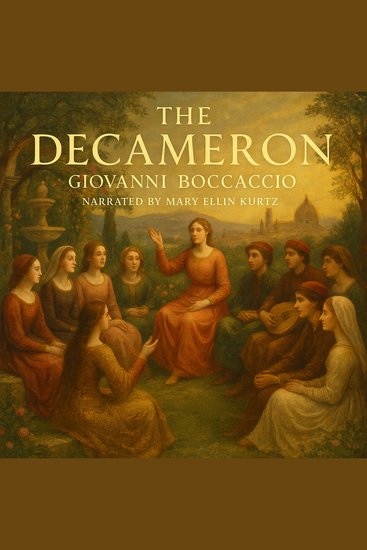
    Set against the shadow of the Black Plague, The Decameron by Giovanni Boccaccio is a radiant tapestry of love, wit, tragedy, and the triumph of the human spirit. When Florence is ravaged by pestilence, ten young nobles — seven women and three men — flee to a countryside villa to escape the horrors of the city. Over ten days, they pass the time by telling one hundred stories: tales of romance and folly, devotion and deception, virtue and vice. 
    From the poetic tragedy of “Griselda” to the romantic daring of “Cymon and Iphigenia” and the moral allegory of “The Three Rings,” Boccaccio captures the full spectrum of human experience — earthy, wise, and profoundly moving. 
    Narrated with grace and warmth by Mary Ellin Kurtz, this timeless masterpiece invites listeners into a world where storytelling itself becomes an act of survival — and of joy.
    Ver libro
  • A Source of Irritation - From their pens to your ears genius in every story - cover

    A Source of Irritation - From...

    Stacy Aumonier

    • 0
    • 0
    • 0
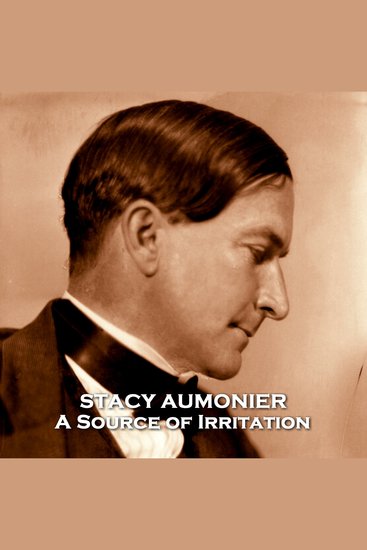
    The bookshelves of British literature are incredible collections that have gathered together centuries of very talented authors.  From these Isles their fame spread and whilst among their number many are now forgotten or neglected their talents endure.  Among them is Stacy Aumonier.
    Ver libro
  • Frankenstein or the Modern Prometheus - cover

    Frankenstein or the Modern...

    Mary Wollstonecraft Godwin Shelley

    • 0
    • 0
    • 0
    Frankenstein; or, The Modern Prometheus, is a novel written by English author Mary Shelley about the young student of science Victor Frankenstein, who creates a grotesque but sentient creature in an unorthodox scientific experiment. Shelley started writing the story when she was eighteen, and the novel was published when she was twenty. Shelley had travelled through Europe in 1814, journeying along the river Rhine in Germany with a stop in Gernsheim which is just 17 km (10 mi) away from Frankenstein Castle, where two centuries before an alchemist was engaged in experiments. Later, she travelled in the region of Geneva (Switzerland)—where much of the story takes place—and the topics of galvanism and other similar occult ideas were themes of conversation among her companions, particularly her lover and future husband, Percy Shelley. Mary, Percy, Lord Byron, and John Polidori decided to have a competition to see who could write the best horror story. After thinking for days, Shelley dreamt about a scientist who created life and was horrified by what he had made; her dream later evolved into the story within the novel.
    Ver libro
  • Political Ideals - cover

    Political Ideals

    Bertrand Russell

    • 0
    • 0
    • 0
    “Liberty demands self-government, but not the right to interfere with others.” 
     
    “The object of education ought not to be to make all men think alike, but to make each think in the way which is the fullest expression of his own.” 
     
    “You may kill an artist or a thinker, but you cannot acquire his art or his thought. You may put a man do death because he loves his fellow men, but you will not by so doing acquire the love which made his happiness.” 
     ― Bertrand Russell, Political Ideals 
     
    'Political Ideals' was written during the upheaval of World War One. It is, in many ways, a statement, of Russell's beliefs, a declaration of the ideas that influenced his thinking on the major events of the 20th century. In this sense, it is essential reading for every student of this great philosopher.
    Ver libro