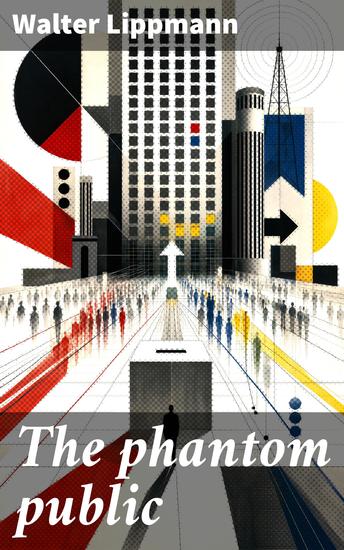
The phantom public
Walter Lippmann
Editora: Good Press
Sinopse
In The Phantom Public, Walter Lippmann offers a penetrating critique of democratic theory, arguing that the idealized "sovereign citizen" of mass politics is largely a fiction. Written in lucid, analytical prose, the book blends political philosophy, social criticism, and early media theory to examine how modern public affairs exceed the knowledge and capacities of ordinary citizens. Emerging in the aftermath of World War I and amid the growth of mass journalism and bureaucracy, it stands as a central text in twentieth-century debates about liberalism, public opinion, and the limits of participatory democracy. Lippmann was one of the most influential American public intellectuals of his age: a journalist, commentator, and co-founder of The New Republic. Deeply shaped by the upheavals of modern industrial society, wartime propaganda, and the instability of interwar politics, he became increasingly skeptical of romantic notions of popular rule. The Phantom Public develops concerns already present in Public Opinion, refining his conviction that democratic governance depends less on an omniscient public than on expert administration and responsible leadership. This is an essential book for readers interested in political theory, democratic skepticism, and the history of modern liberal thought. Challenging, elegant, and still strikingly relevant, it rewards anyone seeking a serious understanding of democracy's promises and illusions.
Disponível desde: 29/06/2026.
Comprimento de impressão: 79 páginas.