Junte-se a nós em uma viagem ao mundo dos livros!
Adicionar este livro à prateleira
Grey
Deixe um novo comentário Default profile 50px
Grey
Assine para ler o livro completo ou leia as primeiras páginas de graça!
All characters reduced
As We Are and As We May Be - Exploring Social Issues and Moral Dilemmas in the Late Victorian Era - cover
LER

As We Are and As We May Be - Exploring Social Issues and Moral Dilemmas in the Late Victorian Era

Walter Besant

Editora: Good Press

  • 0
  • 0
  • 0

Sinopse

In "As We Are and As We May Be," Walter Besant explores the intricate tapestry of social reform and human potential through a blend of narrative and philosophical discourse. The book is written in a didactic style that seamlessly intertwines storytelling with critical analysis, making it a significant work in the context of late Victorian literature, which grappled with the rapid changes brought about by industrialization and urbanization. Besant presents a vision of an ideal society, emphasizing the importance of education, freedom, and moral integrity as mechanisms for social change, thereby inviting readers to consider both the harsh realities of their contemporary world and the possibilities for a more equitable future. Walter Besant, a prominent novelist and social commentator of the late 19th century, was deeply influenced by the socio-economic conditions of his time. His experiences as a pioneer in the Society of Authors and his commitment to social causes provided a rich backdrop for his writings. Besant's advocacy for the rights of the working class and his belief in the transformative power of collective action are evident throughout this work, revealing him as a visionary concerned with the plight of his fellow citizens. This book is highly recommended for readers interested in the intersections of literature, social justice, and utopian thought. Besant'Äôs compelling arguments and vivid illustrations not only provoke reflection but also inspire action, making it an essential read for anyone passionate about reforming society and envisioning a better world.
Disponível desde: 12/08/2023.
Comprimento de impressão: 189 páginas.


Outros livros que poderiam interessá-lo

  • Learn Korean With Music - cover

    Learn Korean With Music

    Innovative Language Learning, ...

    • 0
    • 0
    • 0
    Can learning Korean be as simple as listening to music? 


    And as easy as remembering song lyrics?


    Just think. You remember song lyrics because lyrics are catchy, repeated throughout the song, and go with the music, right? Now, if you stuck in Korean, you’d easily learn Korean words and phrases the same way! 


    So, yes, learning Korean is as easy as listening to music… with the Learn Korean With Music Audiobook.


    Just press play, and you’ll hear Korean words and phrases repeated to the beat of upbeat and cheerful music. And… follow along!


    You’ll learn 180+ most common Korean words and phrases… while relaxing at home, or while driving to work.


    Learn Korean With Music is the easiest way to start learning Korean.. without getting overwhelmed by complicated explanations. Perfect for new learners with little to no language learning experience.


    What will you learn?
     
    180+ Words & Phrases Including...
     
    • Basic Greetings
     
    • Numbers
     
    • Common Questions and Answers
     
    • Parts of the Body & Talking About Your Wellbeing
     
    • Common Hobbies
     
    • And much more


    Learn Korean With Music includes...
     
    • 15 Songs/Lessons Inside (Each is about 7 minutes long)
     
    • Fast-Paced Review Section at the End of Each Lesson
     
    • 1 Hour 50 Minutes in Total
     
    • Accompanying PDF eBook with the Words, Phrases and Translations


    Download the PDF and read along
    Ver livro
  • A Chance to Harmonize - How FDR's Hidden Music Unit Sought to Save America from the Great Depression—One Song at a Time - cover

    A Chance to Harmonize - How...

    Sheryl Kaskowitz

    • 0
    • 0
    • 0
    In 1934, the Great Depression had destroyed the US economy, leaving residents poverty-stricken. First Lady Eleanor Roosevelt urged President Roosevelt to take radical action to help those hit hardest. They set up government homesteads in rural areas across the country, an experiment in cooperative living where people could start over. To boost morale and encourage the homesteaders to find community in their own traditions, the administration brought in artists to lead group activities—including folk music.Working almost entirely (and purposely) under the radar, the music unit would collect more than 800 songs and operate for nearly two years, until they were shut down under fire from a conservative coalition in Congress that deemed the entire homestead enterprise dangerously "socialistic."Despite its early demise, the music unit proved that music can provide hope and a sense of belonging even in the darkest times. It also laid the groundwork for the folk revival that followed.A Chance To Harmonize reveals this untold story and will delight listeners with the revelation of a new and previously undiscovered chapter in American cultural history.
    Ver livro
  • Amerigo Vespucci: A short biography - 5 Minutes: Short on time - long on info! - cover

    Amerigo Vespucci: A short...

    5 Minutes, 5 Minute Biographies,...

    • 0
    • 0
    • 0
    Amerigo Vespucci, discoverer and namesake of America: Life and work in a short biography! Everything you need to know, brief and concise. Infotainment, education and entertainment at its best!
    Ver livro
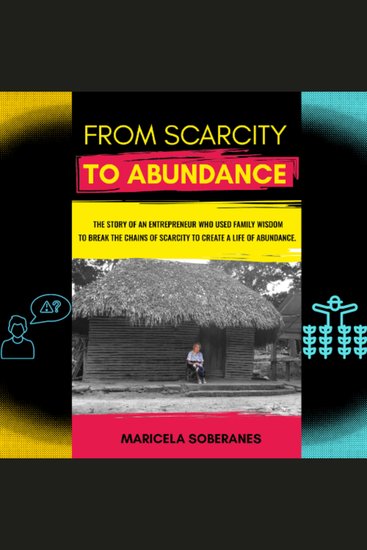
  • From scarcity to abundance - A story of an entrepreneur who used family wisdom to break the chains of scarcity to create a life of abundance - cover

    From scarcity to abundance - A...

    Maricela Soberanes

    • 0
    • 0
    • 0
    FROM SCARCITY TO ABUNDANCE 
    WHAT IF your limiting believes disappeared overnight? 
    WHAT IF there was no "victim syndrome' to hide behind? 
    WHAT IF you realize you are enough and deserving? 
    WHAT IF living life to the full potential was your only option? 
    WHAT IF you you assume one hundred percent ownership of your resources and your life? 
    With the tools provided in this book, you will feel empowered to take action and begin to write your own success story. 
    This book is written for those aspiring entrepreneurs chained to their "comfort zone" and tormented with self-imposed limiting believes. 
    This book is written through the eyes of a young girl as she witnesses her mother overcome poverty, physical abuse, scarcity of essential resources, and societal suppression. Based on true stories which took place over two decades, starting in the 1980s between Mexico City and the province of Mexico. The young girl was the fourth generation and destined to continue the cycle of scarcity. Through the mentorship, continued encouragement, and support received through her mother and grandmother, she escaped to a mindset of abundance. 
    The survivalist skills she developed and the life principles passed on from generation to generation are the only tools she inherits to break the chains that keep most people in similar situations tied to their "comfort zone." Now, as an adult, the young girl's lenses of innocence are removed. She abstracts the principles that helped her go from scarcity to abundance and shares them here to empower the readers to do the same. She calls them the Mastermind principles: the grouped principles of resilience, tenacity, accountability, visualization, and self-imposed responsibility. The author invites you to follow these principles to break away from any chains that keep you from living a life of abundance and holistic wealth. 
    ~Wealth is a state of mind. Maricela S.
    Ver livro
  • Philippine-American War The: The History and Legacy of the Rebellion against America’s Occupation of the Philippines - cover

    Philippine-American War The: The...

    Editors Charles River

    • 0
    • 0
    • 0
    On April 27, 1898 six American ships of the line, led by the Olympia with Commodore George Dewey aboard, headed toward Manila Bay. After several days of sailing over the South China Sea, Dewey hoped to sail past the Spanish fort at Corregidor to arrive at Manila without detection, and sailed without lights in order to do so. He made it into the bay, where the naval battle with the Spanish South Pacific Squadron began in the wee hours of May 1, 1898. Dewey was a student of the Mahanian school of naval strategy, so called for the aggressive Alfred T. Mahan, a top naval strategist and President of the Naval War College. As such, he concentrated his efforts on the offensive, preferring to meet the Spanish fleet on his own terms and to avoid, if it all possible fire from land-based batteries that lined Manila Bay. He refused to engage the batteries on land, sailing straight past the firing batteries and toward the Spanish fleet. Dewey issued his most famous command just before 6:00 that morning, “You may fire when ready, Gridley!”  
    The leader of an 1896 insurgency against the Spanish, Emilio Aguinaldo y Famy, had left the Philippines in an agreement following Spanish promises of reform that never materialized. As a recognized Filipino leader, he was brought to Manila by an American ship within days of the American victory at Manila, but the events that followed were to prove controversial and lead to U.S. control of the Philippines, along with a revolution of the Filipino people that would prove to be far longer and more costly than the Spanish-American war itself. The Philippines had no meaningful connection to Cuba except as a Spanish colony, and Spanish forces in the islands were no threat to the U.S. Pacific coast, but the island chain appeared to offer a convenient location for a naval base in an age when warships were coal-powered and needed coaling bases. 
    Ver livro
  • Henry David Thoreau - A Very Short Introduction - cover

    Henry David Thoreau - A Very...

    Lawrence Buell

    • 0
    • 0
    • 0
    Henry David Thoreau was a leading figure in the American Transcendentalist movement and the era of US literary emergence, an intellectual with worldwide influence as essayist, social thinker, naturalist-environmentalist, and sage. Thoreau's Walden, an autobiographical narrative of his two-year sojourn in a self-built lakeside cabin, is one of the most widely studied works of American literature. It has generated scores of literary imitations and experiments in back-to-basics living. Thoreau's essay, "Civil Disobedience," is a classic of American political activism and a model for nonviolent reform movements. Thoreau also stands as an icon of modern American environmentalism, the father of American nature writing, a forerunner of modern ecology, and a harbinger of freelance spirituality. 


    Thoreau is also a controversial figure. He was an advocate for individual self-sufficiency who never broke away from home, a self-professed mystic now also acclaimed as a pioneer natural and applied scientist, and a seminal theorist of nonviolent protest who defended the most notorious guerrilla fighter of his day. All told, he remains a rather enigmatic figure both despite and because we know so much about him. Lawrence Buell gives due consideration to all these aspects of Thoreau's art and thought, framing key issues and complexities in historical and literary context.
    Ver livro