Junte-se a nós em uma viagem ao mundo dos livros!
Adicionar este livro à prateleira
Grey
Deixe um novo comentário Default profile 50px
Grey
Assine para ler o livro completo ou leia as primeiras páginas de graça!
All characters reduced
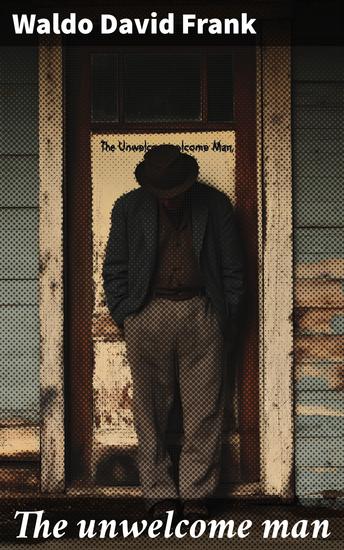
The unwelcome man - A novel - cover
LER

The unwelcome man - A novel

Waldo David Frank

Editora: Good Press

  • 0
  • 0
  • 0

Sinopse

In "The Unwelcome Man," Waldo David Frank explores the intricate dynamics of alienation and identity within the context of early 20th-century American society. Through a masterful blend of lyrical prose and poignant characterizations, Frank crafts a narrative that critiques the prevailing social norms of his time. The novel delves into the psyche of its protagonist, a man marginalized by societal expectations, ultimately examining the broader implications of individualism versus conformity. Frank's use of stream-of-consciousness techniques echoes modernist literary styles, creating a deeply immersive reading experience that reflects the turbulent cultural shifts of his era. Waldo David Frank was a prominent American author and social activist, known for his deep engagement with themes of culture, identity, and the human condition. His experiences as an immigrant and his observations of the American socio-political landscape informed much of his work. Drawing from personal interactions and a keen sense of cultural critique, Frank's writing often seeks to understand the complexities of belonging and exclusion, making "The Unwelcome Man" a significant reflection of his worldview. This book is a compelling read for those interested in modernist literature and the existential dilemmas faced by individuals in a rapidly changing world. Frank's insightful portrayal of his protagonist's struggles speaks to universal themes of acceptance and the innate desire for connection, making it a valuable addition to any literary collection.
Disponível desde: 02/03/2025.
Comprimento de impressão: 200 páginas.
Outros livros que poderiam interessá-lo

  • Paiute Passage (Stonecroft Saga Book 11) - A Historical Western Novel - cover

    Paiute Passage (Stonecroft Saga...

    B.N. Rundell

    • 0
    • 0
    • 0
    BLOOD WOULD BE SPILT, LIVES CHANGED AND DECISIONS MADE. 
    When the Salish War Leader, Spotted Eagle appeared in the clearing before their cabin, life-long friends Gabe and Ezra weren’t sure what to think. This man had shown himself to be their friend, and now he invited them to join him and the village on a buffalo hunt. With winter just around the corner, it seemed the likely thing to do, but had they known what the journey would bring, they might have had second thoughts… 
    Gabe and Ezra’s discovery of the massacre of the Paiute village, and the three survivors that told the story, was just the beginning of the fight against the warring Waiilatpus. When the band of raiders also attacked the Salish and fled, it was up to Gabe and Ezra to seek some vengeance and recapture the stolen girls. 
    A pursuit across the lava beds of the Snake River plains, a fight in the dead of night, a thundering stampede of buffalo, and a horde of bugs that shrouded the entire valley, were just the added complications to a simple buffalo hunt, or perhaps more. The unorthodox ways of the two non-native men would earn Gabe more scars, Ezra a new name, the lasting friendship of the Paiute, and the gratefulness of the Salish.
    Ver livro
  • A Profitable Weakness - From their pens to your ears genius in every story - cover

    A Profitable Weakness - From...

    George Gissing

    • 0
    • 0
    • 0
    George Robert Gissing was born on November 22nd, 1857 in Wakefield, Yorkshire.  
    He was educated at Back Lane School in Wakefield. Gissing loved school. He was enthusiastic with a thirst for learning and always diligent.  By the age of ten he was reading Dickens, a lifelong hero. 
    In 1872 Gissing won a scholarship to Owens College. Whilst there Gissing worked hard but remained solitary. Unfortunately, he had run short of funds and stole from his fellow students. He was arrested, prosecuted, found guilty, expelled and sentenced to a month's hard labour in 1876. 
    On release he decided to start over.  In September 1876 he travelled to the United States. Here he wrote short stories for the Chicago Tribune and other newspapers. On his return home he was ready for novels. 
    Gissing self-published his first novel but it failed to sell.  His second was acquired but never published. His writing career was static.  Something had to change.  And it did. 
    By 1884 The Unclassed was published.  Now everything he wrote was published. Both Isabel Clarendon and Demos appeared in 1886. He mined the lives of the working class as diligently as any capitalist. 
    In 1889 Gissing used the proceeds from the sale of The Nether World to go to Italy. This trip formed the basis for his 1890 work The Emancipated. 
    Gissing's works began to command higher payments. New Grub Street (1891) brought a fee of £250.  
    Short stories followed and in 1895, three novellas were published; Eve's Ransom, The Paying Guest and Sleeping Fires. Gissing was careful to keep up with the changing attitudes of his audience.  
    Unfortunately, he was also diagnosed as suffering from emphysema. The last years of his life were spent as a semi-invalid in France but he continued to write. 1899; The Crown of Life. Our Friend the Charlatan appeared in 1901, followed two years later by The Private Papers of Henry Ryecroft. 
    George Robert Gissing died aged 46 on December 28th, 1903 after catching a chill on a winter walk.
    Ver livro
  • Men Without Women - cover

    Men Without Women

    Ernest Hemingway

    • 0
    • 0
    • 0
    Experience the poignant brilliance of Ernest Hemingway's Men Without Women, a masterful collection of short stories exploring the complexities of masculinity, isolation, and emotional resilience. These narratives capture lives defined by longing, courage, and the aching void of love lost or unattained. 
    This collection includes some of Hemingway’s finest work, each story a gem of his minimalist style and sharp emotional insight:The UndefeatedIn Another CountryHills Like White ElephantsThe KillersChe Ti Dice La Patria?Fifty GrandA Simple EnquiryTen IndiansA Canary for OneAn Alpine IdyllA Pursuit RaceToday Is FridayBanal StoryNow I Lay Me 
    Each story invites listeners into a world of raw emotion, deep introspection, and Hemingway's timeless prose. From the tension of bullfighting arenas to the quiet pain of human disconnection, Men Without Women resonates with themes of love, loss, and the indomitable spirit. 
    This audiobook brings these classic tales to life, making it an essential addition to any literary enthusiast’s collection.
    Ver livro
  • Mr Britling Sees It Through (Unabridged) - cover

    Mr Britling Sees It Through...

    H. G. Wells

    • 0
    • 0
    • 0
    Mr. Britling Sees It Through is H.G. Wells's "masterpiece of the wartime experience in south eastern England." The novel was published in September 1916.
    Mr. Britling Sees It Through tells the story of a renowned writer, Mr. Britling, a protagonist who is quite evidently an alter ego of the author. The garrulous, easy-going Mr. Britling lives with family and friends in the fictional village of Matching's Easy, located in the county of Essex, northeast of London. The novel is divided into three parts. Book the First, entitled "Matching's Easy At Ease," is set in June-July 1914 and is at first narrated from the point of view of an American, Mr. Direck, who visits Mr. Britling's establishment in Dower House and falls in love with Cissie, the sister of Mr. Britling's secretary's wife. Also in the company are Mr. Britling's son Hugh and a visiting German student, Herr Heinrich, who is forced to leave when war breaks out. Book the Second, "Matching's Easy at War," covers August 1914 to October 1915, when Mr. Britling's son Hugh is killed at the front. In Book the Third, "The Testament of Matching's Easy," Mr. Britling learns that Herr Heinrich has also been killed, and writes a long letter to the dead German soldier's parents.
    Ver livro
  • Concerning the American Language - From their pens to your ears genius in every story - cover

    Concerning the American Language...

    Mark Twain

    • 0
    • 0
    • 0
    Samuel Langhorne Clemens was born in Florida, Missouri on the 30th November 1835 and is far better known by his pen name of Mark Twain.  An American writer and humorist of the first order he is perhaps best known for his novels ‘The Adventures of Tom Sawyer’ and its sequel ‘The Adventures of Huckleberry Finn’ which are often described with that mythic line The Great American Novel. 
    Twain grew up in Hannibal, Missouri which would later provide the backdrop to these great novels.  Apprenticed to a printer he also became a typesetter and then a master riverboat pilot on the Mississippi.  Later, heading west with his brother Orion to make his fortune, he failed at gold mining and instead turned to journalism and thence his true calling as a writer of humorous stories where his wit and humor sparkled from every paragraph, his craft evident with every page and punctured target. 
    A staunch supporter of copyright protections this helped him keep much of the wealth his writing created, though much money was also lost on investments that he pursued in his love for science and technology as well as investing in his own inventions. 
    Twain was born during a visit by Halley’s comet, and he predicted that he would go out with it as well.  He died the day after its subsequent return on 21st April 1910, at his house, Stormfield, located in Redding, Connecticut.
    Ver livro
  • After the Funeral - From their pens to your ears genius in every story - cover

    After the Funeral - From their...

    Mary Butts

    • 0
    • 0
    • 0
    Mary Frances Butts was born on 13th December 1890 in Poole, Dorset. 
    Her early years were spent at Salterns, an 18th-century house overlooking Poole Harbour.  Sadly in 1905 her father died, and she was sent for boarding at St Leonard's school for girls in St Andrews. 
    Her mother remarried and, from 1909, Mary studied at Westfield College in London, and here, first became aware of her bisexual feelings.  She was sent down for organising a trip to Epsom races and only completed her degree in 1914 when she graduated from the London School of Economics.  By then Mary had become an admirer of the occultist Aleister Crowley and she was given a co-authorship credit on his ‘Magick (Book 4)’. 
    In 1916, she began the diary which would now detail her future life and be a constant reference point for her observations and her absorbing experiences. 
    During World War I, she was doing social work for the London County Council in Hackney Wick, and involved in a lesbian relationship.  Life changed after meeting the modernist poet, John Rodker and they married in 1918. 
    In 1921 she spent 3 months at Aleister Crowley's Abbey of Thelema in Sicily; she found the practices dreadful and also acquired a drug habit.  Mary now spent time writing in Dorset, including her celebrated book of short stories ‘Speed the Plough’ which saw fully develop her unique Modernist prose style. 
    Europe now beckoned and several years were spent in Paris befriending many artists and writing further extraordinary stories.   
    She was continually sought after by literary magazines and also published several short story collections as books. Although a Modernist writer she worked in other genres but is essentially only known for her short stories.  Mary was deeply committed to nature conservation and wrote several pamphlets attacking the growing pollution of the countryside. 
    In 1927, she divorced and the following year her novel ‘Armed with Madness’ was published.  A further marriage followed in 1930 and time was spent attempting to settle in London and Newcastle before setting up home on the western tip of Cornwall.  By 1934 the marriage had failed. 
    Mary Butts died on 5th March 1937, at the West Cornwall Hospital, Penzance, after an operation for a perforated gastric ulcer. She was 46.
    Ver livro