Junte-se a nós em uma viagem ao mundo dos livros!
Adicionar este livro à prateleira
Grey
Deixe um novo comentário Default profile 50px
Grey
Assine para ler o livro completo ou leia as primeiras páginas de graça!
All characters reduced
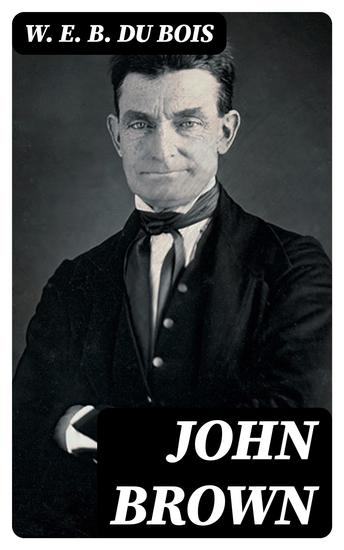
John Brown - cover
LER

John Brown

W. E. B. Du Bois

Editora: DigiCat

  • 0
  • 0
  • 0

Sinopse

In "John Brown," W. E. B. Du Bois presents a compelling biography that merges historical narrative with philosophical introspection. The text delves into the life of the fierce abolitionist John Brown, situating his radical actions against the backdrop of America's tumultuous struggle over slavery. Du Bois employs a lyrical style, interweaving vivid descriptions with profound reflections on morality, justice, and the complexities of race in America. Written during a period when the American socio-political landscape was fraught with racial tensions, the work serves both as a tribute to Brown's revolutionary spirit and a critique of the inadequacies of his contemporaries. W. E. B. Du Bois, a prominent sociologist and civil rights activist, was profoundly influenced by his own experiences of racism and his relentless quest for racial equity. His scholarly background, particularly in social sciences, informed his exploration of Brown's unwavering commitment to abolition. Du Bois's engagement with historical figures like Brown reflects not only his admiration for their sacrifices but also his belief that profound change often arises from radical action. I highly recommend "John Brown" to readers seeking an insightful exploration of one of America's most controversial figures in the fight against slavery. Du Bois's masterful narrative not only provides historical context but also invites reflection on the enduring themes of justice and morality in contemporary society.
Disponível desde: 21/07/2022.
Comprimento de impressão: 254 páginas.

Outros livros que poderiam interessá-lo

  • The Prince and the Pauper - cover

    The Prince and the Pauper

    Mark Twain

    • 0
    • 0
    • 0
    The Prince and the Pauper is a novel by American author Mark Twain. It was first published in 1881 in Canada, before its 1882 publication in the United States. The novel represents Twain's first attempt at historical fiction. Set in 1547, it tells the story of two young boys who were born on the same day and are identical in appearance: Tom Canty, a pauper who lives with his abusive, alcoholic father in Offal Court off Pudding Lane in London, and Edward VI of England, son of Henry VIII of England.
    Ver livro
  • Ely Samuel Parker: The Life and Legacy of the Seneca Grand Chief Who Fought in the Civil War and Became Commissioner of Indian Affairs - cover

    Ely Samuel Parker: The Life and...

    Editors Charles River

    • 0
    • 0
    • 0
    Despite their own cultural differences, the nations that comprised the Iroquois Confederacy established their political dominance across much of America’s East Coast and Midwest through conquest, and it is that aspect which has perhaps best endured among Americans in terms of the Iroquois’ legacy. European settlers who came into contact with the Mohawks in the Northeast certainly learned to respect their combat skills, to the point that there were literally bounties on the Mohawks’ heads, with scalps fetching money for colonists who succeeded in slaying them and carrying away the “battle prize”. 
    	One of the best known of the six nations is the Seneca, and arguably the most famous Seneca chief was Ely Samuel Parker. Over the course of his life, he was a Seneca chief, a civil engineer, a close friend and adjutant to General Ulysses S. Grant, an advocate for the Indian peoples, and the first Native American Commissioner of the Department of Indian Affairs. His marriage to a much younger socialite scandalized Washington, and he made a fortune on Wall Street and lost it all. He ended his life in genteel poverty, working for nearly 20 years in an obscure position for the New York City Police Department.  
    Parker was a largely self-taught engineer, who worked on various canal projects, and was hired by the Department of the Treasury to supervise the construction of several buildings in Galena, Illinois, where he met a shy salesclerk named Ulysses S. Grant. At the age of 18, he dined with President Polk, later talked with President Lincoln, and had the commanding general of the U.S. Army as the best man at his wedding. He was the principal source for the first serious ethnological work by one of the first American ethnologists, who dedicated the book to Parker. He was a plaintiff before the U.S. Supreme Court when he was in his teens and was so important in the Seneca’s struggle to retain their Tonawanda reservation that he was made grand sachem.
    Ver livro
  • Arch Rascal An - From their pens to your ears genius in every story - cover

    Arch Rascal An - From their pens...

    Knut Hamsun

    • 0
    • 0
    • 0
    Knud Pedersen was born in Lom in the Gudbrandsdal valley of Norway on the 4th of August, 1859 in what was then the United Kingdoms of Sweden and Norway.  He was the fourth son of seven children born to poor parents who, when he was three, were invited to an uncle’s farm to work his land. 
    When he was nine he moved away from his family to help another uncle who ran a post office.  Whilst with him he was beaten and starved which manifested in a series of chronic nervous difficulties.  The treatment endured for six years until he managed to escape back to Lom. 
    For some time he now took any job that was available to him, including store clerk, peddler, shoemaker's apprentice, sheriff's assistant, elementary-school teacher and ropemaker's apprentice.  At about the same time, with the wealth of these gained experiences, he began to explore his literary talents. 
    In 1877 he published his first book ‘The Enigmatic Man: A Love Story from Northern Norway’, others soon followed but real success only came in 1890 with ‘Hunger’, an influential work for later novelists with its internal monologue and bizarre logic.  His work is often associated with Pantheism; where nature and mankind are unified in a strong and often mystical bond.   
    His work was so influential that in 1920 he was awarded the Novel Prize for Literature. 
    Shortly after this point his works became fewer and his interests darker.  During World War II he became a fervent admirer of the Nazi’s, even meeting Hitler, even though German armies had overrun Norway.  With the war’s end he was detained on charges of treason.  His old age was apparently the primary reason given for Hamsun receiving only a fine.  Other reasons also sought to excuse his abhorrent behaviour but it was clear that whilst he was loved for his literature he was detested for his politics and morals. 
    His literary canon includes more than 20 novels, a poetry collection, short stories, plays, a travelogue, other works of non-fiction and essays. 
    Knut Hamsun died on the 19th February 1952 in Grimstad. He was 92.
    Ver livro
  • Angels Don't Cry - Autobiography of an Extraterrestrial Part 2 - cover

    Angels Don't Cry - Autobiography...

    Omnec Onec

    • 0
    • 0
    • 0
    Autobiography of an Extraterrestrial: Experiences and Mastership of Unconditional Love lived on Earth Angels Dont Cry is the stunning sequel to Omnec Onecs autobiography FROM VENUS I CAME. This book is about the earthly life of the Venusian, who came to Earth from the astral Venus as a child and who grew up in the USA. Difficult family circumstances, constant changes of location and a spiritually unawakened environment presented very challenging conditions for the conscious child from Venus. The telepathic and sometimes physical contact with her friends and relatives from Venus as well as the awareness of her mission gave Omnec the strength to endure this life and to master it in love. Further rays of hope were her encounters with Indians, who recognized in her the prophesied Great White Hope, and in later years the re-encounter with her spiritual teachings through Paul Twitchell, who recognized her from an astral journey to Venus. Slowly, Omnecs way to the public was paved and the fulfillment of her mission as an Ambassador of Venus took hold with the publication of her life story by Lt. Col. Ret. Wendelle C. Stevens.The title, Angels Dont Cry, comes from a childhood anecdote.
    Ver livro
  • Daughter of the Dragon - Anna May Wong's Rendezvous with American History - cover

    Daughter of the Dragon - Anna...

    Yunte Huang

    • 0
    • 0
    • 0
    A trenchant reclamation of the Chinese American movie star, whose battles against cinematic exploitation and endemic racism are set against the currents of twentieth-century history. 


    Born into the steam and starch of a Chinese laundry, Anna May Wong (1905–1961) emerged from turn-of-the-century Los Angeles to become Old Hollywood's most famous Chinese American actress, a screen siren who captivated global audiences and signed her publicity photos—with a touch of defiance—"Orientally yours." Now, more than a century after her birth, Yunte Huang narrates Wong's tragic life story, retracing her journey from Chinatown to silent-era Hollywood, and from Weimar Berlin to decadent, prewar Shanghai, and capturing American television in its infancy. As Huang shows, Wong's rendezvous with history features a remarkable parade of characters, including a smitten Walter Benjamin and (an equally smitten) Marlene Dietrich. Challenging the parodically racist perceptions of Wong as a "Dragon Lady," "Madame Butterfly," or "China Doll," Huang's biography becomes a truly resonant work of history that reflects the raging anti-Chinese xenophobia, unabashed sexism, and ageism toward women that defined both Hollywood and America in Wong's all-too-brief fifty-six years on earth.
    Ver livro
  • I Once Was Lost - My Search for God in America - cover

    I Once Was Lost - My Search for...

    Don Lemon

    • 0
    • 0
    • 0
    In a deeply personal follow-up to his #1 bestseller This is the Fire: What I Say to My Friends about Racism, a modern media iconoclast faces a test of faith—and reveals how such tribulations can make us stronger, as individuals and as a nation. Renowned journalist Don Lemon always had a complicated relationship with God. He cherished the Southern Black church he was raised in, but struggled with the fundamentalist rejection of his right to exist as a gay man—one who wanted to marry his longtime love in a church wedding with all the traditional trimmings. In his work as a reporter, moreover, he saw his fellow Americans losing faith in a higher power, in institutions, and in each other.   Setting out to understand the place that religion has in our lives today, Don turned a journalistic eye on ancient stories and found connections that sparked memories, conversations, and chance encounters. Then, suddenly, his world unraveled: In a blaze of inglorious headlines, Don was ousted from his high-profile network news job and tasked with redefining his role in the shifting media landscape. But through a year of personal changes and professional whiplash, he kept his “eyes on the prize” and ultimately found what he was seeking: grace, within himself and in this nation we call home. Rich with humor and Louisiana realness, I Once Was Lost is a prayer for a country that reflects the multifaceted image of God and a clarion call to those who believe in our common humanity enough to fight for it.
    Ver livro