Unisciti a noi in un viaggio nel mondo dei libri!
Aggiungi questo libro allo scaffale
Grey
Scrivi un nuovo commento Default profile 50px
Grey
Iscriviti per leggere l'intero libro o leggi le prime pagine gratuitamente!
All characters reduced
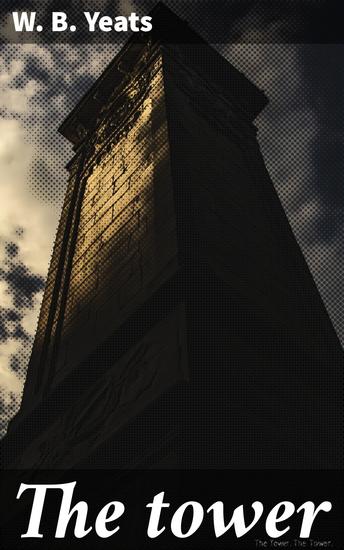
The tower - cover

The tower

W. B. Yeats

Casa editrice: Good Press

  • 0
  • 0
  • 0

Sinossi

W. B. Yeats's "The Tower" stands as a monumental collection of poems that intricately blend personal reflection with universal themes. Crafted in the wake of Yeats's aging and the tumultuous sociopolitical landscape of early 20th-century Ireland, the poems explore motifs of love, loss, and the passage of time. The volume showcases Yeats's mastery of varied forms, from traditional verse to more experimental techniques, reflecting his evolution as a poet influenced by symbolism and mysticism. Thematically rich, the collection often grapples with the tension between the idealized past and the stark realities of the present. W. B. Yeats, a pivotal figure in the Irish literary revival, was deeply influenced by both his Irish heritage and philosophical inquiries. His personal experiences, including spiritual explorations and complexities in relationships, provided fertile ground for the introspective and at times melancholic tone of "The Tower." As his life progressed, Yeats became increasingly preoccupied with themes of mortality and the cyclical nature of existence, ultimately shaping this profound work that resonates with enduring human concerns. For readers drawn to poetry that combines lyrical beauty with deep philosophical contemplation, "The Tower" is an essential read. It invites one to traverse the intricate landscapes of Yeats's thought, as he articulates the essence of his life's journey through a stunning tapestry of language. This collection is a profound testament not only to Yeats's genius but to the broader human experience of grappling with time and identity.
Disponibile da: 02/03/2025.
Lunghezza di stampa: 190 pagine.
Altri libri che potrebbero interessarti

  • Backstroke - cover

    Backstroke

    Anna Mackmin

    • 0
    • 0
    • 0
    'Just let go. Let your body float. You'll still be here but it'll feel like flying in a dream.'
    Bo is busy – balancing the pressures of work and the needs of her struggling daughter. When her mother, the irrepressible force-of-nature Beth, is admitted to hospital following a stroke, the practical realities of the present collide with the complexities of their past.
    Backstroke is a kaleidoscopic and compassionate play, first performed at the Donmar Warehouse, London, in 2025. It was written and directed by Anna Mackmin, with Celia Imrie and Tamsin Greig playing mother and daughter.
    Mostra libro
  • failure project - cover

    failure project

    Yolanda Mercy

    • 0
    • 0
    • 0
    'Cause when you win, we all win. So you have to keep "winning". Even if you feel like you're losing losing yourself'
    Ade is a successful writer, or so it seems. She has everything she ever wanted: her career is flying, she's (kinda) moved out of her mum's house, and her situationship isn't as complicated as she expected. Her life should be perfect! But things don't always go to plan, as Ade is about to find out…
    failure project is a warm and witty one-person play exploring grief, the strings attached to success, and what it means to 'fail'.
    Written and performed by Yolanda Mercy, it premiered at Summerhall as part of the Edinburgh Festival Fringe in 2024, co-directed with Joseph Barnes-Phillips. It won the Solo Award at the Besties awarded by The Skinny and Fest magazine.
    Mostra libro
  • The Poetry of Samuel Taylor Coleridge - Hugely influential co-founder of the Romantic movement in England - cover

    The Poetry of Samuel Taylor...

    Samuel Taylor Coleridge

    • 0
    • 0
    • 0
    Samuel Taylor Coleridge was born on October 21st, 1772 in Ottery St Mary in Devon. 
    As a child he was an early and devoted reader and, after being schooled at Christ's Hospital, a charity school, he attended, from 1791, Jesus College, Cambridge and the following year won the Browne Gold Medal for an ode on the slave trade. 
    He was great friends with the poet Robert Southey, indeed they formed a plan, soon abandoned, in 1795, to found a utopian commune-like society, called Pantisocracy, in the wilds of Pennsylvania. But the same year the two friends married sisters Sarah and Edith Fricker and, of course, went on to be part of the Lake Poets movement along with Wordsworth. 
    In 1798, Coleridge and Wordsworth published a joint volume of poetry, Lyrical Ballads, which proved to be the starting point for the English romantic age. 
    In the autumn he and Wordsworth left for a stay in Germany; Coleridge soon went his own way immersing himself in both German philosophy and the language, which later proved invaluable for his translations. 
    In 1800, he returned to England and settled with his family at Keswick in the Lake District, near to where Wordsworth had moved. Soon, however, he was beset by marital problems, illnesses, a growing opium dependency, tensions with Wordsworth, and a lack of confidence in his poetic powers, all of which fuelled the composition of Dejection: An Ode and an intensification of his philosophical studies. He abandoned his family to Southey's care and departed on new travels. 
    Between 1810 and 1820, this "giant among dwarfs", as he was often considered, gave a series of lectures in London and Bristol. Much of Coleridge's reputation as a literary critic is founded on the lectures from the winter of 1810–11 a series on Shakespeare and Milton. Although he rarely prepared anything other than loose notes and was inclined to digress, these lectures were a huge literary event and success. 
    By this time Coleridge was dependent on opium and by 1817 his solution was to live in Highgate under the watchful eye of physician James Gillman where his dependency was somewhat controlled and his output of work could continue.  These included his 23 volume Biographia Literaria, Sibylline Leaves (1817), Aids to Reflection (1825), and Church and State (1826). 
    He died in Highgate, London on 25 July 1834 as a result of heart failure and a lung disorder together with the long term effects of opium. 
    This volume comes to you from Portable Poetry, a specialized imprint from Deadtree Publishing.  Our range is large and growing and covers single poets, themes, and many compilations.
    Mostra libro
  • The Eclogues and Georgics - cover

    The Eclogues and Georgics

    Virgil

    • 0
    • 0
    • 0
    Though it is for the sparkling epic, Aeneid, that the Roman poet Virgil is best known, it was these two poems, The Eclogues and Georgics, which first established his reputation.  Cast in the tradition of pastoral poetry, The Eclogues were written between 41 BCE and 37 BCE when Virgil (Publius Vergilius Maro, to give him his full name) was in his thirties. The Eclogues (the word means ‘Selections’ in Greek) contain 10 poems, a combination of dialogues and monologues. They drew on the ‘bucolic’ (rural) style of the ancient Greek poet Theocritus (c 300BCE-c 260 BCE), but Virgil weaves many references to contemporary Roman events. Though The Eclogues have perhaps existed in the shadow of Georgics, they have been highly regarded and studied by academics and poets down the centuries. They are presented here in the 20th century translation by the British poet R. C. Trevelyan, and read in multi-voice format as they were originally written, with clearly delineated characters bringing the content to life with verve and temperament. 
    Though also pastoral in nature, Georgics is very different in style. Published in 29 BCE, the main subject is agriculture (the title reflects the Greek word ‘georgika’, agricultural things), and vigorously promotes traditional means of farming. Again, Virgil weaves into his verse cultural and political themes. Cast in four Books, the dynamic expression draws on numerous Classical, mythical and contemporary references, while explaining the best methods for ploughing, animal husbandry, observing weather patterns, the life of bees and the like. Increasingly, the rise and fall of man’s endeavours can be reflected in the vicissitudes of agricultural life. The 20th century translation of Georgics used on this recording is by the highly respected translator of Latin poetry, Smith Palmer Bovie. It is read by Jamie Parker. Closer study of both works while listening is possible through the complete texts that come with the recording. 
     
    PLEASE NOTE: When you purchase this title, the accompanying PDF will be available in your Audible Library along with the audio.
    Mostra libro
  • Runaway Dreams - cover

    Runaway Dreams

    Richard Wagamese

    • 0
    • 0
    • 0
    Having developed an impressive reputation for his many novels and non-fiction works, Richard Wagamese now presents a collection of stunning poems ranging over a broad landscape. He begins with an immersion in the unforgettable world where “the ancient ones stand at your shoulder … making you a circle / containing everything.” 
    These are Medicine teachings told from the experience of one who lived and still lives them. He also describes his life on the road when he repeatedly ran away at an early age, and the beatings he received when the authorities tried “to beat the Indian right out of me.” Yet even in the most desperate situations, Wagamese shows us Canada as seen through the eyes and soul of a well-worn traveller, with his love of country, his love of people. Through it all, there are poems of love and music, the language sensuous and tender.
    		 
    Bespeak Audio Editions brings Canadian voices to the world with audiobook editions of some of the country’s greatest works of literature, performed by Canadian actors.
    Mostra libro
  • Whaling Town - Poems - cover

    Whaling Town - Poems

    David Parker Allen

    • 0
    • 0
    • 0
    This is a place you never hear about in America... 
    A unique American collection of poetry, Whaling Town explores the rough work of self-realization and the roots that anchor us to the unsteady ground of our past.  
    Facing a turning point in his life, David Parker Allen began traversing the landscape of the United States, researching and writing music and assembling the bones of a collection of poetry. His journey led him through a personal family immigrant story in New Bedford, Massachusetts—the whaling town Melville made famous—to small communities across the Mississippi Delta and deep South, Gulf Coast, and Mountain West, as well as the streets of Chicago and New York. Jumping from rural America to urban hubs and back, Whaling Town tells a story of place and people in a gritty world that’s both in and out of our control. 
    With clear-eyed observations and gentle musicality, Allen takes stock of the burden of our collective history and looks directly into passing storms that we each must face alone. When the skies clear, how do we come to terms with self and our place in this world, and what do we build from the wreckage?
    Mostra libro