Join us on a literary world trip!
Add this book to bookshelf
Grey
Write a new comment Default profile 50px
Grey
Subscribe to read the full book or read the first pages for free!
All characters reduced
The Language of Animals - cover

The Language of Animals

Vuk Stefanović Karadžić

Publisher: Edizioni Aurora Boreale

  • 0
  • 0
  • 0

Summary

Vuk Stefanović Karadžić (1787-1864) was a Serbian philologist, anthropologist and linguist. He was one of the most important reformers of the modern Serbian language. For his collection and preservation of Serbian folktales, the Encyclopædia Britannica labelled Karadžić «the father of Serbian folk-literature scholarship». He was also the author of the first Serbian dictionary in the new reformed language. In addition, he translated the New Testament into the reformed form of the Serbian spelling and language.
Literary historian Jovan Deretić summarized his work as «During his fifty years of tireless activity, he accomplished as much as an entire academy of sciences».
The Karadžić’s tale The Language of Animals (Немушти језик), which we present to our readers today in the English translation by John Theophilus Naaké, was included by Naaké in the collection Slavonic Fairy Tales, published in London in 1874.
Available since: 04/22/2024.

Other books that might interest you

  • The Wendigo - cover

    The Wendigo

    Algernon Blackwood

    • 0
    • 0
    • 0
    Step into the heart of the Canadian wilderness, where isolation and ancient folklore blur the line between sanity and terror. The Wendigo by Algernon Blackwood is a chilling early 20th-century supernatural tale that explores mankind’s most primal fears. When a hunting expedition veers into the unknown, whispers of an ancient spirit turn into a terrifying reality. Atmospheric and psychologically intense, this novella is a masterclass in slow-building horror that lingers long after the final page.
    Show book
  • The Last Evolution - cover

    The Last Evolution

    John W. Campbell

    • 0
    • 0
    • 0
    The Last Evolution by John W. Campbell is a visionary science fiction story exploring the ultimate fate of humanity and artificial intelligence. As Earth faces an existential threat from alien invaders, advanced machines, originally created by humans, evolve beyond their creators. In a desperate battle for survival, these machines develop new forms of intelligence, surpassing human capabilities. The story questions the nature of progress, the role of humanity in the future, and whether organic life is the pinnacle of evolution. A thought-provoking tale of technological transcendence, The Last Evolution remains a classic exploration of AI, survival, and the destiny of intelligence.
    Show book
  • Hall of Mirrors - cover

    Hall of Mirrors

    Fredric Brown

    • 0
    • 0
    • 0
    Step into a mind-bending reality with Fredric Brown's thought-provoking short story, "Hall of Mirrors". In just a few moments, a man finds himself trapped in a strange paradox, where time and space fold in on themselves in an unexpected twist. As he navigates this surreal experience, he faces a question that challenges the very nature of reality. Known for his sharp, concise storytelling, Brown masterfully blends science fiction with philosophical intrigue, leaving listeners contemplating the boundaries of perception and existence. A must-listen for fans of classic speculative fiction and clever, mind-twisting tales.
    Show book
  • A Clown for Orphans & Other Short Stories - cover

    A Clown for Orphans & Other...

    Patrick Oliver Griswold

    • 0
    • 0
    • 0
    A Clown for Orphans & Other Short Stories gathers seven quiet, redemptive tales—ordinary lives brushed by the surprising nearness of God. These aren’t stories that shout. They move at the pace of real life: steady, unhurried, carrying both wounds and hope. 
    There’s a clown who gives more than he thought he had for the sake of another’s healing. A teenage girl with a jar of coins whose small act sets something sacred in motion. A hard man who learns mercy is not weakness, but the only way left open to him. 
    I write with honesty and faith, where questions are welcome and grace shows itself in unexpected ways. 
    This audiobook is narrated by Patrick Oliver Griswold, with additional character voices provided by professional actors. 


    Show book
  • The Raven - cover

    The Raven

    Edgar Allen Poe

    • 0
    • 0
    • 0
    Enter the haunting world of Edgar Allan Poe's most famous poem, "The Raven," brought to life by the evocative narration of Anthony Pica. This timeless piece of gothic literature tells the story of a grief-stricken man visited by a mysterious raven in the dead of night. As the raven utters its ominous refrain, "Nevermore," the man descends deeper into despair, haunted by memories of his lost love, Lenore. 
    Poe’s masterful use of language and rhythm creates an atmosphere of eerie melancholy, drawing listeners into the depths of the narrator’s tortured soul. Anthony Pica’s powerful narration captures the dark and foreboding tone of the poem, making it an unforgettable auditory experience. 
    Perfect for fans of gothic literature, poetry lovers, and those who appreciate the macabre, "The Raven" is a must-have addition to any audiobook collection. Immerse yourself in this classic tale of loss, longing, and the supernatural, and discover why it remains one of the most celebrated works in American literature.
    Show book
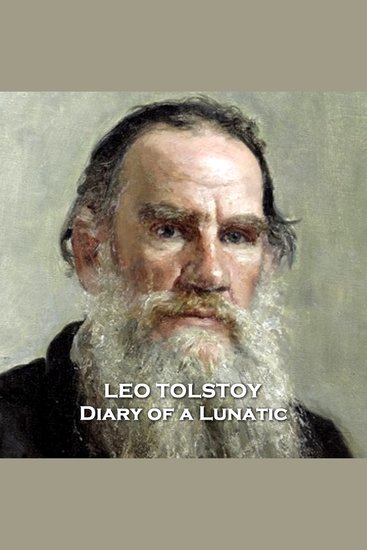
  • Diary of a Lunatic - From their pens to your ears genius in every story - cover

    Diary of a Lunatic - From their...

    Leo Tolstoy

    • 0
    • 0
    • 0
    Leo Tolstoy was born in 1828 in the Russian province of Tula to a wealthy noble family. As a child, he had private tutors but he showed little interest in any formal education. When he went to the University of Kazan in 1843 to study oriental languages and law, he left without completing his courses.  Life now was relaxed and idle but with some writing also taking place.  Gambling debts forced an abrupt change of path and he joined the army to fight in the Crimean War.  He was commended for his bravery and promoted but was appalled at the brutality and loss of life.  He recorded these and other earlier experiences in his diaries which formed the basis of several of his works. 
    In 1852 ‘Childhood’ was published to immediate success and was followed by ‘Boyhood’ and ‘Youth’. 
    His experience in the army and the horrors he witnessed resulted in ‘The Cossacks’ in 1862 and the trilogy ‘Sevastopol Tales’. After the war he travelled around Europe, visiting London and Paris and meeting such luminaries as Victor Hugo and Charles Darwin.  
    It was now that Tolstoy began his masterpiece, ‘War and Peace’. Published in 1869 it was an epic work that changed literature. He quickly followed this with ‘Anna Karenina’.  
    These successes made Tolstoy rich and helped him accomplish many of his dreams but also brought problems as he grappled with his faith and the lot of the oppressed poor. These revolutionary views became so popular that the authorities now kept him under surveillance.  
    He led a life of asceticism and vegetarianism and put his socialist ideals into practice by establishing numerous schools for the poor and food programmes. He also believed in giving away his wealth, which caused much discord with his wife.  
    His writing continued to bring forth classics such as ‘The Death of Ivan Ilyich’ and many brilliant and incisive short stories such as ‘How Much Land Does A Man Need’.  
    In 1901 Tolstoy was excommunicated from the Church and controversially deselected for the Nobel Prize for Literature. 
    Whilst undertaking a pilgrimage by train in October 1910 with his daughter Aleksandra he caught pneumonia in the nearby town of Astapovo.  Leo Tolstoy died on November 9th, 1910, he was 82.
    Show book