

¡Acompáñanos a viajar por el mundo de los libros!
Añadir este libro a la estantería
Grey
Escribe un nuevo comentario Default profile 50px
Grey
Suscríbete para leer el libro completo o lee las primeras páginas gratis.
All characters reduced
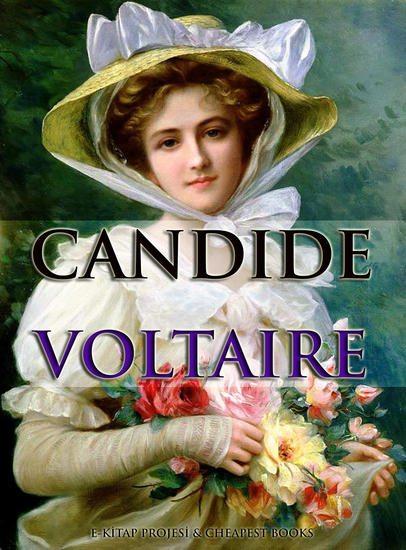
Candide - cover

Candide

Voltaire

Editorial: E-Kitap Projesi & Cheapest Books

  • 0
  • 0
  • 0

Sinopsis

Candide is characterised by its sarcastic tone, as well as by its erratic, fantastical and fast-moving plot. A picaresque novel with a story similar to that of a more serious bildungsroman, it parodies many adventure and romance clichés, the struggles of which are caricatured in a tone that is mordantly matter-of-fact. Still, the events discussed are often based on historical happenings, such as the Seven Years' War and the 1755 Lisbon earthquake.

As philosophers of Voltaire's day contended with the problem of evil, so too does Candide in this short novel, albeit more directly and humorously. Voltaire ridicules religion, theologians, governments, armies, philosophies, and philosophers through allegory; most conspicuously, he assaults Leibniz and his optimism.

Voltaire's men and women point his case against optimism by starting high and falling low. A modern could not go about it after this fashion. He would not plunge his people into an unfamiliar misery. He would just keep them in the misery they were born to.

But such an account of Voltaire's procedure is as misleading as the plaster cast of a dance. Look at his procedure again. Mademoiselle Cunégonde, the illustrious Westphalian, sprung from a family that could prove seventy-one quarterings, descends and descends until we find her earning her keep by washing dishes in the Propontis. The aged faithful attendant, victim of a hundred acts of rape by negro pirates, remembers that she is the daughter of a pope, and that in honor of her approaching marriage with a Prince of Massa-Carrara all Italy wrote sonnets of which not one was passable. We do not need to know French literature before Voltaire in order to feel, although the lurking parody may escape us, that he is poking fun at us and at himself. His laughter at his own methods grows more unmistakable at the last, when he caricatures them by casually assembling six fallen monarchs in an inn at Venice.

A modern assailant of optimism would arm himself with social pity. There is no social pity in "Candide." Voltaire, whose light touch on familiar institutions opens them and reveals their absurdity, likes to remind us that the slaughter and pillage and murder which Candide witnessed among the Bulgarians was perfectly regular, having been conducted according to the laws and usages of war.

Had Voltaire lived today he would have done to poverty what he did to war. Pitying the poor, he would have shown us poverty as a ridiculous anachronism, and both the ridicule and the pity would have expressed his indignation.
Disponible desde: 02/01/2024.
Longitud de impresión: 250 páginas.
Otros libros que te pueden interesar

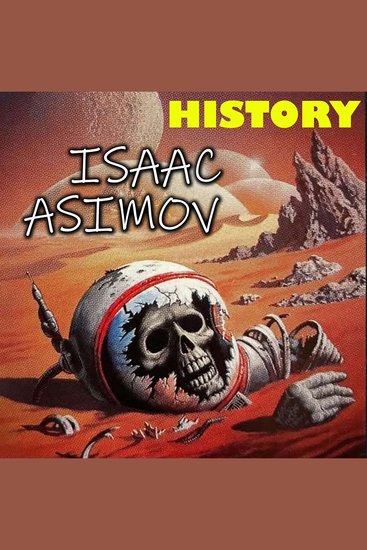
  • History - cover

    History

    Isaac Asimov

    • 0
    • 0
    • 0
    "History" is a science fiction short story by American writer Isaac Asimov. It was first published in the March 1941 issue of Super Science Stories and reprinted in the 1972 collection The Early Asimov.
    Ver libro
  • Political Ideals - cover

    Political Ideals

    Bertrand Russell

    • 0
    • 0
    • 0
    “Liberty demands self-government, but not the right to interfere with others.”“The object of education ought not to be to make all men think alike, but to make each think in the way which is the fullest expression of his own.”“You may kill an artist or a thinker, but you cannot acquire his art or his thought. You may put a man do death because he loves his fellow men, but you will not by so doing acquire the love which made his happiness.” ? Bertrand Russell, Political Ideals'Political Ideals' was written during the upheaval of World War One. It is, in many ways, a statement, of Russell's beliefs, a declaration of the ideas that influenced his thinking on the major events of the 20th century. In this sense, it is essential reading for every student of this great philosopher.
    Ver libro
  • Stories - cover

    Stories

    Anton Chekhov

    • 0
    • 0
    • 0
    Anton Pavlovich Chekhov (1860–1904) was a Russian playwright and short-story writer, who is considered to be among the greatest writers of short fiction in history. His career as a playwright produced four classics, and his best short stories are held in high esteem by writers and critics. Along with Henrik Ibsen and August Strindberg, Chekhov is often referred to as one of the three seminal figures in the birth of early modernism in the theatre.Chekhov practiced as a medical doctor throughout most of his literary career: "Medicine is my lawful wife", he once said, "and literature is my mistress."
    The following works were included in the collection of stories Chekhov Anton:  The Lady with the Dog, The Wife, A Slander, The Horse-Stealers, The Petchenyeg, A Dead Body, A Happy Ending, The Looking-Glass, Old Age, Darkness, The Beggar, In Trouble, Frost, Minds in Ferment, Gone Astray, An Avenger, The Jeune Premier, A Defenceless Creature, An Enigmatic Nature, A Happy Man, A Troublesome Visitor, An Actor's End.
    Ver libro
  • The Eidoloscope - Milnes incredible sci fi tale shows the power of his imagination as it soon after this went from scientific fiction to fact - cover

    The Eidoloscope - Milnes...

    Robert Duncan Milne

    • 0
    • 0
    • 0
    Robert Duncan Milne was born on 7th June 1844 in Cupar in Fife, Scotland. 
     
    Little is known of the life of this extraordinary author who created some of the most appealing science fiction stories ever written.   
     
    As an adult he lived in San Francisco and wrote short stories for local newspapers and periodicals of the time and principally for The Argonaut, the political and literary newspaper heavyweight of the area. 
     
    Robert Duncan Milne died in San Francisco, California on 15th December 1899.  He was 55. 
     
    The Eidoloscope is a story of a man’s pursuit to record and reveal past events as though they are happening right now before our very eyes.  Outlandish, yes. But possible?
    Ver libro
  • What Maisie Knew - cover

    What Maisie Knew

    Henry James

    • 0
    • 0
    • 0
    "What Maisie Knew" is a novel written by Henry James, first published in 1897. The story revolves around a young girl named Maisie Farange, whose parents, Beale and Ida Farange, go through a tumultuous divorce. The narrative explores the impact of the divorce on Maisie's life and her relationships with the adults around her.
    Ver libro
  • Pride and Prejudice - cover

    Pride and Prejudice

    Jane Austen

    • 0
    • 0
    • 0
    Step into a world where wit is sharp, glances speak volumes, and the dance of manners conceals deeper truths. Pride and Prejudice isn't just a novel—it's a perfectly tuned social symphony composed by one of literature's most insightful observers, Jane Austen.
    This timeless classic captures the tension between pride and vulnerability, societal expectation and personal desire, all through language as elegant as the world it critiques. In its pages—and now in your ears—you'll encounter unforgettable characters whose joys, flaws, and revelations still echo today.
    Let Austen's artistry carry you to a place where decorum is everything, yet emotion wins the day. Whether it's your first visit to Longbourn or a cherished return, this audiobook promises not only storytelling at its finest, but the quiet thrill of rediscovering the brilliance behind every ironic turn.
    Ver libro
