Junte-se a nós em uma viagem ao mundo dos livros!
Adicionar este livro à prateleira
Grey
Deixe um novo comentário Default profile 50px
Grey
Assine para ler o livro completo ou leia as primeiras páginas de graça!
All characters reduced
The Blind Musician - cover
LER

The Blind Musician

Vladimir Galaktionovich Korolenko

Tradutor Aline Delano

Editora: e-artnow

  • 0
  • 0
  • 0

Sinopse

The Blind Musician is a novel by Vladimir Korolenko. Essentially a sketch, this psychological study like treatise focuses on two blind children and a musician, detailing their struggles and accomplishments.
Disponível desde: 25/11/2023.
Comprimento de impressão: 1043 páginas.

Outros livros que poderiam interessá-lo

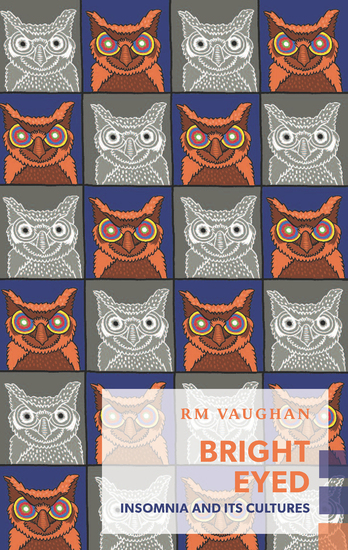
  • Bright Eyed - Insomnia and Its Cultures - cover

    Bright Eyed - Insomnia and Its...

    RM Vaughan

    • 0
    • 0
    • 0
    For forty years, RM Vaughan has been fighting, and failing, to get his forty winks each night. He's not alone, not by any stretch. 
    More and more studies highlight the health risks of undersleeping, yet we have never been asked to do more, and for longer. And we can't stop thinking that a lack of sleep is heroic: snoozing is a kind of laziness, after all. But why, when we know more about the value of sleep, are we obsessed with twenty­-four-­hour workdays and deliberate sleep deprivation? 
    Working outward from his own experience, Vaughan explores this insomnia culture we've created, predicting a cultural collision -- will we soon have to legislate rest, as France has done? -- and wondering about the cause-and-effect model of our shorter attention spans. Does the fact that we are almost universally underslept change how our world works? We know it's an issue with, say, pilots and truck drivers, but what about artists-- does an insomnia culture change creativity? And what are the longterm cultural consequences of this increasing sacrifice for the ever elusive goal of 'total productivity'? 
    ‘With his usual caustic wit and gut-churning insight, Vaughan guides us through pills, sleep clinics (where even the therapists don’t sleep) and the nightly nightmare of Restless Leg Syndrome. Interviewing long-term insomniacs, neuroscientists and Douglas Coupland, Vaughan battles an always-on culture – taking us right to the core of a dreamless empire.’ – Redfern Jon Barrett, author of The Giddy Death of the Gays & the Strange Demise of Straights 
    ‘RM Vaughan has taken his lifelong affliction with insomnia and (dare I say it) made it funny and sexy.’ – Dr. Brian Goldman, host of CBC Radio’s White Coat, Black Art and author of The Secret Language of Doctors
    Ver livro

  • Politics and the English Language - cover

    Politics and the English Language

    George Orwell

    • 0
    • 0
    • 0
    This audiobook is narrated by an AI Voice.   
    MOST people who bother with the matter at all would admit that the English language is in a bad way, but it is generally assumed that we cannot by conscious action do anything about it. Our civilization is decadent, and our language—so the argument runs—must inevitably share in the general collapse. It follows that any struggle against the abuse of language is a sentimental archaism, like preferring candles to electric light or hansom cabs to aeroplanes. Underneath this lies the half-conscious belief that language is a natural growth and not an instrument which we shape for our own purposes. 
    Now, it is clear that the decline of a language must ultimately have political and economic causes: it is not due simply to the bad influence of this or that individual writer. But an effect can become a cause, reinforcing the original cause and producing the same effect in an intensified form, and so on indefinitely. A man may take to drink because he feels himself to be a failure, and then fail all the more completely because he drinks. It is rather the same thing that is happening to the English language. It becomes ugly and inaccurate because our thoughts are foolish, but the slovenliness of our language makes it easier for us to have foolish thoughts. The point is that the process is reversible. Modern English, especially written English, is full of bad habits which spread by imitation and which can be avoided if one is willing to take the necessary trouble. If one gets rid of these habits one can think more clearly, and to think clearly is a necessary first step towards political regeneration: so that the fight against bad English is not frivolous and is not the exclusive concern of professional writers. I will come back to this presently, and I hope that by that time the meaning of what I have said here will have become clearer. Meanwhile, here are five specimens of the English language as it is now habitually written.
    Ver livro
  • Drive: Book summary & analysis - cover

    Drive: Book summary & analysis

    Briefly Summaries

    • 0
    • 0
    • 0
    This is a concise summary and analysis of Drive, by Daniel H. Pink. It is not the original book and is not affiliated with or endorsed by Daniel H. Pink. Ideal for those seeking a quick and insightful overview.
     
    Discover the groundbreaking insights of "Drive," a transformative exploration of human motivation that challenges outdated paradigms and reveals the secrets to true productivity and fulfillment. Through engaging storytelling and real-world examples, this audiobook unveils the power of intrinsic motivators—autonomy, mastery, and purpose—essential for thriving in today’s creative and knowledge-driven world.
     
    Each chapter dives deep into the psychology of motivation, offering practical strategies and inspiring case studies to help listeners rethink how they approach work, leadership, and personal growth. Learn how to foster autonomy in your environment, embrace the journey of mastery, and align your efforts with a greater purpose for lasting impact.
     
    Perfect for professionals, educators, and anyone seeking to unlock their potential, "Drive" combines science, insight, and actionable tools to ignite meaningful change. Let this audiobook guide you toward a future of enhanced productivity, satisfaction, and success.
    Ver livro
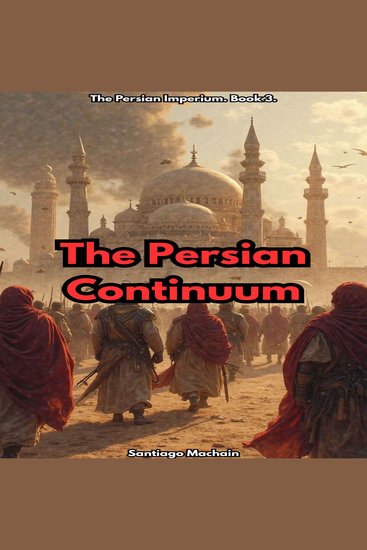
  • The Persian Continuum - cover

    The Persian Continuum

    Santiago Machain

    • 0
    • 0
    • 0
    The Persian Continuum traces how the Achaemenid Empire’s administrative genius, religious pragmatism, and infrastructural vision shaped a vast world stretching from the Aegean to the Indus—and how Alexander’s lightning conquests disrupted but did not erase that order. Through a sequence of richly drawn chapters, the book follows the Persian high tide under Xerxes, the long wars and negotiations with Greek city-states, and the empire’s resilient governance from Egypt to Bactria. It then charts Macedon’s rise under Philip II, Alexander’s campaigns and statecraft, and the striking continuity of Persian institutions under Hellenistic rulers. 
    Beyond conquest, the narrative explores what came after: Seleucid experiments in Greek cityhood layered over Iranian provincial rule, Parthian aristocratic federalism built on cavalry and caravan routes, and Sasanian resurgence with law, priesthood, and fortified frontiers. The final chapters bring the story into the present, revealing how Achaemenid ideas—satrapies and couriers, plural law and shared rituals, standardized coinage and road networks—continue to inform modern governance, diplomacy, and identity. Blending military history with economic systems, religious life, and everyday experience, the book illuminates how empires rise and endure, and how their vocabularies of order survive long after the names on the coins have changed.
    Ver livro
  • Parliamentary America - The Least Radical Means of Radically Repairing Our Broken Democracy - cover

    Parliamentary America - The...

    Maxwell L. Stearns

    • 0
    • 0
    • 0
    Americans face increasingly stark choices each presidential election and a growing sense that our government can't solve the nation's most urgent challenges.  Our eighteenth-century system is ill-suited to our twenty-first-century world. Information-age technology has undermined our capacity to face common problems together and turned our democracy upside down, with gerrymanders letting representatives choose voters rather than voters choosing them. In Parliamentary America, Maxwell L. Stearns argues that the solution to these complex problems is a parliamentary democracy. 


    Stearns considers such leading alternatives as ranked choice voting, the national popular vote, and congressional term limits, showing why these can't solve our constitutional crisis. Instead, three amendments—expanding the House of Representatives, having House party coalitions choose the president, and letting the House end a failing presidency based on no confidence—will produce a robust multiparty democracy. 


    Stearns takes listeners on a world tour—England, France, Germany, Israel, Taiwan, Brazil, and Venezuela—showing what works in government, what doesn't, and how to make the best features our own. Genuine party competition and governing coalitions, commonplace across the globe, may seem like a fantasy in the United States. But we can make them a reality.
    Ver livro
  • Governing a Continent - cover

    Governing a Continent

    Santiago Machain

    • 0
    • 0
    • 0
    Governing a Continent takes readers inside the real machinery of large-scale rule—where institutions outlast leaders, where roads and courts shape daily routines, and where culture, science, and trade knit diverse peoples into a common future. Through vivid analysis and human-centered storytelling, the book reveals how stable governance is built not only by grand strategy but by dependable services, fair laws, resilient budgets, and inclusive rituals. 
    Spanning provincial administration, taxation, logistics, military pluralism, legal pluralism, court ceremony, work and markets, art and identity, and the governance of knowledge and time, this volume shows how empires and federations maintain continuity through crisis and change. It explains how legitimacy is earned every day—at border posts and bus stops, in clinics and classrooms, through the choices of judges, engineers, quartermasters, and archivists.
    Ver livro