¡Acompáñanos a viajar por el mundo de los libros!
Añadir este libro a la estantería
Grey
Escribe un nuevo comentario Default profile 50px
Grey
Suscríbete para leer el libro completo o lee las primeras páginas gratis.
All characters reduced
The Waves - cover

The Waves

Virginia Woolf

Editorial: Classic Harbor

  • 0
  • 0
  • 0

Sinopsis

Six voices move through life, memory, friendship, and change in one of Virginia Woolf's most experimental novels.

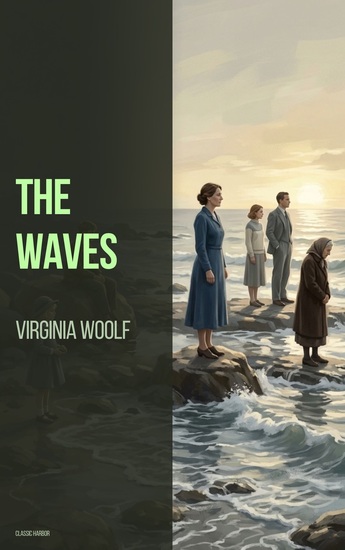
Virginia Woolf's The Waves follows six characters whose inner voices unfold from childhood through adulthood.

Rather than relying on conventional storytelling, Woolf presents a lyrical exploration of consciousness, memory, friendship, identity, love, loss, and the passage of time. Their voices create a poetic portrait of individual lives while also revealing the deep connections between them.

Experimental, atmospheric, and beautifully constructed, The Waves stands as one of Woolf's most distinctive achievements and an important work of literary modernism.

Immerse yourself in Woolf's lyrical exploration of consciousness, friendship, identity, and the ever-changing rhythm of human life.
Disponible desde: 08/10/2026.
Longitud de impresión: 193 páginas.
Otros libros que te pueden interesar

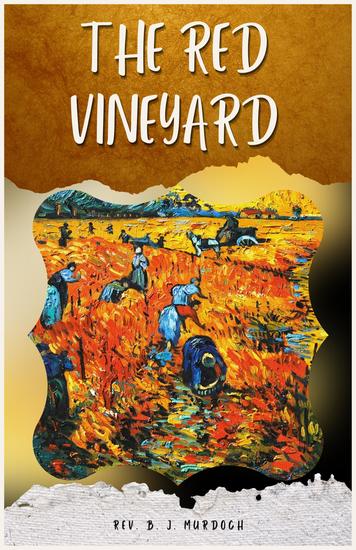
  • The red vineyard - cover

    The red vineyard

    REV. B. J. MURDOCH

    • 0
    • 0
    • 0
    Benedict Joseph Murdoch (1886–1973), better known as Reverend B.J. Murdoch, was a Roman Catholic priest and writer. His best known work is The Red Vineyard (1923), which recalls his service during the First World War as a military chaplain. He initially enlisted and trained with the 132nd CEF Battalion (North Shore), and eventually served in England, France, Belgium and Germany. The unit was used as reinforcements upon its arrival in the United Kingdom. Later in his life he suffered from posttraumatic stress disorder (PTSD) or shell shock as it was called at the time. This resulted in him living almost half his life in seclusion in Bartibog, New Brunswick.
    Ver libro
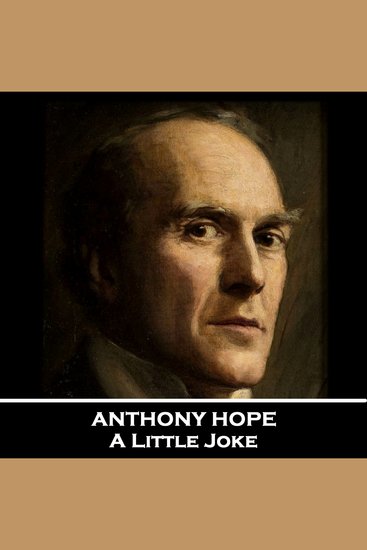
  • A Little Joke - From their pens to your ears genius in every story - cover

    A Little Joke - From their pens...

    Anthony Hope

    • 0
    • 0
    • 0
    Sir Anthony Hope Hawkins was born on 9th February 1863 in Clapton, London.  
    He was educated at St John's School, Leatherhead, Marlborough College and Balliol College, Oxford.  Hope trained as a lawyer and barrister and was called to the Bar by the Middle Temple in 1887. Despite what was thought to be a promising legal career he had literary ambitions and wrote in his spare time. 
    His early works appeared in various periodicals of the day but for his first book ‘A Man of Mark’ (1890), with no publisher interested, he published with his own resources.  
    More novels and short stories followed, including the mildly successful ‘Mr Witt's Widow’ in 1892. Hope even found time to run as the Liberal candidate for Wycombe in the election that same year but was unsuccessful. 
    His first major literary success came with ‘The Dolly Dialogues’, a collection of previously published magazine pieces followed very quickly by his instant classic, ‘The Prisoner of Zenda’. He now gave up the vestiges of his legal career to pursue writing full-time. 
    Despite never again reaching the same pinnacle of success he was popular and wrote prolifically across novels, plays and of course, short stories though his writing output rapidly diminished after the war. 
    In 1918 he was knighted for his contribution to propaganda efforts during World War I.  
    His short stories are delicate, mannered and often surprising with their wit, humour and interplay of characters who say one thing and usually mean another.  He was very definitely a writer of escapist rather than serious fare but they are no less enjoyable for that. 
    Anthony Hope died of throat cancer on 8th July 1933 at his country home, Heath Farm at Walton-on-the-Hill in Surrey. He was 70.
    Ver libro
  • Love and Freindship - And Other Early Works - cover

    Love and Freindship - And Other...

    Jane Austen

    • 0
    • 0
    • 0
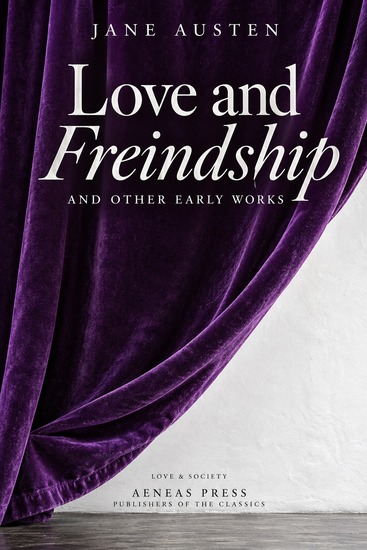
    Austen at fourteen, writing for her family and sparing no one: a burlesque of the sentimental novel in which heroines faint alternately on a sofa, virtue is proved by fainting, and reason is despised as vulgar. She spelt the title wrong in the manuscript and it has stayed wrong ever since. Read it for the shock of hearing the mature voice already fully armed. Fifty-five plates of landscape and farmyard scenes by painters including John Constable and George Morland set the Regency world Austen was already mocking at fourteen.
    Ver libro
  • High Wages - cover

    High Wages

    Dorothy Whipple

    • 0
    • 0
    • 0
    In Dorothy Whipple's High Wages, a determined young woman makes her way in the world against the looming backdrop of World War I. High Wages is more than a tale of savvy entrepreneurship: Jane’s thoughts, feelings, adventures and disappointments in love and friendship are all laid bare. Jane Carter sees an advertisement for a live-in shop assistant and jumps at the chance to leave her old life behind. After Chadwick the draper takes her on, Jane learns all there is to know about fabrics and dressmaking. She proves a talented saleswoman and befriends Maggie and Lily, the other employees.The girls struggle under exploitative conditions: meagre pay; tiny portions of food; the boss cheating them out of commissions. When the young man Maggie is seeing falls in love with Jane, a bitter falling-out results in Maggie threatening to leave Chadwick’s. Armed with initiative and ideas, Jane decides to set up her very own clothing shop, but it’s not all plain sailing – far from it.High Wages is part of the Persephone Audiobook Collection, a series of forgotten classics including neglected fiction and non-fiction by women writers. First published in 1930, this edition includes a new preface by author Jane Brocket.
    Ver libro
  • The Living Telegraph - From their pens to your ears genius in every story - cover

    The Living Telegraph - From...

    Boleslaw Prus

    • 0
    • 0
    • 0
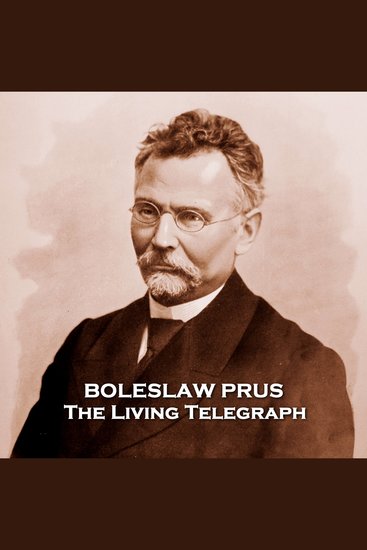
    Aleksander Głowacki who wrote under the nom de plume Boleslaw Prus was born on 20th August 1847 at Hrubieszów in the Kingdom of Poland, at that time, controlled by the Russian Empire. 
    At three his mother died and then at nine his father.  Female relatives helped raise him but at 15 he joined the Polish uprising against the might of Imperial Russia.  Wounded on the battlefield, arrested and imprisoned, he was later released into the care of a relative and resumed secondary school and then Warsaw University but poverty forced him to leave after two years.  At some point he developed agoraphobia which often caused problems. 
    In 1869, he enrolled in the Forestry Department at Puławy but was soon sacked and so he began a system of self-education that led to work as a newspaper columnist on a wide-ranging series of topics that eventually became the ‘Weekly Chronicles’ and spanned 40 years. 
    With his finances now stabilized he married and then adopted his late brother-in-law’s son.  
    It seems he had doubts as to the scale of his talents and early on adopted the name ‘Boleslaw Prus’ for both his journalistic and literary offerings. 
    His work as a short-story writer met with much acclaim. He wrote several dozen of them, originally published in newspapers and ranging in length from micro-story to novella. His keen observation of everyday life and sense of humor are evident in them.  
    During his career he also wrote novels. After ‘Pharoah’, in 1895, he embarked on a four-month journey taking in Berlin, Dresden, Nuremberg, Rapperswil in Switzerland, where he stayed for two months, and his final destination, Paris.  Here his agoraphobia was so bad he couldn’t cross the Seine.  
    However, his writing continued and in 1911 his novel ‘Changes’, though uncompleted, began to be serialised.  It was never finished. 
    Boleslaw Prus died on 19th May 1912, at his Warsaw apartment.  He was 64.  A National Hero, thousands attended both his funeral service and interment.
    Ver libro
  • Meditations - cover

    Meditations

    Marcus Aurelius

    • 0
    • 0
    • 0
    Written by a Roman emperor, this philosophical work offers insights into Stoic wisdom and self-discipline. Marcus Aurelius reflects on how to live a virtuous life, maintain inner peace, and remain resilient in the face of adversity. The audiobook teaches acceptance of what cannot be controlled, the importance of rational thinking, and the value of humility. It encourages listeners to focus on character, duty, and the present moment. A profound guide for mental clarity and emotional strength, still relevant in today's fast-paced world.
    Ver libro