¡Acompáñanos a viajar por el mundo de los libros!
Añadir este libro a la estantería
Grey
Escribe un nuevo comentario Default profile 50px
Grey
Suscríbete para leer el libro completo o lee las primeras páginas gratis.
All characters reduced
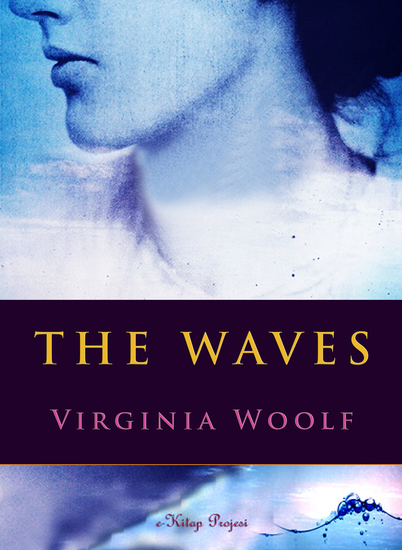
The Waves - cover

The Waves

Virginia Woolf

Editorial: E-Kitap Projesi & Cheapest Books

  • 0
  • 0
  • 0

Sinopsis

The Waves, first published in 1931, is Virginia Woolf's most experimental novel. It consists of soliloquies spoken by the book's six characters: Bernard, Susan, Rhoda, Neville, Jinny, and Louis.

Also important is Percival, the seventh character, though readers never hear him speak in his own voice. The soliloquies that span the characters' lives are broken up by nine brief third-person interludes detailing a coastal scene at varying stages in a day from sunrise to sunset.

As the six characters or "voices" speak Woolf explores concepts of individuality, self and community. Each character is distinct, yet together they compose (as Ida Klitgard has put it) a gestalt about a silent central consciousness.

The sun had not yet risen. The sea was indistinguishable from the sky, except that the sea was slightly creased as if a cloth had wrin-kles in it. Gradually as the sky whitened a dark line lay on the hori-zon dividing the sea from the sky and the grey cloth became barred with thick strokes moving, one after another, beneath the surface, following each other, pursuing each other, perpetually.

As they neared the shore each bar rose, heaped itself, broke and swept a thin veil of white water across the sand. The wave paused, and then drew out again, sighing like a sleeper whose breath comes and goes unconsciously. Gradually the dark bar on the horizon became clear as if the sediment in an old wine-bottle had sunk and left the glass green. Be-hind it, too, the sky cleared as if the white sediment there had sunk, or as if the arm of a woman couched beneath the horizon had raised a lamp and flat bars of white, green and yellow spread across the sky like the blades of a fan.

Then she raised her lamp higher and the air seemed to become fibrous and to tear away from the green surface flickering and flaming in red and yellow fibres like the smoky fire that roars from a bonfire. Gradually the fibres of the burning bonfire were fused into one haze, one incandescence which lifted the weight of the woollen grey sky on top of it and turned it to a million atoms of soft blue. The surface of the sea slowly became transparent and lay rippling and sparkling until the dark stripes were almost rubbed out. Slowly the arm that held the lamp raised it higher and then higher until a broad flame became visible; an arc of fire burnt on the rim of the horizon, and all round it the sea blazed gold.
Disponible desde: 04/02/2024.
Longitud de impresión: 300 páginas.

Otros libros que te pueden interesar

  • At Christmas Time - From their pens to your ears genius in every story - cover

    At Christmas Time - From their...

    Anton Chekhov

    • 0
    • 0
    • 0
    Anton Pavlovich Chekhov was born on 29th January 1860 in Taganrog, on the south coast of Russia.  
    His family life was difficult; his father was strict and over-bearing but his mother was a passionate story-teller, a subject Chekhov warmed to. As he later said; ‘our talents we got from our father, but our soul from our mother’.  
    At school Chekhov was distinctly average. At 16 his father mis-managed his finances and was declared bankrupt. His family fled to Moscow. Chekhov remained and eked out a living by various means, including writing and selling short sketches to newspapers, to finish his schooling. That completed and with a scholarship to Moscow University obtained he rejoined his family. 
    He was able to help support them by selling satirical sketches and vignettes of Russian lifestyles and gradually obtained further commissions. In 1884, he qualified as a physician and, although it earned him little, he often treated the poor for free, he was fond of saying ‘Medicine is my lawful wife, and literature is my mistress.’ 
    His own health was now an issue as he began to cough up blood, a symptom of tuberculosis.  Despite this his writing success enabled him to move the family into more comfortable accommodation.  
    Chekhov wrote over 500 short stories which included many, many classics including ‘The Kiss’ and ‘The Lady with a Dog’.  His collection ‘At Dusk’ won him the coveted Pushkin Prize when was only 26.  
    He was also a major playwright beginning with the huge success of ‘Ivanov’ in 1887.   
    In 1892 Chekhov bought a country estate north of Moscow. Here his medical skills and money helped the peasants tackle outbreaks of cholera and bouts of famine. He also built three schools, a fire station and a clinic.  It left him with less time for writing but the interactions with real people gained him detailed knowledge about the peasantry and their living conditions for his stories.  
    His most famous work, ‘The Seagull’ was received disastrously at its premiere in St Petersburg. It was later restaged in Moscow to highlight its psychological aspects and was a huge success. It led to ‘Uncle Vanya’, ‘The Three Sisters’ and ‘The Cherry Orchard’.  
    Chekhov suffered a major lung hemorrhage in 1897 while visiting Moscow. A formal diagnosis confirmed tuberculosis and the doctors ordered changes to his lifestyle.  
    Despite a dread of weddings the elusive literary bachelor quietly married the actress Olga Knipper, whom he had met at rehearsals for ‘The Seagull’, on 25th May 1901. 
    By May 1904 with his tuberculosis worsening and death imminent he set off for the German town of Badenweiler writing cheerful, witty letters to his family and assuring them his health was improving.  
    On 15th July 1904 Anton Chekhov died at Badenweiler.  He was 44.
    Ver libro
  • The Schoolmistress - cover

    The Schoolmistress

    Anton Chekhov

    • 0
    • 0
    • 0
    The short story focuses on a schoolmistress who is returning home after collecting her salary from the town. The weather is terrible, and makes the journey far longer than it should be. She meets a man named Hanov, an aging man who is joyful and seemingly ignorant of the misery of life. On this journey, Marya Vassilyevna ponders her life, her happiness and the repetition of it all. When a train goes past, she sees a woman who looks much like her late mother, which fills her with joy she hasn't felt in a very long time.
    In 'The Schoolmistress' by Anton Chekhov, life is represented as meaningless, repetitive and dull. This is done by characterization and descriptive language.
    Ver libro
  • A Selection of Short Stories and Poems by Edgar Allan Poe (Legend Classics) - cover

    A Selection of Short Stories and...

    Edgar Allan Poe

    • 0
    • 1
    • 0
    “Sleep, those little slices of death — how I loathe them.” 
    Behold: a selection of short stories from the master of the macabre, Edgar Allen Poe.From the brilliant mind of a man responsible for popularising the genres of detective fiction and science fiction come these unforgettable tales of death, decay and the dark depths of human emotion. They will, almost inevitably, crawl under your skin and into your brain. 
    The Legend Classics series:Around the World in Eighty DaysThe Adventures of Huckleberry FinnThe Importance of Being EarnestAlice's Adventures in WonderlandThe MetamorphosisThe Railway ChildrenThe Hound of the BaskervillesFrankensteinWuthering HeightsThree Men in a BoatThe Time MachineLittle WomenAnne of Green GablesThe Jungle BookThe Yellow Wallpaper and Other StoriesDraculaA Study in ScarletLeaves of GrassThe Secret GardenThe War of the WorldsA Christmas CarolStrange Case of Dr Jekyll and Mr HydeHeart of DarknessThe Scarlet LetterThis Side of ParadiseOliver TwistThe Picture of Dorian GrayTreasure IslandThe Turn of the ScrewThe Adventures of Tom SawyerEmmaThe TrialA Selection of Short Stories by Edgar Allan PoeGrimm Fairy TalesThe AwakeningMrs DallowayGulliver’s TravelsThe Castle of OtrantoSilas MarnerHard Times
    Ver libro
  • Crome Yellow - cover

    Crome Yellow

    Aldous Huxley

    • 0
    • 0
    • 0
    Crome Yellow, first novel by Aldous Huxley, published in 1921. The book is a social satire of the British literati in the period following World War I. The book revolves around the hapless love affair of Denis Stone, a sensitive poet, and Anne Wimbush. Anne’s uncle, Henry Wimbush, hosts a party at his country estate, Crome, that brings together a humorous coterie of characters. Aldous Leonard Huxley was an English writer and philosopher. He wrote nearly 50 books—both novels and non-fiction works—as well as wide-ranging essays, narratives, and poems. Born into the prominent Huxley family, he graduated from Balliol College, Oxford, with an undergraduate degree in English literature
    Ver libro
  • Don Quixote - cover

    Don Quixote

    Miguel de Cervantes

    • 0
    • 0
    • 0
    Miguel de Cervantes Saavedra was born September 29, 1547, was a Spanish writer widely regarded as the greatest writer in the Spanish language and one of the world's pre-eminent novelists. He is best known for his novel Don Quixote, a work often cited as both the first modern novel and one of the pinnacles of world literature. Much of his life was spent in poverty and obscurity, many of its details are disputed or unknown, and the bulk of his surviving work was produced in the three years preceding his death. Despite this, his influence and literary contribution are reflected by the fact that Spanish is often referred to as "the language of Cervantes".[12] An incident in the story of Don Quixote (1870), by English painter Robert Hillingford, depicts a scene from Cervantes' magnum opus. In 1569, Cervantes was forced to leave Spain and moved to Rome, where he worked in the household of a cardinal. In 1570, he enlisted in a Spanish Navy infantry regiment and was badly wounded at the Battle of Lepanto in October 1571. He served as a soldier until 1575 when he was captured by Barbary pirates; after five years in captivity, he was ransomed and returned to Madrid. His first significant novel, titled La Galatea, was published in 1585, but he continued to work as a purchasing agent, then later a government tax collector. Part One of Don Quixote was published in 1605, Part Two in 1615. Other works include the 12 Exemplary Novels a long poem, Journey to Parnassus); and Eight Plays and Eight Entr'actes. The Travails of Persiles and Sigismunda, was published posthumously in 1616.
    Ver libro
  • A Midsummer Night's Dream - cover

    A Midsummer Night's Dream

    William Shakespeare

    • 0
    • 0
    • 0
    Сomedy A Midsummer's Night Dream is a wonderful piece of work written by a genius English playwright William Shakespeare. Three very amusing stories tightly connected with each other fascinate the reader with a numerous love adventures. The reason for that is a potion of a forest spirit Puck. William Shakespeare is the author of the world famous sonnets and plays Romeo and Juliet, Hamlet, Macbeth and Othello, as well as comedies Twelfth Night, A Midsummer's Night Dream, Love's Labour's Lost, The Merry Wives of Windsor, The Two Gentlemen of Verona and As You Like It. William Shakespeare is the most performed playwright, the works of the great English poet have been on top of the world theatre stages for some centuries already.
    Ver libro