Junte-se a nós em uma viagem ao mundo dos livros!
Adicionar este livro à prateleira
Grey
Deixe um novo comentário Default profile 50px
Grey
Assine para ler o livro completo ou leia as primeiras páginas de graça!
All characters reduced
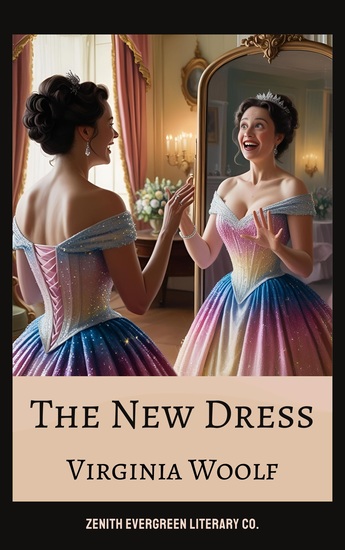
The New Dress - A Short Story on Insecurity Identity and Social Perception - cover
LER

The New Dress - A Short Story on Insecurity Identity and Social Perception

Virginia Woolf, Zenith Evergreen Literary Co.

Editora: Zenith Evergreen Literary Co.

  • 0
  • 0
  • 0

Sinopse

It was supposed to be the perfect dress. It became a symbol of everything she feared.

The New Dress by Virginia Woolf is a razor-sharp psychological portrait of Mabel Waring, a woman whose moment of self-doubt at a high-society party unravels into a profound meditation on class, identity, and the tyranny of appearances.

Written in Woolf's iconic stream-of-consciousness style, this short story is a concise yet deeply moving critique of how women are conditioned to perceive themselves—and each other.

💬 "A quiet rebellion told through silk and self-awareness—Woolf at her subtlest."

🪞 Why This Story Remains So Relevant:
A brilliant literary snapshot of internalized shame and social anxiety

Ideal for fans of Clarice Lispector, Dorothy Parker, and Annie Ernaux

Frequently studied in feminist literature, identity studies, and modernist fiction

📣 Dress the Part. Question the Image. Discover the Truth.
Buy The New Dress today and experience Virginia Woolf's powerful insight into the minds behind the masks.
Disponível desde: 24/04/2025.
Comprimento de impressão: 23 páginas.
Outros livros que poderiam interessá-lo

  • Les Misérables: Volume 3: Marius - Book 8: The Wicked Poor Man (Unabridged) - cover

    Les Misérables: Volume 3: Marius...

    Victor Hugo

    • 0
    • 0
    • 0
    Victor-Marie Hugo (26 February 1802 - 22 May 1885) was a French poet, novelist, essayist, playwright, and dramatist of the Romantic movement. During a literary career that spanned more than sixty years, he wrote abundantly in an exceptional variety of genres: lyrics, satires, epics, philosophical poems, epigrams, novels, history, critical essays, political speeches, funeral orations, diaries, and letters public and private, as well as dramas in verse and prose.
    BOOK 8: THE WICKED POOR MAN: Summer passed, then the autumn; winter came. Neither M. Leblanc nor the young girl had again set foot in the Luxembourg garden. Thenceforth, Marius had but one thought,-to gaze once more on that sweet and adorable face.
    Ver livro
  • Shades A Phantasy - Ukranian born Korolenko creates a fictional dialogue of Socrates to examine lifes biggest questions - cover

    Shades A Phantasy - Ukranian...

    Vladimir Korolenko

    • 0
    • 0
    • 0
    Vladimir Galaktionovich Korolenko was born in Zhytomyr, Ukraine, then part of the Russian Empire on 27th July 1853. 
     
    His father died when he was 13 and life was then often struck with bouts of poverty, which resulted in his education being somewhat erratic.   A spell in exile at 23 was followed by another as the politics of the times opposed his volatile but heart-felt passions. 
     
    Writing was also coming to the fore and in 1879 his debut short story telling of a young Narodnik searching for social and spiritual identity, was published. 
     
    In 1881, Korolenko refused to swear allegiance to the new Russian Tsar and was again exiled, this time much farther afield.  He spent the next three years doing manual work, but took time to study local customs and history.  These impressions in exile provided rich material for his writings. 
     
    In 1885 he was allowed to settle in Nizhny, where again he repeatedly questioned the authorities.  That same year ‘Makar's Dream’ established his literary reputation and was part of his first collection ‘Sketches and Stories’, the following year. 
     
    In the early 1890’s when famine struck Central Russia, he went to work on relief missions, collecting donations, supervising the delivery and distribution of food, opening 45 free canteens, all this while writing the graphic reports that would later be published as ‘In the Year of Famine’ in 1893. 
     
    By 1896 despite some psychological disorders, he was well regarded amongst Russian writers and was even a member of the Russian Academy of Sciences.  Throughout his writing career Korolenko was a staunch advocate of human rights, putting that sacred activity above what he called his 'part-time-writing'. 
     
    In the Revolutionary year of 1905, under his editorship, Russkoye Bogatstvo published the Manifest by the Petersburg Soviet of the Workers' deputies. Korolenko was now repeatedly harassed by the authorities, had his flat raided many times and materials confiscated. 
     
    As a lifetime opponent of Tsarism, he guardedly welcomed the Revolution of 1917.  Once the nature of Bolshevism was established, he soon started to criticize it. During the Russian Civil War that ensued, he condemned both the Red Terror and the White Terror.  
     
    Despite suffering from a progressive heart disorder, he collected food packages for children in famine-stricken Moscow and Petrograd as well as organised orphanages and shelters for the homeless.  
     
    Vladimir Korolenko died in Poltava, Ukraine, of the complications of pneumonia on 25th December 1921.  He was 68. 
     
    In this story Korolenko invokes the characters of Socrates and Elpidias who, after their deaths, involve themselves in a debate on God.  This is a tour-de-force of conception and execution.
    Ver livro
  • Top 10 Short Stories The - Jerome K Jerome - The top ten short stories written by English humourist Jerome K Jerome - cover

    Top 10 Short Stories The -...

    Jerome K. Jerome

    • 0
    • 0
    • 0
    Short stories have always been a sort of instant access into an author’s brain, their soul and heart.  A few pages can lift our lives into locations, people and experiences with a sweep of landscape, narration, feelings and emotions that is difficult to achieve elsewhere. 
     
    In this series we try to offer up tried and trusted ‘Top Tens’ across many different themes and authors. But any anthology will immediately throw up the questions – Why that story? Why that author?  
     
    The theme itself will form the boundaries for our stories which range from well-known classics, newly told, to stories that modern times have overlooked but perfectly exemplify the theme.  Throughout the volume our authors whether of instant recognition or new to you are all leviathans of literature. 
     
    Some you may disagree with but they will get you thinking; about our choices and about those you would have made.  If this volume takes you on a path to discover more of these miniature masterpieces then we have all gained something. 
     
    Invariably Jerome is most often remembered for his light-hearted and humourous works such as ‘Three Men in a Boat’.  Here we have a number of his beautifully lyrical short stories and some from his forgotten, and rather darker side. 
     
    01 - The Top 10 - Jerome K Jerome - An Introduction  
    02 - Told After Supper - The Doctor's Story by Jerome  K Jerome 
    03 - The Curate's Story - My Uncle's Story - My Own Story by Jerome K Jerome 
    04 - Told After Supper - The Wisdom Of Uncle Podger by Jerome K Jerome 
    05 - The Absent Minded Man by Jerome K Jerome 
    06 - The Man of Science by Jerome K Jerome 
    07 - The Man Who Went Wrong by Jerome K Jerome 
    08 - The Cost of Kindness by Jerome K Jerome 
    09 - The Man Who Did Not Believe in Luck by Jerome K Jerome 
    10 - The Minor Poets Story by Jerome J Jerome 
    11 - The Lesson by Jerome K Jerome
    Ver livro
  • The Island of Doctor Moreau - cover

    The Island of Doctor Moreau

    H. G. Wells

    • 0
    • 0
    • 0
    A visionary and disturbing masterpiece, The Island of Doctor Moreau explores the awful potential of biological experimentation. 
     
    In one of H. G. Wells' most celebrated works, the shipwrecked Edward Prendick finds himself alone on an island with the mad scientist Doctor Moreau. When he hears strange cries echoing through the forest, he discovers that the island is inhabited by bizarre human-hybrid creatures. Prendick must escape the island before he becomes the scientist's next victim. 
     
    Raising questions about morality, the hubris of science, and what it means to be human, The Island of Doctor Moreau has fascinated readers for generations.
    Ver livro
  • Hide And Seek - From their pens to your ears genius in every story - cover

    Hide And Seek - From their pens...

    Fyodor Sologub

    • 0
    • 0
    • 0
    Fyodor Kuzmich Teternikov was born on 1st March 1863 in St. Petersburg into the family of a poor tailor.  When his father died of tuberculosis in 1867, his illiterate mother was forced to become a servant in the home of an aristocrat, where Sologub and his younger sister grew up.  
    Seeing how difficult his mother's life was, Sologub was determined to rescue her from it, and after graduating from the St. Petersburg Teachers' Institute in 1882 he took his mother and sister with him to his first teaching post in Kresttsy.  It was here he began his literary career in 1884 with his poem ‘The Fox and the Hedgehog’ under the name Te-rnikov. 
    It would be another decade before he could escape his various jobs to move to Moscow and begin his literary career on what would be his most famous novel, ‘The Petty Demon’.  It was now suggested that he use a pseudonym and so Sologub became his new identity. 
    In 1896 he published a book of poems, a collection of short stories, and his first novel, ‘Bad Dreams’, which is considered one of the first decadent Russian novels. 
    In 1905 ‘The Petty Demon’, was published, initially in serial form. But life was still difficult unrewarding jobs, little time to write and a small, cramped apartment lightened only by gatherings of friends, poets and writers. 
    By the October Revolution his work was becoming popular and with the novel of ‘The Petty Demon’, finally published as a book, he now had a growing income. 
    His sister's tuberculosis could now be more easily treated with treatments in proper sanitoria, even as far away as Finland, but in June 1907 she passed. 
    He returned to St. Petersburg and retired.  The following year he married the translator Anastasia Chebotarevskaya who reordered his life.  A big new apartment was rented, small gilt chairs were bought, and the walls of the large cold office were decorated with paintings. 
    Sologub continued to write and publish poems, plays, and translations and in 1914 he started a magazine, Writers' Journals, but the outbreak of World War I put an end to it.  
    The October Revolution, with publishing under Bolshevik control, ensured he now had no outlets for his writing and could only lecture. 
    His wife’s suicide in September 1921, mainly due to deprivation and uncertainty, as they prepared for a new life abroad, grieved him for the rest of his life. 
    In May 1927 Sologub became seriously ill, and by summer he could leave his bed only rarely.  
    After a long struggle, Fyodor Sologub died on 5th December 1927 in Leningrad.  He was 64.
    Ver livro
  • The Black Tulip - cover

    The Black Tulip

    Alexandre Dumas

    • 0
    • 0
    • 0
    "The Black Tulip" is a historical novel and a work of Romantic poetry written by Alexandre Dumas, père, first published in 1850. The story unfolds in 1672 during the time of tulip mania in the Netherlands. Dumas' last major historical novel is a tale of romantic love, jealousy and obsession, interweaving historical events surrounding the brutal murders of two Dutch statesman in 1672 with the phenomenon of tulipomania that gripped seventeenth-century Holland.
    Ver livro