Junte-se a nós em uma viagem ao mundo dos livros!
Adicionar este livro à prateleira
Grey
Deixe um novo comentário Default profile 50px
Grey
Assine para ler o livro completo ou leia as primeiras páginas de graça!
All characters reduced
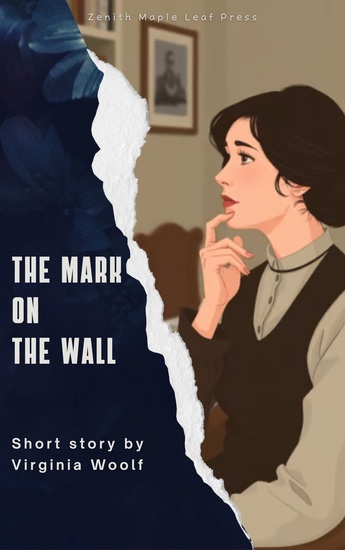
The Mark on the Wall - A Virginia Woolf Classic of Perception Memory & Reflection - cover
LER

The Mark on the Wall - A Virginia Woolf Classic of Perception Memory & Reflection

Virginia Woolf, Zenith Maple Leaf Press

Editora: Zenith Maple Leaf Press

  • 0
  • 0
  • 0

Sinopse

"A single mark on the wall can open a universe of thought."

Virginia Woolf's short story The Mark on the Wall is a groundbreaking exploration of how the mind drifts, questions, and creates meaning from the smallest details. What begins as a simple observation of a spot on the wall blossoms into a stream of consciousness meditation on history, identity, memory, and the fluidity of perception.

Written in Woolf's signature style, this piece exemplifies her literary innovation—breaking free from traditional narrative to capture the intimate rhythms of thought. Every page draws readers deeper into the mystery of the ordinary, reminding us that the world around us is both fragile and profound.

🌟 Why Readers Love It:

A perfect introduction to Woolf's stream-of-consciousness style.

A meditation on art, life, and the act of observation.

A timeless reflection on how meaning is constructed from the simplest things.

📖 Praised as one of Woolf's most influential short works, The Mark on the Wall is often regarded as the seed of modernist literature, beloved by scholars and casual readers alike.

🎯 Discover how a fleeting moment can reveal the deepest truths of existence. Step into Woolf's visionary mind—Click "Buy Now" to own this literary gem.
Disponível desde: 18/08/2025.
Comprimento de impressão: 22 páginas.

Outros livros que poderiam interessá-lo

  • Candide - Audiobook - cover

    Candide - Audiobook

    Voltaire, Classic Audiobooks,...

    • 0
    • 0
    • 0
    Candide is Voltaire's razor-sharp philosophical satire that follows the naive young man Candide as he travels the world, enduring war, betrayal, natural disasters, and heartbreak — all while clinging to his mentor Pangloss's absurd claim that "all is for the best in the best of all possible worlds." Through Candide's misadventures, Voltaire mercilessly mocks blind optimism, organized religion, and the cruelty of human institutions.Packed with irony, wit, and fast-paced action, Candide remains one of the most influential works of the Enlightenment. Beneath its humor lies a serious call for reason, practical action, and compassion — a reminder that cultivating one's own garden may be the truest form of wisdom.
    Ver livro
  • Cranford - cover

    Cranford

    Elizabeth Gaskell

    • 0
    • 0
    • 0
    Step into the quaint village of "Cranford" by Elizabeth Gaskell, where tradition and charm rule the day. This delightful novel chronicles the lives of the village's predominantly female inhabitants, led by the endearing and resilient Miss Matty. Through a series of vignettes, Gaskell captures their small triumphs, cherished routines, and subtle resistances to change. With gentle humor and deep empathy, "Cranford" offers a nostalgic and touching portrait of community, friendship, and the enduring strength of women in a rapidly evolving world.
    Ver livro
  • Master and Man - cover

    Master and Man

    Leo Tolstoy

    • 0
    • 0
    • 0
    "The thought that he might, and very probably would die that night occurred to him, but did not seem particularly unpleasant or dreadful."
    Master and Man is the haunting tale of a landowner and his servant caught in a snowstorm, where survival hinges not on status but on sacrifice. As the cold deepens and death looms, Tolstoy strips away social pretenses to reveal the redemptive power of selflessness.
    Leo Tolstoy (1828–1910) was a Russian novelist, philosopher, and social reformer, widely regarded as one of the greatest writers of all time. He is best known for his epic novels War and Peace and Anna Karenina, both celebrated for their intricate character development and profound exploration of moral dilemmas and human nature. In his later years, Tolstoy experienced a spiritual awakening which led him to reject materialism and embrace a life of simplicity, seeking to align his life with his beliefs about nonviolence and compassion. Tolstoy's legacy endures not only through his literary masterpieces but also through his profound impact on literature and philosophy.
    Ver livro
  • Martin Eden- Audiobook - cover

    Martin Eden- Audiobook

    Jack London, Classic Audiobooks,...

    • 0
    • 0
    • 0
    Martin Eden is a semi-autobiographical novel by Jack London, chronicling the journey of a working-class sailor who strives to become a writer to win the love of a woman from a higher social class. Martin's relentless self-education and pursuit of artistic success highlight the tension between individual ambition and the constraints of society.As Martin rises to fame, he becomes disillusioned with the very world he once idolized. The novel is a powerful exploration of class, identity, and existential despair, showcasing London's critique of capitalism and the literary elite. It remains a haunting and deeply introspective work.
    Ver livro
  • In the Vault (Unabridged) - cover

    In the Vault (Unabridged)

    H. P. Lovecraft

    • 0
    • 0
    • 0
    George Birch, undertaker for the New England town of Peck Valley, finds himself trapped in the vault where coffins are stored during winter for burial in the spring. When Birch stacks the coffins to reach a transom window, his feet break through the lid of the top coffin, injuring his ankles and forcing him to crawl out of the vault. Later, Dr. Davis investigates the vault, and finds that the top coffin was one of inferior workmanship, which Birch used as a repository for Asaph Sawyer, a vindictive citizen whom Birch had disliked, even though the coffin had originally been built for the much shorter Matthew Fenner. Davis finds that Birch had cut off Sawyer's feet in order to fit the body into the coffin, and the wounds in Birch's ankles are actually teeth marks.
    Ver livro
  • Betty Brown the St Giles Orange Girl - From their pens to your ears genius in every story - cover

    Betty Brown the St Giles Orange...

    Hannah More

    • 0
    • 0
    • 0
    Hannah More was born on February 2nd, 1745 at Fishponds in the parish of Stapleton, near Bristol. She was the fourth of five daughters. 
    The City of Bristol, at that time, was a centre for slave-trading and Hannah would, over time, become one of its staunchest critics.  
    She was keen to learn, possessed a sharp intellect and was assiduous in studying.  Hannah first wrote in 1762 with The Search after Happiness (by the mid-1780s some 10,000 copies had been sold). 
    In 1767 Hannah became engaged to William Turner.  After six years, with no wedding in sight, the engagement was broken off.  Turner then bestowed upon her an annual annuity of £200.  This was enough to meet her needs and set her free to pursue a literary career.   
    Her first play, The Inflexible Captive, was staged at Bath in 1775. The famous David Garrick himself produced her next play, Percy, in 1777 as well as writing both the Prologue and Epilogue for it.  It was a great success when performed at Covent Garden in December of that year.  
    Hannah turned to religious writing with Sacred Dramas in 1782; it rapidly ran through nineteen editions. These and the poems Bas-Bleu and Florio (1786) mark her gradual transition to a more serious and considered view of life. 
    Hannah contributed much to the newly-founded Abolition Society including, in February 1788, her publication of Slavery, a Poem recognised as one of the most important of the abolition period.   
    Her work now became more evangelical.  In the 1790s she wrote several Cheap Repository Tracts which covered moral, religious and political topics and were both for sale or distributed to literate poor people.  The most famous is, perhaps, The Shepherd of Salisbury Plain, describing a family of incredible frugality and contentment. Two million copies of these were circulated, in one year. 
    In 1789, she purchased a small house at Cowslip Green in Somerset. She was instrumental in setting up twelve schools in the area by 1800. 
    She continued to oppose slavery throughout her life, but at the time of the Abolition Bill of 1807, her health did not permit her to take as active a role in the movement as she had done in the late 1780s, although she maintained a correspondence with Wilberforce and others.  
    In July 1833, the Bill to abolish slavery throughout the British Empire passed in the House of Commons, followed by the House of Lords on August 1st. 
    Hannah More died on September 7th, 1833.
    Ver livro