¡Acompáñanos a viajar por el mundo de los libros!
Añadir este libro a la estantería
Grey
Escribe un nuevo comentario Default profile 50px
Grey
Suscríbete para leer el libro completo o lee las primeras páginas gratis.
All characters reduced
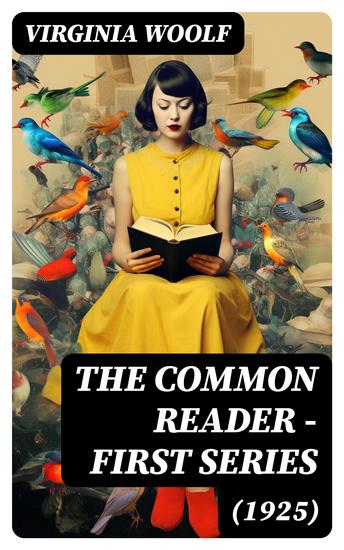
The Common Reader - First Series (1925) - cover

The Common Reader - First Series (1925)

Virginia Woolf

Editorial: DigiCat

  • 0
  • 0
  • 0

Sinopsis

In "The Common Reader - First Series," Virginia Woolf presents a collection of essays that illuminate her views on literature and the act of reading. Written with her signature modernist flair, these essays bridge the gap between popular and highbrow literary discourse, exploring works from various authors such as Jane Austen and Charles Dickens. Woolf's prose is characterized by its introspective depth and lyrical quality, offering readers a nuanced appreciation of the literary landscape. The context of the early 20th century—marked by burgeoning feminist thought and a reevaluation of cultural norms—profoundly influences her reflections on literature's role in society. Virginia Woolf, a central figure in the modernist movement and a member of the Bloomsbury Group, brought her unique perspectives on gender, art, and society into her writing. Her advocacy for women's voices in literature, fostered by her own experiences as a groundbreaking female author, informs the insightfulness of "The Common Reader." Woolf's keen analytical eye and empathetic understanding of literature's impact on both individuals and communities further enrich this collection, allowing her to dissect cultural landmarks with remarkable clarity. This collection is highly recommended for readers seeking a deeper appreciation of literature's cultural significance and its interconnectedness with personal identity. Woolf's elegant prose and perceptive analyses invite readers to expand their literary horizons, making "The Common Reader - First Series" an essential read for both scholars and casual readers alike.
Disponible desde: 29/12/2023.
Longitud de impresión: 272 páginas.

Otros libros que te pueden interesar

  • If My People - A Prayer Guide for Our Nation - cover

    If My People - A Prayer Guide...

    Jack Countryman

    • 0
    • 0
    • 0
    When a nation is divided, to whom can we turn? Perfectly timed and updated for the election season, If My People provides us with 40 days of prayers and reflections in the spirit of 2 Chronicles 7:14: "If My people, who are called by my name, will humble themselves and pray and seek my face and turn from their wicked ways, then I will hear from heaven, and I will forgive their sin and will heal their land." 
    If My People also stirs our hearts and minds with seven prayers from past presidents that were inspired during some of our country's darkest days. This is an ideal audiobook to share with:Entire church congregationsSunday school classesSmall groupsPrayer partners to pray through together 
    This prayer guide not only reminds us that "in God we still trust," but it also brings a greater sense of pride in and hope for our country, just when we need it most. With biblical and historical reminders of the power of prayer, If My People will inspire anyone who feels uncertain about how to make a difference as the country heads into another election season.
    Ver libro
  • Defence of Idealism - cover

    Defence of Idealism

    May Sinclair

    • 0
    • 0
    • 0
    The philosophy of Idealism, revived in eighteenth-century Europe by George Berkeley, argued against philosophical materialism by maintaining that Reality is a creation of the Mind. Despite its flourishing under the leadership of Hegel, Fichte, Schopenhauer, and Schelling, Idealism had definitely fallen into decline late in the nineteenth century and early in the twentieth. May Sinclair, the writer of many popular but philosophically provocative novels and part-time World War I ambulance corps-person, was an unlikely one to take up the torch of the old school and try to revive it yet again for the twentieth century. Most notably, in this treatise she tried to formulate a union of Idealistic Monism with the New Realism as epitomized by Bertrand Russell and his mathematics-based philosophy. How successful she was is a matter for the reader to judge, but this volume and its sequel (The New Idealism) provide fascinating insights into the mind of Sinclair herself, helping the twenty-first century reader better to understand this highly significant author as she wrote in the very midst of the Great War. - Summary by Expatriate
    Ver libro
  • When Chickenheads Come Home to Roost - A Hip-Hop Feminist Breaks It Down - cover

    When Chickenheads Come Home to...

    Joan Morgan, Brittney Cooper,...

    • 0
    • 0
    • 0
    Joan Morgan offers a provocative and powerful look into the life of the modern black woman: a complex world in which feminists often have not-so-clandestine affairs with the most sexist of men, where women who treasure their independence frequently prefer men who pick up the tab, where the deluge of babymothers and babyfathers reminds black women who long for marriage that traditional nuclear families are a reality for less than forty percent of the population, and where black women are forced to make sense of a world where truth is no longer black and white but subtle, intriguing shades of gray. 
    Still fresh, funny, and irreverent, When Chickenheads Come Home to Roost gives voice to the most intimate thoughts of the post–Civil Rights, post-feminist, post-soul generation.
    Ver libro
  • Summary: How to Win Friends and Influence People - by Dale Carnegie - cover

    Summary: How to Win Friends and...

    EssentialInsight Summaries

    • 0
    • 0
    • 0
    "It isn't what you have or who you are or where you are or what you are doing that makes you happy or unhappy. It is what you think about it" – Dale Carnegie 
      
    Summary of How to Win Friends and Influence People by Dale Carnegie 
      
    Human interaction denotes one of the most complex skills to master. Dale Carnegie compiles some of the most effective principles he curated to achieve this skill. He spent many years studying human interactions from all walks of life and presents the strategies for how to master human communications. 
      
    What to take from this book? 
    This book teaches how to improve interactions with others and influence their actions in your favor. As humans, we have a tendency to focus on our self-interests, but this book teaches how to best achieve those interests by simply becoming more interested in others. 
      
    Who is this book for? 
    This book can aid people from all cultures, races, socioeconomic groups, educational levels, genders, and areas of diversity because it is about interacting with other people, which is fundamental and avoidable. It is highly recommended for:Persons who want to improve how they interact with others.Leaders who want to achieve greater influence on their teams.People who want to gain insight into how some of the most influential persons in history retained their influence. 
      
    Added-value of this summary:Ascertaining a concise overview of each principle with examples.Learning how to influence others.Saving time.
    Ver libro
  • How to Raise Smart and Intelligent Children - 7 Secrets for Raising a Successful and Thriving Child With Extraordinary Intelligence - cover

    How to Raise Smart and...

    Frank Dixon

    • 0
    • 0
    • 0
    Do you ever wonder if you’re doing enough to help your child reach their full potential? 
    Are you looking for practical, proven ways to build intelligence, confidence, and strong thinking habits—starting now? 
    How to Raise Smart and Intelligent Children gives you practical, parent-friendly strategies to help your child build life-long intelligence, stronger thinking skills, and the kind of confidence that carries into every area of life. 
    Being “smart” isn’t just about grades. It’s a combination of habits, mindset, emotional strength, curiosity, and how your child learns to handle challenges. 
    In How to Raise Smart and Intelligent Children, you’ll discover how to: 
    • Understand what really shapes intelligence (and what matters most at home) 
    • Build simple daily habits that strengthen focus, memory, and learning 
    • Avoid common parenting mistakes that unintentionally limit growth 
    • Help your child enjoy learning and become naturally curious 
    • Teach problem-solving and critical thinking in everyday situations 
    • Use intelligence for good by developing empathy, responsibility, and character 
    If you’re ready to help your child become sharper, more confident, and more capable for the long run, How to Raise Smart and Intelligent Children will help you get there—one simple step at a time.
    Ver libro
  • Mikhail Gorbachev: The Life and Legacy of the Soviet Union’s Last Leader - cover

    Mikhail Gorbachev: The Life and...

    Editors Charles River

    • 0
    • 0
    • 0
    After going through three elderly leaders in three years, Mikhail Gorbachev was chosen as the new General Secretary of the Soviet Union at the relatively youg age of 54 in March 1985. Gorbachev hoped to build the Soviet economy to relieve the persistent shortages of consumer goods it faced, which were caused by enormous military spending of the Soviet Union. Gorbachev tried to introduce some economic reforms, but they were blocked by communist hardliners. Gorbachev then came to the belief that the Soviet economy could not improved without political reform as well. 
    In comparison with other Soviet leaders, Gorbachev was leader of the USSR for a relatively short period, but the changes that took place under his leadership were monumental, including some that were intended and others that were unforeseen. Gorbachev oversaw the end of the Cold War and the peaceful transition away from communism in Central and Eastern Europe, and he ended the war in Afghanistan and many other proxy conflicts in the developing world. Gorbachev improved relations with the West and developed enough trust with President Ronald Reagan and President George H.W. Bush to decommission thousands of nuclear weapons. He also liberalized the political environment within the Soviet Union itself, increased accountability, and brought in a certain degree of democracy.  
    	Gorbachev was awarded the Nobel Peace Prize for these efforts in 1990, but his regime also left a legacy of turbulence and destruction in its wake. As a result of his policies, many Soviet people rose up against the status quo, demanding national self-determination and reviving old grievances. Gorbachev could not prevent the USSR from disbanding at the end of 1991, leaving much of the country’s economy in ruins and nationalist and ethnic conflicts that are still unresolved today.
    Ver libro