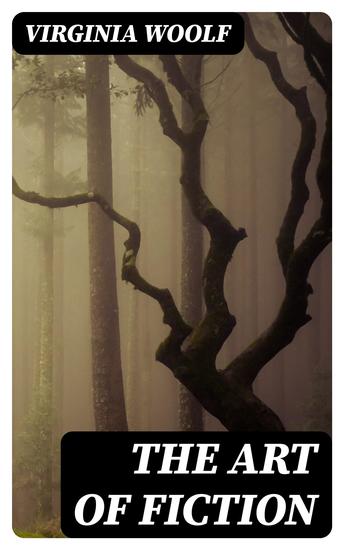
The Art of Fiction - Enriched edition
Virginia Woolf
Editorial: DigiCat
Sinopsis
In "The Art of Fiction," Virginia Woolf presents a profound exploration of the intricacies and nuances within the craft of writing. In this seminal essay, Woolf reflects on the evolution of fiction, assessing its potential to express the complexity of human experience. Employing a strikingly modernist style, she delves into the interplay of character, narrative structure, and the psychological underpinnings that shape literary creation. Woolf's observations draw from the broader tapestry of early 20th-century literature, positioning her ideas within the context of a rapidly changing social and artistic landscape, influenced by contemporaries such as James Joyce and Marcel Proust. Virginia Woolf, a central figure in the modernist movement, utilized her keen insights into human consciousness and social dynamics, galvanized by her own experiences as a writer and member of the Bloomsbury Group. Her deep conviction that fiction should reflect the totality of human experience is evident in her thoughtful criticism and exploration of literary form. Woolf's personal struggles with mental health and her quest for authentic expression significantly informed her literary philosophy, bringing a rare depth to her interpretations. "The Art of Fiction" stands as an essential read for both aspiring writers and ardent readers, offering timeless wisdom about the writer's craft. Woolf's eloquent articulation of the artistic process encourages readers to reconsider the boundaries of fiction and the role of the author in constructing meaning. This work is not merely an essay on writing; it is an invitation to engage with the very nature of storytelling itself.

In this enriched edition, we have carefully created added value for your reading experience:
- A comprehensive Introduction outlines these selected works' unifying features, themes, or stylistic evolutions.
- The Author Biography highlights personal milestones and literary influences that shape the entire body of writing.
- A Historical Context section situates the works in their broader era—social currents, cultural trends, and key events that underpin their creation.
- A concise Synopsis (Selection) offers an accessible overview of the included texts, helping readers navigate plotlines and main ideas without revealing critical twists.
- A unified Analysis examines recurring motifs and stylistic hallmarks across the collection, tying the stories together while spotlighting the different work's strengths.
- Reflection questions inspire deeper contemplation of the author's overarching message, inviting readers to draw connections among different texts and relate them to modern contexts.
- Lastly, our hand‐picked Memorable Quotes distill pivotal lines and turning points, serving as touchstones for the collection's central themes.
Disponible desde: 13/11/2022.
Longitud de impresión: 284 páginas.