¡Acompáñanos a viajar por el mundo de los libros!
Añadir este libro a la estantería
Grey
Escribe un nuevo comentario Default profile 50px
Grey
Suscríbete para leer el libro completo o lee las primeras páginas gratis.
All characters reduced
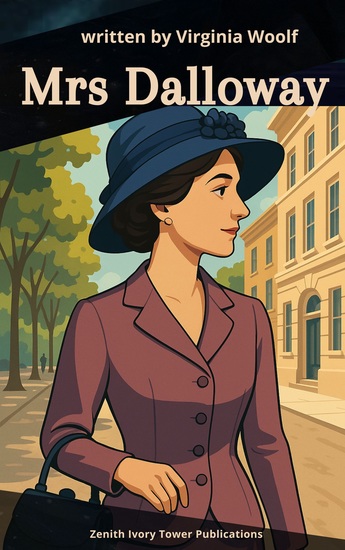
Mrs Dalloway - Virginia Woolf's Modernist Masterpiece of Time Memory and the Inner Life - cover

Mrs Dalloway - Virginia Woolf's Modernist Masterpiece of Time Memory and the Inner Life

Virginia Woolf, Zenith Ivory Tower Publications

Editorial: Zenith Ivory Tower Publications

  • 0
  • 0
  • 0

Sinopsis

🌸 One day. One woman. A lifetime in her thoughts.

Mrs Dalloway is Virginia Woolf's luminous exploration of a single day in post–World War I London, where the external bustle of city life mirrors the intricate web of thoughts, memories, and emotions within. As Clarissa Dalloway prepares for a high-society party, her mind drifts between past and present, grappling with questions of love, loss, time, and identity.

🕰️ A revolutionary novel that redefined how stories could be told.
Woolf's pioneering use of stream-of-consciousness gives readers direct access to her characters' inner worlds—juxtaposing Clarissa's elegant routines with the haunted mind of Septimus Smith, a shell-shocked veteran. Their stories run in parallel, quietly illuminating the fragility of existence and the shared weight of memory.

🎭 A portrait of a woman—and a world—on the edge of transformation.
Set against a backdrop of social change and emotional undercurrents, Mrs Dalloway captures the fleeting nature of life and the profound connections hidden beneath ordinary moments.

🌟 What Critics and Readers Say:
"A miracle of poetic insight and narrative innovation." — The Guardian

"Woolf's most lyrical and emotionally resonant novel." — The New York Times

"Still astonishingly relevant, nearly a century after its first publication." — Amazon Reviewer

🎯 Why You'll Love This Book:
A modernist literary classic praised for its originality and depth

Perfect for readers of psychological fiction, feminist literature, and philosophical storytelling

Offers a deeply human look at time, trauma, and the quiet courage of everyday life

Ideal for students, scholars, and thoughtful readers

🛒 Click Buy Now to Walk the Streets of London with Mrs. Dalloway.
Let Virginia Woolf guide you through a single day that echoes an entire lifetime.
👉 Click Buy Now to experience Mrs Dalloway—a novel of exquisite beauty and insight.
Disponible desde: 18/07/2025.
Longitud de impresión: 88 páginas.

Otros libros que te pueden interesar

  • Alphonso Davies - A New Hope - cover

    Alphonso Davies - A New Hope

    Farhan Devji

    • 0
    • 0
    • 0
    Built on years of interviews with friends, family, teachers, coaches, and teammates, the first biography of Alphonso Davies, the new face of Canadian men's soccer 


    Arguably the most famous Canadian athlete on the planet, Alphonso Davies has been the subject of global attention after bursting onto the scene as a fifteen-year-old soccer sensation. Since then, he's won every trophy imaginable with German giant FC Bayern Munich and helped Canada reach the men's World Cup for the first time in thirty-six years. 


    Based on years of original reporting and extensive interviews with his friends, family members, teachers, coaches, teammates, and others from his inner circle, Alphonso Davies: A New Hope paints a complete portrait of the soccer star. The first biography about "Phonzie" covers every angle of his life and career—from the harsh realities of growing up in a refugee camp amidst the Liberian Civil War, to the unique challenges of starting a new life in a foreign country, twice, to his trailblazing path as a Canadian megastar in the world's most popular sport. Bringing together intimate details and never-before-told stories, author Farhan Devji pulls back the curtain on a person and player who has captured the hearts of a nation and become a shining light for refugees everywhere.
    Ver libro
  • Essays: First Series Prudence - cover

    Essays: First Series Prudence

    Ralph Waldo Emerson

    • 0
    • 0
    • 0
    Prudence is not timidity. It is not caution for its own sake. It is the art of knowing when to act and when to wait, when to follow reason and when to trust instinct. In Prudence, Ralph Waldo Emerson reclaims this often-misunderstood virtue, not as mere carefulness but as the wisdom of navigating life with both vision and restraint.
    For Emerson, prudence is not the enemy of boldness but its quiet architect. It does not stifle ambition but shapes it, guiding passion with clarity and purpose. A mind without prudence rushes blindly; a mind ruled by it never moves at all. The balance is where true mastery lies.
    Part of Essays: First Series, Prudence is neither a defense of conservatism nor a rejection of daring. It is an exploration of how thought and action, reason and impulse, can coexist in harmony. To read it is to rethink not just how we act, but how we decide when to act at all.
    Ver libro
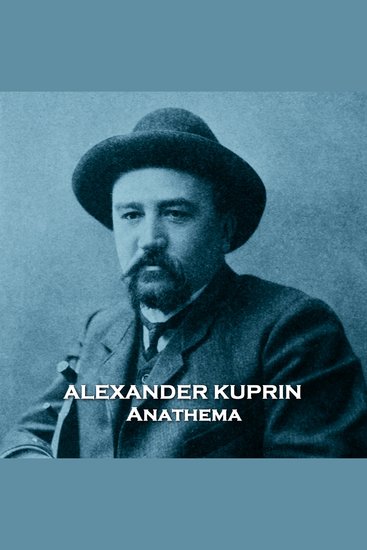
  • Anathema - From their pens to your ears genius in every story - cover

    Anathema - From their pens to...

    Alexander Kuprin

    • 0
    • 0
    • 0
    Alexander Kuprin was born in Narovchat, Penza in Russia on 7th September 1870. 
    At 3 his Father died and he and mother moved to Moscow. By 10 he was enrolled at the Second Moscow Military High School and there his interest in literature began. The Alexander Military Academy followed and two years later he was a sub-lieutenant and posted to an Infantry Regiment for a further four years. 
    Despite his duties he was a now a keen writer and published his first short story at this time. His military duties also garnered him experiences for his breakthrough work ‘The Duel’.  Leaving the military he left for Kiev to work for local newspapers.  He continued to publish both stories and novels and by 1901 he was in St Petersburg becoming part of a group that included Chekhov, Ivan Bunin, Maxim Gorky and Leonid Andreyev.  
    In the years that followed further controversial works and acclaim followed.  His comments on the regime meant he was also put under secret police surveillance.   
    As World War I erupted, Kuprin opened a military hospital but was then given command of an infantry company in Finland. He was soon discharged on grounds of ill health.  
    The October Revolution saw him praise Lenin, but he warned that the Bolsheviks threatened Russian culture and might cause further widespread suffering to the peasants.  As Civil War raged he took his family to Helsinki and then on to Paris. 
    Exile saw his talents decline further and his succumbing to alcoholism. He became lonely and withdrawn. The family's poverty increased his malaise.   
    In May 1937, the Kuprin’s returned to Moscow.  He now saw his work published but wrote almost nothing new.  In 1938 his health rapidly deteriorated.  Already suffering from a kidney problems and sclerosis, he had now developed cancer of the oesophagus.  
    Alexander Kuprin died on 25th August 1938.
    Ver libro
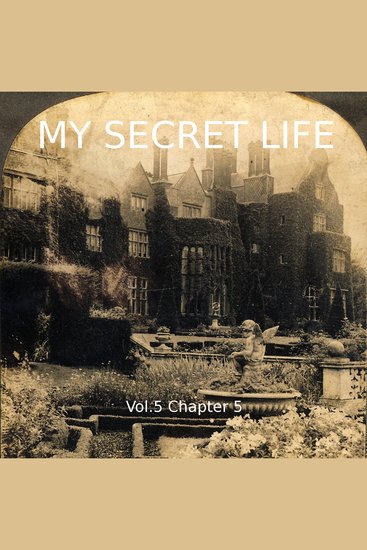
  • My Secret Life Vol 5 Chapter 5 - cover

    My Secret Life Vol 5 Chapter 5

    Dominic Crawford Collins

    • 0
    • 0
    • 0
    My Secret Life, the gargantuan erotic autobiography of a wealthy Victorian English gentleman has been described as 'the strangest book ever written'. Comprising one-hundred-and-eighty-four chapters and over one million words, the epic confessional describes in eloquent and explicit detail the exploits of a man (who refers to himself simply as 'Walter'), whose life was devoted to the pursuit of erotic adventure and carnal pleasure.
    
    Now for the first time in the history of this infamous erotic masterpiece, film composer Dominic Crawford Collins is producing a fully scored narration of the complete unabridged text. More 'audiofilm' than audiobook, each chapter and scene has its own unique musical accompaniment, reflecting the author's changing emotional landscape and offering the listener a truly immersive erotic audio experience.
    
    Vol. 5 Chapter V
    
    
    My letch for Tomlin. • An assault. • Slight resistance. • What's for dinner? • Cook this. • Sham displeasure. • Aunt out. • After dinner. • My bed-room. • Tail in tail. • The grotto again. • The dog's food. • Joey's fears and regrets. • Against the table. • A holiday out. • The brothel at ***. • Complete enjoyment. • Tomlin's widow-hood. • Confession of lust. • Her husband's lechery. • No fears. • Joey's future. • A round of visits. To London.
    Ver libro
  • The Unlikely Voyage of Jack de Crow - cover

    The Unlikely Voyage of Jack de Crow

    A. J. Mackinnon

    • 0
    • 0
    • 0
    A revitalised edition of this much-loved bestseller. 
     
    Truly hilarious books are rare. Even rarer are those based on real events. Join A.J. Mackinnon, your charming and eccentric guide, on an amazing voyage in a boat called Jack de Crow. 
     
    A couple of quiet weeks sailing the River Severn was the intention. Somehow things got out of hand – a year later I had reached Romania and was still going... 
     
    Equipped with his cheerful optimism and a pith helmet, this Australian Odysseus in a dinghy travels from the borders of North Wales to the Black Sea – 4,900 kilometres over salt and fresh water, under sail, at the oars, or at the end of a tow-rope – through twelve countries, 282 locks and numerous trials and adventures, including an encounter with Balkan pirates. Along the way he experiences the kindness of strangers, gets very lost, and perfects the art of slow travel. 
     
     ‘A marvellous adventure, and Mackinnon recounts it with humour and unflagging enthusiasm ... a clever and entirely engaging read’ Melbourne Times 
     
    ‘A great travel writer and more importantly a great traveller’ Sydney Morning Herald 
     
    ‘Not just an adventurer, but an artist, philosopher and keen observer of the world around him’ Canberra Times 
     
    ‘A wonderful idea for a book – a series of ever bolder improvisations ... undertaken in praise of the spirit of adventure’ Times Literary Supplement 
     
     ‘Mackinnon’s journey makes a lovely picaresque tale, one dotted with English literary references and wonderful descriptions of the English and European countryside’ Good Reading
    Ver libro
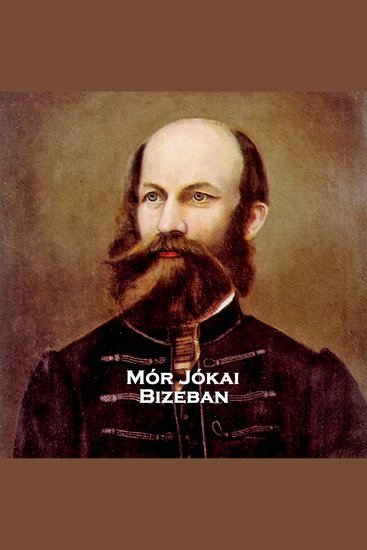
  • Bizeban - From their pens to your ears genius in every story - cover

    Bizeban - From their pens to...

    Moritz Jokai

    • 0
    • 0
    • 0
    Móric Jókay de Ásva was born on the 18th February 1825 in Komárom, then in the Kingdom of Hungary but now part of Slovakia.  
    Due to his timid and delicate constitution he was educated at home until the age of 10 and then sent away to complete his studies at the Calvinist college at Pápa. 
    At 12 his father died, and he was pushed to honour him by replicating his career as a lawyer.  He studied hard and completed the curriculum at Kecskemét and Pest.  He won his first case as a newly graduated lawyer. 
    But he found a career in law to be dull and, encouraged by the positive reaction to his first play, he moved to Pest in 1845.  There he published, first in a newspaper, and then as a novel ‘Hétköznapok’ (‘Working Days’).  It was acclaimed as a masterpiece.  To add to his promise he was appointed as the editor of Életképek, the leading Hungarian journal. 
    In 1848 he married the actress, Róza Laborfalvi.  That same year Europe was awash with revolutions and Jókai, a moderate Liberal, enthusiastically supported the nationalist cause and its decision to depose the Habsburg dynasty.  The attempt failed. 
    He was now classed as a political suspect and threw himself into his literary career, writing dozens of novels, many of them masterpieces, stories, essays and the like.  In total he wrote several hundred volumes, many of them in the local Magyar language which helped arrest its declining relevance in society.  
    By 1867 the political temperature had cooled, and he entered parliament as well as becoming the editor a government journal he had founded.   His skills were much admired and helped the government navigate through several difficult matters.   
    His wife died in 1886 but although grief-stricken he continued to work and to write.  
    In 1897 the king appointed him a member of the upper house.  Two years later he caused a minor scandal by marrying the young 20-year-old actress, Bella Nagy.  At the time he was 74.
    Ver libro