Unisciti a noi in un viaggio nel mondo dei libri!
Aggiungi questo libro allo scaffale
Grey
Scrivi un nuovo commento Default profile 50px
Grey
Iscriviti per leggere l'intero libro o leggi le prime pagine gratuitamente!
All characters reduced
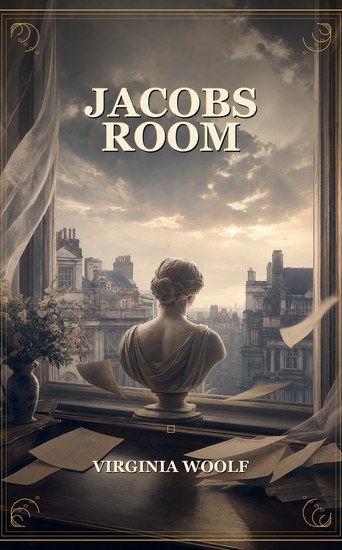
Jacobs Room - cover

Jacobs Room

Virginia Woolf

Casa editrice: Caelwick Press

  • 0
  • 0
  • 0

Sinossi

In her third novel, Virginia Woolf departs from conventional narrative and explores storytelling through discordant scenes and impressions. Jacob Flanders' life story is told through the perspectives of the people in his life. In Jacob's Room , we see Jacob grow from a young boy to an ardent student of Classical culture while the world around him moves closer to an impending war. Jacob is described in flashes by the women around him—his mother and his lovers. Virginia Woolf (died 1941) was an influential writer of the modernist period. Their work has endured across generations and continues to be read and studied worldwide. As a work of classic literary fiction, Jacobs Room exemplifies the narrative craft and social insight that defined great storytelling of its era. Literary fiction of this period was characterized by careful attention to character psychology, social milieu, and the moral questions that animated public discourse.
Disponibile da: 19/05/2026.
Lunghezza di stampa: 194 pagine.

Altri libri che potrebbero interessarti

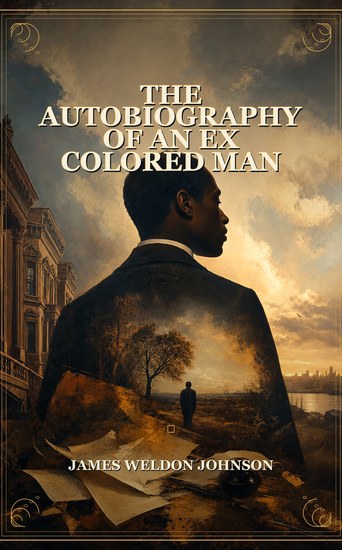
  • The Autobiography Of An Ex Colored Man - cover

    The Autobiography Of An Ex...

    James Weldon Johnson

    • 0
    • 0
    • 0
    The protagonist of this fictional autobiography wrestles with race in America from the perspective of someone who learns that he is considered black but also that he can pass as white if he wants to. His personal ambitiousness and racial ambivalence makes him a sort of American Hamlet: undone by indecision. Will he be "a credit to his race" by advancing an African-American heritage he loves and appreciates in the face of a hostile culture, or will he retreat into the mediocrity of a safe, white, middle-class family life? Along the way, he shares his penetrating observations about race relations in the American north and south, about the "freemasonry" of subterranean black American culture, about the emerging bohemian jazz subculture in New York City, and about traditions of African American religious music and oratory. James Weldon Johnson (died 1938) was a major literary figure of the early 20th century. Their work has endured across generations and continues to be read and studied worldwide. As a work of classic literary fiction, The Autobiography Of An Ex Colored Man exemplifies the narrative craft and social insight that defined great storytelling of its era. Literary fiction of this period was characterized by careful attention to character psychology, social milieu, and the moral questions that animated public discourse.
    Mostra libro
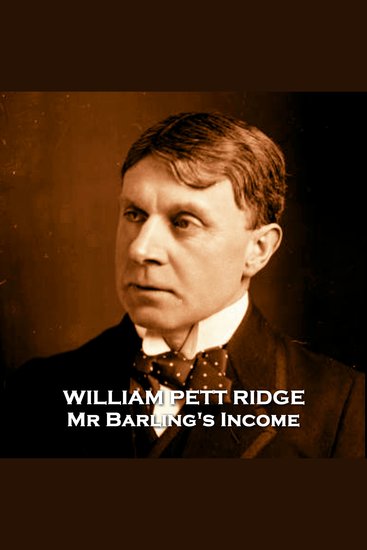
  • Mr Barlings Income - From their pens to your ears genius in every story - cover

    Mr Barlings Income - From their...

    William Pett Ridge

    • 0
    • 0
    • 0
    William Pett Ridge was born at Chartham, near Canterbury, Kent, on 22nd April 1859. 
    His family’s resources were certainly limited. His father was a railway porter, and the young Pett Ridge, after schooling in Marden, Kent became a clerk in a railway clearing-house. The hours were long and arduous, but self-improvement was Pett Ridge’s goal.  After working from nine until seven o’clock he would attend evening classes at Birkbeck Literary and Scientific Institute and then to follow his passion; the ambition to write.  He was heavily influenced by Dickens and several critics thought he had the capability to be his successor. 
    From 1891 many of his humourous sketches were published in the St James's Gazette, the Idler, Windsor Magazine and other literary periodicals of the day. 
    Pett Ridge published his first novel in 1895, A Clever Wife. By the advent of his fifth novel, Mord Em'ly, a mere three years later in 1898, his success was obvious.  His writing was written from the perspective of those born with no privilege and relied on his great talent to find humour and sympathy in his portrayal of working class life. 
    Today Pett Ridge and other East End novelists including Arthur Nevinson, Arthur Morrison and Edwin Pugh are being grouped together as the Cockney Novelists.   
    In 1924, Pugh set out his recollections of Pett Ridge from the 1890s: “I see him most clearly, as he was in those days, through a blue haze of tobacco smoke. We used sometimes to travel together from Waterloo to Worcester Park on our way to spend a Saturday afternoon and evening with H. G. Wells. Pett Ridge does not know it, but it was through watching him fill his pipe, as he sat opposite me in a stuffy little railway compartment, that I completed my own education as a smoker... Pett Ridge had a small, dark, rather spiky moustache in those days, and thick, dark, sleek hair which is perhaps not quite so thick or dark, though hardly less sleek nowadays than it was then”. 
    With his success, on the back of his prolific output and commercial success, Pett Ridge gave generously of both time and money to charity. In 1907 he founded the Babies Home at Hoxton.  This was one of several organisations that he supported that had the welfare of children as their mission.  
    His circle considered Pett Ridge to be one of life's natural bachelors. In 1909 they were rather surprised therefore when he married Olga Hentschel.  
    As the 1920’s arrived Pett Ridge added to his popularity with the movies. Four of his books were adapted into films.  
    Pett Ridge now found the peak of his fame had passed. Although he still managed to produce a book a year he was falling out of fashion and favour with the reading public and his popularity declined rapidly.  His canon runs to over sixty novels and short-story collections as well as many pieces for magazines and periodicals. 
    William Pett Ridge died, on 29th September 1930, at his home, Ampthill, Willow Grove, Chislehurst, at the age of 71. 
    He was cremated at West Norwood on 2nd October 1930.
    Mostra libro
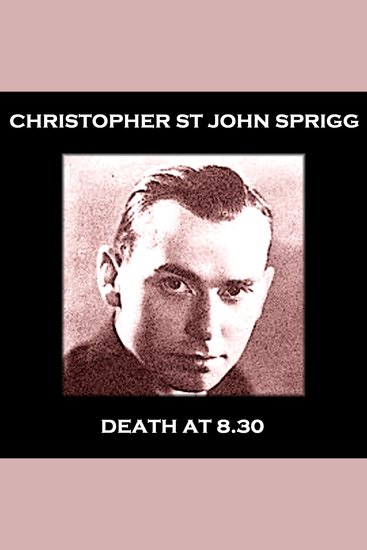
  • Death at 830 - From their pens to your ears genius in every story - cover

    Death at 830 - From their pens...

    Christopher St. John Sprigg

    • 0
    • 0
    • 0
    The bookshelves of British literature are incredible collections that have gathered together centuries of very talented authors.  From these Isles their fame spread and whilst among their number many are now forgotten or neglected their talents endure.  Among them is Christopher St John Sprigg.
    Mostra libro
  • A Study in Scarlet - cover

    A Study in Scarlet

    Arthur Conan Doyle

    • 1
    • 0
    • 0
    A blood-red word on a wall. A body with no wounds. A detective unlike any the world has ever seen.
    When a baffling murder shakes London, Dr. John Watson is drawn into the orbit of a mysterious consulting detective—Sherlock Holmes. Together they follow a trail of cryptic clues, strange symbols, and hidden motives that lead far beyond the quiet streets of the city. What begins as a violent puzzle unfolds into a gripping story of revenge, justice, and fate.
    
    Praised as "the groundbreaking debut that introduced the greatest detective in literature," this novel showcases Holmes's unmatched brilliance and Watson's steady voice in a partnership readers have adored for over a century.
    
    If you love sharp mysteries, unforgettable characters, and classic detective fiction, this first adventure will leave you eager for more.
    
    Begin the case now—and witness the moment a legend is born.
    Mostra libro
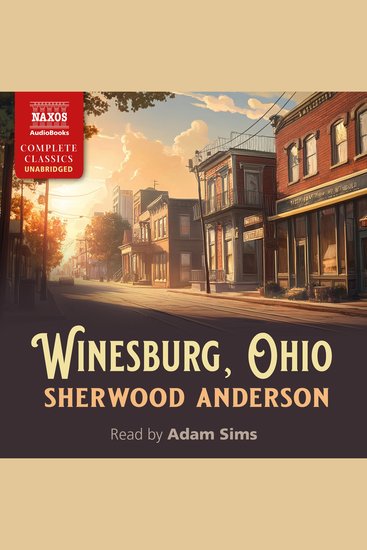
  • Winesburg Ohio - cover

    Winesburg Ohio

    Sherwood Anderson

    • 0
    • 0
    • 0
    A vivid and haunting collection of interconnected stories, Winesburg, Ohio portrays a cast of isolated individuals in a small midwestern town at the end of the 19th century. Central to the book is George Willard, a young newspaper writer, to whom a variety of Winesburg’s residents, past and present, attempt to confide their secret desires, failures and innermost truths. Through George we encounter Wing Biddlebaum, run out of another town because of his ‘expressive’ hands; Reverand Curtis Hartman and his incoherent account of religious epiphany; and Doctor Parcival and his strange philosophies such as the supposed ‘secret of life’. A profound exploration of loneliness and the quiet struggle for human connection, Winesburg, Ohio transformed the American short story, shifting the focus from plot to the emotional lives of ordinary people.
    Mostra libro
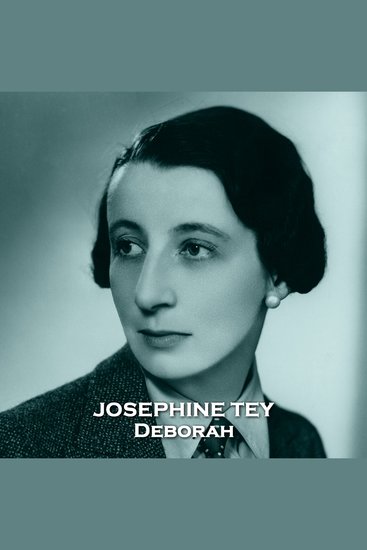
  • Deborah - From their pens to your ears genius in every story - cover

    Deborah - From their pens to...

    Josephine Tey

    • 0
    • 0
    • 0
    Elizabeth MacKintosh was born on the 25th July 1896 in Inverness, Scotland. 
    After attending Inverness Royal Academy and then the Anstey Physical Training College in Erdington, Birmingham she taught physical training at schools throughout England and Scotland. 
    In 1923, she returned to Inverness to care for her invalid mother. She stayed after her mother's death later that year to keep house for her father.  It was now that she began her literary career and first published in The Westminster Gazette in 1925, under the pseudonym Gordon Daviot.  She continued to write and publish in periodicals until, in 1929, her first novel ‘Kif: An Unvarnished History’ was published to good reviews followed, three months later, by her first mystery novel, ‘The Man in the Queue’.   
    Despite her good fortune and talents her mind was set on writing a play that would receive a West End run.  ‘Richard of Bordeaux’, under the Daviot pseudonym, made its debut in 1932 at the Arts Theatre. 
    In all she completed about a dozen one-act plays and a dozen full-length plays, many with biblical or historical themes, and all with the Daviot pseudonym.  Only four of these plays were produced. 
    Perhaps her best-known books all involve the Scotland Yard Inspector, Alan Grant, and required yet another pseudonym.  This time Josephine Tey. 
    She was intensely private, and during the last months of her life, when she knew she was terminally ill, she avoided all of her friends.   
    Elizabeth Mackintosh died from liver cancer on 13th February 1952 in London.  She was 55.
    Mostra libro