¡Acompáñanos a viajar por el mundo de los libros!
Añadir este libro a la estantería
Grey
Escribe un nuevo comentario Default profile 50px
Grey
Suscríbete para leer el libro completo o lee las primeras páginas gratis.
All characters reduced
The Aeneid - cover

The Aeneid

Virgil Virgil

Traductor John Dryden

Editorial: DigiCat

  • 0
  • 0
  • 0

Sinopsis

The Aeneid, Virgil's magnum opus, is an epic poem that intricately weaves the founding myths of Rome through the journey of its hero, Aeneas. Written in dactylic hexameter, the poem resonates with the grandeur and gravitas typical of classical epics, reminiscent of Homer's Iliad and Odyssey. Its rich narrative details not only highlight Aeneas's trials and tribulations but also delve into themes of fate, piety, and national identity, illuminating the socio-political context of Augustan Rome. Virgil's exquisite language and emotional depth craft a multifaceted portrayal of a hero whose personal sacrifices serve a greater purpose, ultimately linking the past to Rome's imperial destiny. Virgil, a pivotal figure in Latin literature, was deeply influenced by the political turmoil of his time, having lived through the fall of the Roman Republic and the rise of Augustus. His first-hand experiences with the struggles of displacement and conflict resonate throughout The Aeneid. The poet sought not only to celebrate Roman leadership but also to impart moral and ethical lessons, positioning Aeneas as a model of virtuous conduct amidst adversity. The Aeneid is an essential read for anyone interested in classical literature, history, or the intricate construction of cultural identity. Its themes remain profoundly relevant, providing insight into the human experience and the complexities of legacy. Readers will find in Virgil's timeless verse a powerful exploration of duty, resilience, and the destinies that shape nations.
Disponible desde: 04/09/2022.
Longitud de impresión: 274 páginas.

Otros libros que te pueden interesar

  • My Land of Freedom - A poem of war and freedom - cover

    My Land of Freedom - A poem of...

    Ifeanyi Njoku

    • 0
    • 0
    • 0
    This poem is a powerful reflection on war, displacement, and the struggle for freedom. It tells the tragic story of a people who fought for liberation but were met with violence, loss, and eventual surrender. Likely referencing the Igbo experience during the Nigerian Civil War, it captures the pain of oppression and the resilience of those who endured it. 
    The poem begins with a contradiction: "In my land of freedom, I walked with fear." This highlights the irony of living in a place meant to be free but being consumed by anxiety. The people demand justice, yet their cries are silenced by violence. The line "Killing our brothers, and leaving us undone" conveys both physical loss and emotional devastation. 
    The imagery of "scorching soil" and "separated from families" paints a picture of suffering and displacement. War does not just take lives—it tears families apart and leaves hearts unable to thrive. The mention of "refugee camps" emphasizes how many were forced from their homes, left to question their identity: "Are we unlucky, to be Igbo?" This speaks to a deep sense of abandonment and injustice. 
    The poem also highlights betrayal, as leaders fail to protect their people. "Everyone was a soldier, in this war we couldn't win." This line captures the grim reality of a war where survival itself was a battle. Despite their bravery, they were up against overwhelming forces. 
    The final lines are heartbreaking: "We had to surrender, and say goodbye to our pride." This is not just a loss of battle but a loss of dignity. Yet, even in surrender, their story lives on. This poem is a tribute to resilience, a reminder of suffering, and a call to remember those who fought, even when the world turned away.
    Ver libro
  • Born in England – Exploring English Poetry - The East - A celebration of English poems - cover

    Born in England – Exploring...

    William Cowper, Thomas Nashe,...

    • 0
    • 0
    • 0
    Poetry. A form of words that seems so elegantly simple in one verse and so cleverly complex in another.  Each poet has a particular style, an individual and unique way with words and yet each of us seems to recognise the path and destination of where the verses lead, even if sometimes the full comprehension may be a little beyond us. 
     
    Through the centuries every culture has produced verse to symbolize and to describe everything from everyday life, natural wonders, the human condition and even in its more hubristic moments, the crushing triumph of an enemy. 
     
    In the volumes of this series, we take a look at poetry through the prism of individual regions of England, or sometimes more quaintly known as ‘Albion’, or ‘Blighty’, through the centuries of its gloried history. 
     
    England, despite its perception of reserve and under-statement has, in reality, strode the global stage at various time in many things, both good and bad, from Empire to long distance running. Here our focus in on its literature.  Famed for its fiction and dramas, it is equally admired for its plethora of gifted poets and the dazzling verse which has added so much to its artistic legacy.  These classic poets are wonders of their age and of their art.  Genius is written in their names. 
     
    In this volume we have collected verse from poets born in the East of England.  These flat lowlands face out towards Europe yet within their counties are centuries of poetical history that indelibly mark out their talents as among our very best.  Our poets include Amelia Opie; Sir John Suckling; Margaret Cavendish, Duchess of Newcastle; Thomas Nashe and many others.
    Ver libro
  • Mindforest - cover

    Mindforest

    Harry Owen

    • 0
    • 0
    • 0
    Mindforest, where capitalist economics forms the basis of a language that exploits and damages the natural world, perhaps ecopoetry, whether rooted in South Africa or elsewhere, can offer a more enriching alternative tongue.  
    “Magical, thought-provoking, startling, uplifting and sometimes sad.” – Don Pinnock, environmental journalist and poet 
    About the author: Hailing from Liverpool, UK, Harry Owen made literary history as the inaugural Poet Laureate for Cheshire in 2003 during his residence in Congleton. In January 2008, he relocated to the Eastern Cape of South Africa, where he founded and hosted Reddits Poetry, a successful open-floor poetry event that thrived for over a decade. Harry holds a PhD in Creative Writing from the University of Pretoria. His work is widely recognized and published in an array of literary magazines, journals, and anthologies across South Africa, the UK, and the USA. An ardent advocate for environmental issues, Harry is the author of ten poetry collections. 
    Author Awards & Honours: 
     Poet Laureate, Cheshire, UK, 2003  
     Founded Reddits Poetry 2008 
     Std Bank Ovation Award, National Arts Festival 2020 
     Shortlisted South African National Poetry Prize 2023
    Ver libro
  • You Can Leave - a novel - cover

    You Can Leave - a novel

    Laurie Calhoun

    • 0
    • 0
    • 0
    When is a suicide not a suicide? You Can Leave, a novel by Laurie Calhoun, portrays a dark, disturbing, dystopic world where dissenters are permanently silenced whenever perceived of as threats by ruthless sociopaths occupying the highest corridors of power. The narrator relays her experiences at the hands of "the new mob", a coordinated network of operatives enlisted from all walks of life on a "need to know" basis to carry out what appear to be trivial tasks for enticing sums of money. Lost in the labyrinth of an insane bureaucracy run amok, the heroine charts her path to survival using the only available means: her capacity to think. But will that be taken away from her as well? 
    Where Franz Kafka meets George Orwell meets Jorge Luis Borges, the world of You Can Leave is fraught with paranoia and fear but illuminated by the light of pure reason. As the targeted protagonist uses logic alone to surmount hurdle after hurdle, she leaps in and out of the frame created for her by the author, thereby forcing the reader to confront an unsettling possibility: Could this be the world in which we currently live? 
    Set in 1993-1994, before the ubiquity of GPS technology and cell phones, You Can Leave presages what would become the century of mass surveillance in the age of the internet. 
    Table of Contents 
    Prologue 
    Part I: The Town 
    Part II: The Summer of Love 
    Part III: The Bunker 
    (Double Effect) 
    (The Aberrants) 
    (The Man Who Knew Too Much) 
    (Never Heard, Never Read) 
    Epilogue 
    Postscript
    Ver libro
  • Tithonus - cover

    Tithonus

    Alfred Lord Tennyson

    • 0
    • 0
    • 0
    Alfred Tennyson, 1st Baron Tennyson, FRS was Poet Laureate of Great Britain and Ireland during much of Queen Victoria's reign and remains one of the most popular British poets."Tithonus" doesn't mean a whole lot without the knowledge that the speaker is a mythological character who was loved by a goddess and was granted immortality, but not immortal youth. Since the gods could not take back their gifts, he was doomed to slowly suffer the extremes of decay as he grew ever older and older. (Summary by Leonard Wilson)
    Ver libro
  • Julius Caesar | Shakespeare for kids - Shakespeare in a language children will understand and love - cover

    Julius Caesar | Shakespeare for...

    Jeanette Vigon

    • 0
    • 0
    • 0
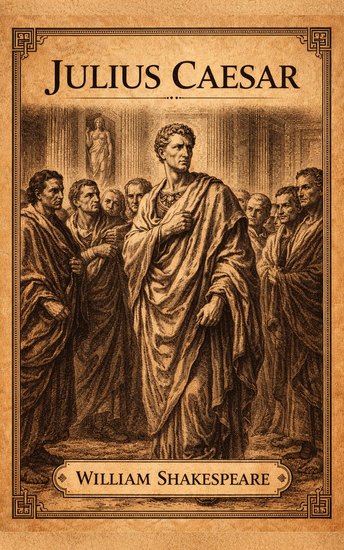
    Imagine a world where the whispers of ancient Rome come alive, where intrigue and bravery shape the destiny of empires. Jeanette Vigon's adaptation brings the monumental story of "Julius Caesar" to young readers, transforming Shakespeare's historical drama into an unforgettable adventure. 
    This thrilling adaptation preserves the essence of the classic tale while making it accessible to children through simplified language and engaging storytelling. Experience the drama, intrigue, and lessons of loyalty, betrayal, and the consequences of power as young minds explore the complexities of one of history's most pivotal moments. "Julius" offers a unique opportunity for children to engage with historical literature, fostering a love for reading and an appreciation for Shakespeare's work from an early age.Accessible and Engaging: Simplified language and storytelling tailored for young readers.Educational Value: Introduces important historical and literary themes in an approachable manner.Moral Lessons: Explores timeless themes of loyalty, betrayal, and the dynamics of power. 
    "Julius" is not just a story; it's a bridge to history, literature, and critical thinking for the next generation. Invite your children to journey back in time and discover the intrigue and lessons of ancient Rome through the eyes of its most famous characters.
    Ver libro