Junte-se a nós em uma viagem ao mundo dos livros!
Adicionar este livro à prateleira
Grey
Deixe um novo comentário Default profile 50px
Grey
Assine para ler o livro completo ou leia as primeiras páginas de graça!
All characters reduced
Calder - cover

Nos desculpe! A editora ou autor removeu este livro do nosso catálogo. Mas não se preocupe, você ainda tem mais de 500.000 livros para escolher para seguir sua leitura!

Calder

Victoria Charles

Editora: Parkstone International

  • 0
  • 3
  • 0

Sinopse

Alexander Calder was a tall man who moved lightly and had the fingers of a surgeon, despite his big hands. Although he had a monk´s ability to concentrate, he loved celebrating with his friends. He was a genius, but not a bore, and his death in 1976 left a big gap for many people. His resounding laughter was silenced and those hands that never stood still would no longer form sculptures, but through thousands of turns of wire, he would continue to manifest his respect and joy for things. As long as the air is still moving and the sun is rising and setting to throw light and shadow onto our world, Alexander Calders sculptures will continue to change their appearance and show new views. When he died on November 11 of 1976, the 16,000 pieces he created would turn into transportable trust funds that would decorate both galleries and landscapes.
Disponível desde: 22/12/2011.
Outros livros que poderiam interessá-lo

  • History Hiding Around Broadway - Backstage Lore Secrets and Surprises from New York's Famed Theater District - cover

    History Hiding Around Broadway -...

    Teale Dvornik, James Monroe...

    • 0
    • 0
    • 0
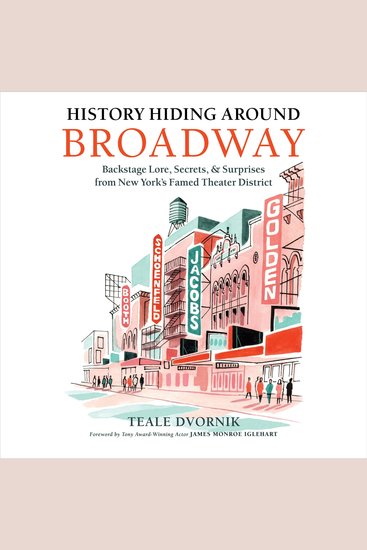
    Go behind the scenes of the Great White Way with this illustrated guide to the Theater District’s hidden history--an essential book for your explorations of the district from a seasoned Broadway guide. Broadway is one of New York’s greatest treasures, and where there is treasure, there is a backstory. When it comes to Broadway, that backstory is fittingly juicy, dramatic, and unexpected. And no one knows these hidden histories like Teale Dvornik, who has been leading Broadway fans on tours of the theater district since 2017. With her immense knowledge and passion for the theater, Dvornik now takes readers on her one-of-a-kind tour of Broadway, “stopping” at each of the 41 theaters to tell us fun facts, lesser-known history, ghost tales, and interesting stories about actors, performances, stage flukes, blunders, and more, involving the biggest names and productions in theater history.  Learn about the Tiffany chandeliers of the Belasco Theater, the trove of hidden jewels at the Gershwin (which houses years of history from the beloved musical Wicked), and the impresarios and players who influenced Broadway. Readers will also learn the fascinating back stories of theater myths, legends, and traditions. Where did the stage ghost light come from? What started the tradition of intermissions? Which theaters have secret connecting hallways? And much, much more!  Along the way, Teale takes detours to explain stage lingo and dives into some of Broadways most popular shows, including CATS, Hello, Dolly!, and Rent. 
    Ver livro
  • Sui Dynasty - Reunification and the Grand Canal Legacy - cover

    Sui Dynasty - Reunification and...

    Rolf Hedger

    • 0
    • 0
    • 0
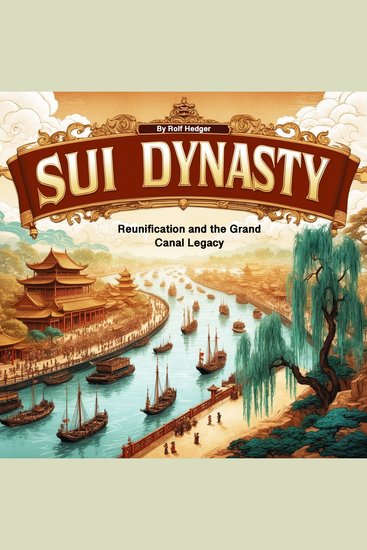
    The period before the rise of the Sui Dynasty was marked by fragmentation and instability, as China remained divided between the Northern and Southern Dynasties. This era, which lasted from the late 4th century to the late 6th century, was characterized by constant warfare, shifting alliances, and a deep cultural divide between the north and south. The fall of this system set the stage for the reunification of China under the Sui Dynasty. 
    The north was ruled by a succession of non-Han Chinese states, often founded by nomadic groups that had migrated into China during the decline of the Western Jin Dynasty. The Northern Wei, established by the Tuoba clan of the Xianbei people, was the most powerful of these states. Over time, the rulers of the Northern Wei adopted Chinese customs, Confucian governance, and Buddhism, which helped stabilize their rule. However, internal struggles, court intrigue, and opposition from powerful aristocratic families led to the dynasty’s division into the Eastern and Western Wei, eventually giving rise to the Northern Qi and Northern Zhou dynasties. 
    In contrast, the Southern Dynasties were ruled by Han Chinese elites who maintained a more traditional Chinese way of life. The Eastern Jin, followed by the Liu Song, Southern Qi, Liang, and Chen dynasties, governed the southern regions, centered around the lower Yangtze River. These dynasties often suffered from weak central control, as powerful noble families exerted significant influence over the government. While the south was culturally rich and economically prosperous, political instability and frequent coups weakened its ability to resist northern invasions.
    Ver livro
  • Fuente Ovejuna - cover

    Fuente Ovejuna

    Lope de Vega, Adrian Mitchell

    • 0
    • 0
    • 0
    A cruel conqueror has captured the Spanish city of Fuente Ovejuna. As his reign of terror builds, the townspeople look within themselves to find the courage to overthrow him. The eminent Spanish playwright Lope de Vega based his best-known play on a historical incident that took place in 1476. Written in the early 17th century, the play remains a timely meditation on honor and selflessness in the face of oppression. 
      
     Recorded at the DoubleTree Guest Suites, Santa Monica in June 1993. 
      
     Directed by Robert Robinson 
     Producing Director: Susan Albert Loewenberg 
      
     An L.A. Theatre Works full-cast recording starring: 
     Christine Avila as Laurencia 
     Ivonne Coll as Jacinta and Queen Isabel 
     Héctor Elizondo as Commander Fernándo Gómez de Guzmán 
     Jorge Galván as Mengo 
     Carlos Gómez as Frondoso 
     Peter A. Jacobs as Captain Flores and Master Rodrigo Téllez Girón 
     Marabina Jaimes as Pascuala 
     Jonathan Nichols as Barrildo and Cimbranos 
     Al Rodrigo as Leonelo, King Ferdinand, and Soldier 
     Ruben Sierra as Esteban  
     Sam Vlahos as Sergeant, Alonso, and Alderman  
      
     Associate Producer: Robert Robinson  
     Technical Director: Raymond Guarna  
     Second Engineer: Jim Machowsky  
     Technical Advisor: Leo del Aguila  
     Music Director: Gerald Sternbach  
     Guitar performed by Ricardo Gomez
    Ver livro
  • Success with Podcasts - From Newbie to Professional: The Complete Guide to Producing Marketing and Making an Income from Your Podcast - cover

    Success with Podcasts - From...

    Dominic Murray

    • 0
    • 0
    • 0
    Add Your Voice to The Podcasting Revolution! 
    The world is tuning to podcasts. Success With Podcasts: is the complete guide to starting, producing, marketing and making an income from your podcast. 
    This book will get you started in the sometimes-daunting world of becoming a podcast host and producer. The advice found within will help in choosing the right equipment, finding your niche, planning an episode, through to assisting in the best approaches to marketing and giving guidance on how to generate an income from your show. Featuring top tech information, production insight, and tips on promoting your pod. Alongside, the latest podcasting trends and audience demographics.
    Ver livro
  • Rocking in the Free World - Popular Music and the Politics of Freedom in Postwar America - cover

    Rocking in the Free World -...

    Nicholas Tochka

    • 0
    • 0
    • 0
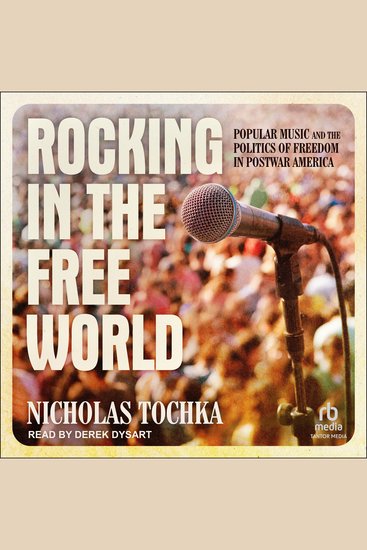
    Progressive and libertarian, anti-Communist and revolutionary, Democratic and Republican, quintessentially American but simultaneously universal. By the late 1980s, rock music had acquired a dizzying array of political labels. These claims about its political significance shared one common thread: that the music could set you free. 


    Rocking in the Free World explains how Americans came to believe they had learned the truth about rock 'n' roll, a truth shaped by the Cold War anxieties of the fifties, the countercultural revolutions (and counter-revolutions) of the sixties and seventies, and the end-of-history triumphalism of the eighties. How did rock 'n' roll become enmeshed with so many different competing ideas about freedom? And what does that story reveal about the promise-and the limits-of rock music as a political force in postwar America?
    Ver livro
  • A Rare Recording of Film Icon Rita Hayworth - cover

    A Rare Recording of Film Icon...

    Rita Hayworth

    • 0
    • 0
    • 0
    Rita Hayworth, born Margarita Carmen Cansino, (October 17, 1918 - May 14, 1987) was an American actress who appeared in 61 films over 37 years achieving fame in the 1940s as one of the top stars of the Golden Age of Hollywood. Dubbed "The Love Goddess" by the Hollywood press, Hayworth is best known for her performance in the 1946 film noir Gilda as the femme fatale opposite Glenn Ford in her first major dramatic role. The following is from a 1972 interview at the San Francisco National Film Festival.
    Ver livro