Junte-se a nós em uma viagem ao mundo dos livros!
Adicionar este livro à prateleira
Grey
Deixe um novo comentário Default profile 50px
Grey
Assine para ler o livro completo ou leia as primeiras páginas de graça!
All characters reduced
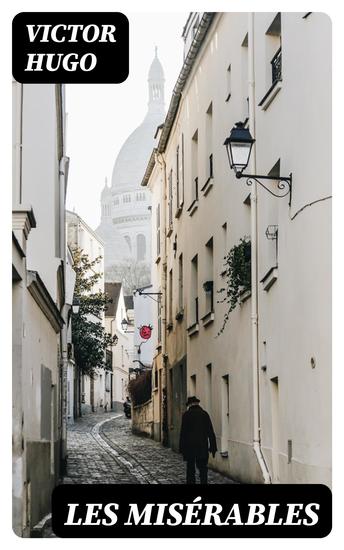
Les Misérables - cover
LER

Les Misérables

Victor Hugo

Tradutor Isabel Florence Hapgood

Editora: DigiCat

  • 0
  • 0
  • 0

Sinopse

Victor Hugo's "Les Misérables" is a monumental exploration of justice, redemption, and the human condition, set against the backdrop of early 19th-century France. Through its intricate narrative, featuring vivid characters such as Jean Valjean, Javert, and Fantine, the novel employs a rich, emotive literary style that deftly blends melodrama with philosophical introspection. This epic work is not only a gripping tale of suffering and resilience but also a profound social commentary, reflective of the tumultuous political landscape and class struggles of its era, serving as a harbinger for later humanitarian movements. Victor Hugo, a titan of French literature and a vocal advocate for social reform, crafted this masterpiece during a period of deep personal and political upheaval. His experiences with poverty, exile, and political injustice greatly influenced his writing. Amidst his literary pursuits, Hugo sought to awaken the conscience of society, and "Les Misérables" epitomizes this mission, intertwining personal tragedy with broader social critique, capturing the zeitgeist of his time. To readers seeking a transformative literary experience, "Les Misérables" is an essential narrative that transcends time and geography. It invites reflection on the inherent dignity of all individuals, challenging societal norms and moral conventions. This novel not only captivates with its storytelling but also serves as a catalyst for empathy and understanding, making it a timeless classic worthy of exploration.
Disponível desde: 16/09/2022.
Comprimento de impressão: 1437 páginas.
Outros livros que poderiam interessá-lo

  • Flowering of the Strange Orchid The (Unabridged) - cover

    Flowering of the Strange Orchid...

    H. G. Wells

    • 0
    • 0
    • 0
    The buying of orchids always has in it a certain speculative flavour. You have before you the brown shrivelled lump of tissue, and for the rest you must trust your judgment, or the auctioneer, or your good luck, as your taste may incline. The plant may be moribund or dead, or it may be just a respectable purchase, fair value for your money, or perhaps-for the thing has happened again and again-there slowly unfolds before the delighted eyes of the happy purchaser, day after day, some new variety, some novel richness, a strange twist of the labellum, or some subtler colouration or unexpected mimicry. Pride, beauty, and profit blossom together on one delicate green spike, and, it may be, even immortality. For the new miracle of nature may stand in need of a new specific name, and what so convenient as that of its discoverer? "John-smithia"! There have been worse names.
    Ver livro
  • Diary of a Lunatic - From their pens to your ears genius in every story - cover

    Diary of a Lunatic - From their...

    Leo Tolstoy

    • 0
    • 0
    • 0
    Leo Tolstoy was born in 1828 in the Russian province of Tula to a wealthy noble family. As a child, he had private tutors but he showed little interest in any formal education. When he went to the University of Kazan in 1843 to study oriental languages and law, he left without completing his courses.  Life now was relaxed and idle but with some writing also taking place.  Gambling debts forced an abrupt change of path and he joined the army to fight in the Crimean War.  He was commended for his bravery and promoted but was appalled at the brutality and loss of life.  He recorded these and other earlier experiences in his diaries which formed the basis of several of his works. 
    In 1852 ‘Childhood’ was published to immediate success and was followed by ‘Boyhood’ and ‘Youth’. 
    His experience in the army and the horrors he witnessed resulted in ‘The Cossacks’ in 1862 and the trilogy ‘Sevastopol Tales’. After the war he travelled around Europe, visiting London and Paris and meeting such luminaries as Victor Hugo and Charles Darwin.  
    It was now that Tolstoy began his masterpiece, ‘War and Peace’. Published in 1869 it was an epic work that changed literature. He quickly followed this with ‘Anna Karenina’.  
    These successes made Tolstoy rich and helped him accomplish many of his dreams but also brought problems as he grappled with his faith and the lot of the oppressed poor. These revolutionary views became so popular that the authorities now kept him under surveillance.  
    He led a life of asceticism and vegetarianism and put his socialist ideals into practice by establishing numerous schools for the poor and food programmes. He also believed in giving away his wealth, which caused much discord with his wife.  
    His writing continued to bring forth classics such as ‘The Death of Ivan Ilyich’ and many brilliant and incisive short stories such as ‘How Much Land Does A Man Need’.  
    In 1901 Tolstoy was excommunicated from the Church and controversially deselected for the Nobel Prize for Literature. 
    Whilst undertaking a pilgrimage by train in October 1910 with his daughter Aleksandra he caught pneumonia in the nearby town of Astapovo.  Leo Tolstoy died on November 9th, 1910, he was 82.
    Ver livro
  • A Piece of Steak - American author of The Call Of The Wild & White Fang brings a biting story about a poverty stricken aging boxer and his plight - cover

    A Piece of Steak - American...

    Jack London

    • 0
    • 0
    • 0
    John Griffith Chaney was born on January 12th, 1876 in San Francisco.   
     
    His father, William Chaney, was living with Flora Wellman when she became pregnant.  Chaney insisted she have an abortion.  Flora's response was to turn a gun on herself.  Although her wounds were not severe the trauma made her temporarily deranged. 
     
    In late 1876 his mother married John London and the young child was brought to live with them as they moved around the Bay area, eventually settling in Oakland where now, calling himself Jack, he completed grade school. 
     
    Jack worked hard at several jobs, sometimes 12-18 hours a day, but his dream was university.  He studied hard and borrowed the money to enrol in the summer of 1896 at the University of California in Berkeley. 
     
    In 1897, at 21, Jack searched out newspaper accounts of his mother's suicide attempt and for the name of his biological father. He wrote to Chaney, then living in Chicago, who claimed he could not be Jack’s father because he was impotent and casually asserted that London's mother had relations with other men.  Jack, devastated by the response, quit Berkeley and went to the Klondike. Other accounts suggest that his dire finances presented Jack with the excuse he needed to leave. 
     
    In the Klondike Jack began to gather material for his writing but also accumulated many health problems, including scurvy, which together with hip and leg problems he would carry for the rest of his life. 
     
    During the late 1890's Jack was regularly publishing short stories and by the turn of the century full blown novels. 
     
    By 1904 Jack had married, fathered two children and was now in the process of divorcing.  A stint as a reporter on the Russo-Japanese war of 1904 was equal amounts trouble and experience. But that experience was always put to good use in a continuing and remarkable output of work. 
     
    In 1905 he married Charmian Kittredge who at last was a soul and companion who brought him some semblance of peace despite his advancing alcoholism and his incurable wanderlust. 
     
    Twelve years later Jack had amassed both wealth and a literary reputation through such classics as ‘The Call of the Wild’, ‘White Fang’ and many others. He had a reputation as a social activist and was a tireless friend of the workers.   
     
    Jack London died suffering from dysentery, late-stage alcoholism and uremia, aged only 40, on November 22nd 1916 at his property in Glen Elen in California 
     
    In ‘A piece of Steak’ an ageing prizefighter seeks one last win. Not for glory, or to revisit fame, but simply to put food on the table and keep his family together.  But to do that he must beat a highly rated up and coming adversary.
    Ver livro
  • Crime and Punishment - cover

    Crime and Punishment

    Fyodor Dostoevsky

    • 0
    • 0
    • 0
    Part of the original Harvard Classics compendium series • One of TIME's 100 Best Mystery and Thriller Books of All Time  
    Crime and Punishment tells the story of Rodion Raskolnikov, an ex-student who plans to murder a pawnbroker to test his theory of personality. Having accomplished the deed, Raskolnikov struggles with mental anguish while trying to both avoid the consequences and hide his guilt from his friends and family.  
    Dostoevsky’s original idea for the novel centered on the Marmeladov family and the impact of alcoholism in Russia, but inspired by a double murder in France he decided to rework it around the new character of Raskolnikov. The novel was first serialized in The Russian Messenger over the course of 1866, where it was an instant success. It was published in a single volume in 1867.   
    This new and unabridged audiobook edition is based on Constance Garnett’s 1914 translation.
    Ver livro
  • Moby Dick - Key Insights - cover

    Moby Dick - Key Insights

    Herman Melville

    • 0
    • 0
    • 0
    Moby Dick is more than a tale of the sea—it is a journey into the depths of ambition, destiny, and human endurance. Through the relentless pursuit of the legendary white whale, listeners are carried into storms of nature and storms of the soul. This timeless adventure explores courage, obsession, unity, and the price of chasing greatness. With its powerful imagery and stirring narrative, it is a story that reminds us that true purpose demands both strength and sacrifice. Perfect for anyone seeking not only a gripping tale but also a reflection on life’s greatest challenges, this audiobook is a voyage you will never forget.
    Ver livro
  • Masterpieces of Tragedies and Comedies - Medea by Euripides; Antigone by Sophocles; The Oresteia by Aeschylus; Othello Hamlet Macbeth by Shakespeare; A Doll's House by Ibsen; Uncle Vanya by Chekhov; Pygmalion by Shaw and others - cover

    Masterpieces of Tragedies and...

    Eurípides, Sophocles, ...

    • 0
    • 0
    • 0
    This collection contains the following works:
    Euripides: Medea
    Sophocles: Antigone
    Aeschylus: Agamemnon
    Aeschylus: Eumenides
    Aeschylus: The Choephori
    William Shakespeare: The Tragedy of Othello, the Moor of Venice
    William Shakespeare: The Tragedy of Romeo And Juliet
    William Shakespeare: The Tragedy of Hamlet, Prince of Denmark
    William Shakespeare: The Tragedy of Macbeth
    William Shakespeare: A Midsummer Night's Dream
    William Shakespeare: The Tragedy of King Lear
    William Shakespeare: Antony and Cleopatra
    William Shakespeare: The Tragedy of Coriolanus
    William Shakespeare: The Tragedie of Julius Caesar
    William Shakespeare: Cymbeline, King of Britain
    William Shakespeare.: The Life of Tymon of Athens
    William Shakespeare: Titus Andronicus
    William Shakespeare: Troilus and Cressida
    Henrik Ibsen: A Doll's House
    Anton Chekhov: Uncle Vanya
    Bernard Shaw: Pygmalion
    Ver livro