Junte-se a nós em uma viagem ao mundo dos livros!
Adicionar este livro à prateleira
Grey
Deixe um novo comentário Default profile 50px
Grey
Assine para ler o livro completo ou leia as primeiras páginas de graça!
All characters reduced
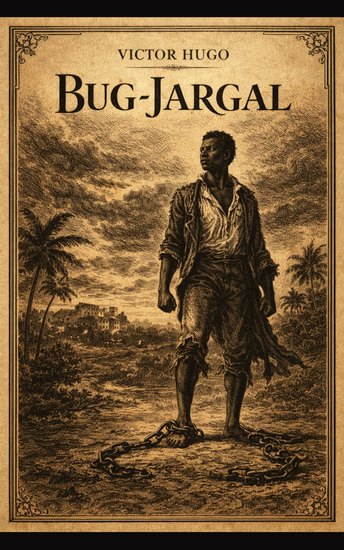
Bug-Jargal - cover
LER

Bug-Jargal

Victor Hugo

Editora: CLXBX

  • 0
  • 0
  • 0

Sinopse

Bug-Jargal is a powerful early novel by Victor Hugo that blends romance, revolution, and tragedy into a sweeping narrative set against the turbulent backdrop of the Haitian Revolution. Written when Hugo was still a teenager, this remarkable work already reveals the dramatic intensity, moral complexity, and poetic vision that would later define one of France's greatest literary figures.

The story unfolds in the French colony of Saint-Domingue at the end of the 18th century, a society built upon rigid racial hierarchies and brutal enslavement. Amid this volatile setting, young French officer Léopold d'Auverney recounts the events that led to a violent uprising and irrevocably altered his life. At the center of the tale stands the mysterious and noble Bug-Jargal—an enslaved man of extraordinary courage, intelligence, and dignity.

Though bound by chains, Bug-Jargal possesses a commanding presence that transcends his status. Secretly in love with Marie, the fiancée of Léopold, he embodies both deep devotion and unwavering honor. When rebellion erupts and plantations burn, the fragile order of colonial society collapses into chaos. Yet even as vengeance and bloodshed sweep across the land, Bug-Jargal distinguishes himself through acts of loyalty and sacrifice that challenge the prejudices of those around him.

Hugo masterfully explores themes of freedom, justice, love, betrayal, and moral integrity. The novel confronts the horrors of slavery while also delving into the emotional entanglements that complicate human relationships in times of crisis. Through vivid descriptions and dramatic confrontations, Hugo portrays a world on the brink of transformation, where ideals clash with reality and personal loyalties are tested by revolutionary fervor.

More than a historical adventure, Bug-Jargal is a meditation on heroism and humanity. Hugo presents his central figure not merely as a victim of oppression, but as a man of profound nobility whose strength lies in his compassion and sense of honor. The novel challenges readers to reconsider notions of race, power, and civilization, offering a bold critique of colonial injustice far ahead of its time.

Filled with sweeping action, passionate emotion, and philosophical reflection, Bug-Jargal foreshadows the grandeur of Hugo's later masterpieces while standing firmly on its own as a gripping and thought-provoking work. For readers who appreciate classic literature, historical drama, and stories of courage amid upheaval, this novel offers an unforgettable journey into one of history's most dramatic revolutions—and into the heart of a hero whose legacy transcends the world that sought to confine him.
Disponível desde: 18/02/2026.
Comprimento de impressão: 200 páginas.
Outros livros que poderiam interessá-lo

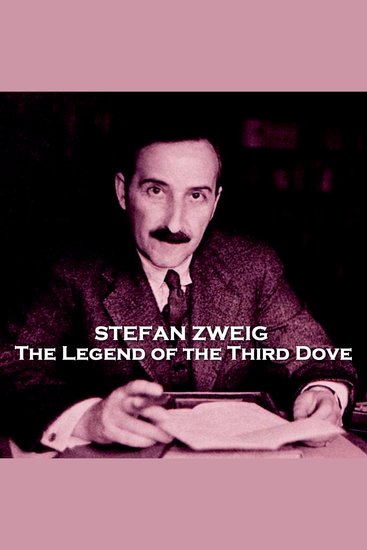
  • The Legend of the Third Dove - From their pens to your ears genius in every story - cover

    The Legend of the Third Dove -...

    Stefan Zweig

    • 0
    • 0
    • 0
    Stefan Zweig was born on the 28th November 1881 in Vienna, then part of the Austro-Hungarian Empire, and into a wealthy Jewish family with interests in banking and textiles. 
    He studied philosophy at the University of Vienna and achieved his degree in 1904. 
    Zweig first published in 1900 and two decades later was a popular and highly regarded author in many parts of the world, although not in England.    
    During the Great War he served in the Archives of the Ministry of War and supported Austria's war effort through his writings in the ‘Neue Freie Presse’.  Whilst his work praised his Country’s progress and, on occasions, its excesses and massacres, he later claimed, in his memoir, that he was a pacifist. 
    In 1912 he began an affair with the married, and mother or two, Friderike Maria von Winternitz, but it was only in 1920 that circumstances allowed them to marry.  She took care of much of his business interests and supported him artistically.  In this decade too many of his most famous works including the short stories; ‘Amok’, and ‘Letter from an Unknown Woman’ (filmed in 1948 by Max Ophüls), novels; ‘Confusion of Feelings’ and biographies including that on Marie Antoinette (filmed by MGM in 1938) were published. 
    He was also the librettist with Richard Strauss of two operas and a keen collector of autographed musical manuscripts.  His collection of over two hundred pieces was later donated to the British Library.  
    In 1934, Zweig, as a Jew, and finding life very difficult under his anti-Semitic government and the neighbouring Nazi’s persuaded him to leave Austria for England.   
    In 1940 Zweig, now divorced and married to his second wife, and former secretary, Lotte Altmann, left London and via New York moved to Petrópolis, a German-colonized town 50 miles north of Rio de Janeiro in Brazil.  Although he continued to write he became, along with his wife, increasingly depressed about the situation in Europe and the future for humanity,  
    His memoir ‘The World of Yesterday’ was completed on the 22nd February 1942. 
    The following day the Zweig’s were found in their house dead of a barbiturate overdose, holding each other’s hand.  He was 60.
    Ver livro
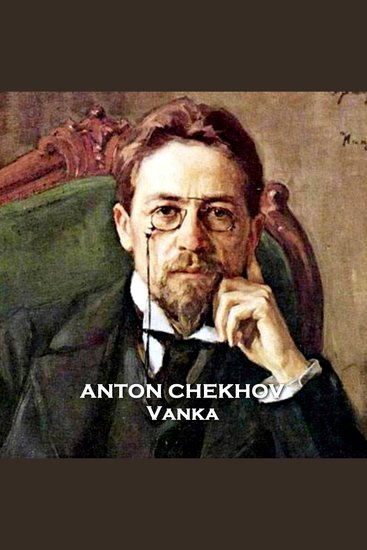
  • Vanka - From their pens to your ears genius in every story - cover

    Vanka - From their pens to your...

    Anton Chekhov

    • 0
    • 0
    • 0
    Anton Pavlovich Chekhov was born on 29th January 1860 in Taganrog, on the south coast of Russia.  
    His family life was difficult; his father was strict and over-bearing but his mother was a passionate story-teller, a subject Chekhov warmed to. As he later said; ‘our talents we got from our father, but our soul from our mother’.  
    At school Chekhov was distinctly average. At 16 his father mis-managed his finances and was declared bankrupt. His family fled to Moscow. Chekhov remained and eked out a living by various means, including writing and selling short sketches to newspapers, to finish his schooling. That completed and with a scholarship to Moscow University obtained he rejoined his family. 
    He was able to help support them by selling satirical sketches and vignettes of Russian lifestyles and gradually obtained further commissions. In 1884, he qualified as a physician and, although it earned him little, he often treated the poor for free, he was fond of saying ‘Medicine is my lawful wife, and literature is my mistress.’ 
    His own health was now an issue as he began to cough up blood, a symptom of tuberculosis.  Despite this his writing success enabled him to move the family into more comfortable accommodation.  
    Chekhov wrote over 500 short stories which included many, many classics including ‘The Kiss’ and ‘The Lady with a Dog’.  His collection ‘At Dusk’ won him the coveted Pushkin Prize when was only 26.  
    He was also a major playwright beginning with the huge success of ‘Ivanov’ in 1887.   
    In 1892 Chekhov bought a country estate north of Moscow. Here his medical skills and money helped the peasants tackle outbreaks of cholera and bouts of famine. He also built three schools, a fire station and a clinic.  It left him with less time for writing but the interactions with real people gained him detailed knowledge about the peasantry and their living conditions for his stories.  
    His most famous work, ‘The Seagull’ was received disastrously at its premiere in St Petersburg. It was later restaged in Moscow to highlight its psychological aspects and was a huge success. It led to ‘Uncle Vanya’, ‘The Three Sisters’ and ‘The Cherry Orchard’.  
    Chekhov suffered a major lung hemorrhage in 1897 while visiting Moscow. A formal diagnosis confirmed tuberculosis and the doctors ordered changes to his lifestyle.  
    Despite a dread of weddings the elusive literary bachelor quietly married the actress Olga Knipper, whom he had met at rehearsals for ‘The Seagull’, on 25th May 1901. 
    By May 1904 with his tuberculosis worsening and death imminent he set off for the German town of Badenweiler writing cheerful, witty letters to his family and assuring them his health was improving.  
    On 15th July 1904 Anton Chekhov died at Badenweiler.  He was 44.
    Ver livro
  • The Secret Garden - cover

    The Secret Garden

    Frances Hodgson Burnett

    • 0
    • 0
    • 0
    "The Secret Garden," written by Frances Hodgson Burnett in the late 19th century, tells the story of Mary Lennox, a spoiled and unhappy child who becomes orphaned and is sent to live with her reclusive uncle at the mysterious Misselthwaite Manor. As Mary explores the manor's enchanting yet neglected gardens, including a hidden garden that has been locked away for years, she begins a journey of self-discovery, healing, and friendship. 
    At the beginning of the book, we meet Mary Lennox, who is left alone in a foreign land after a cholera outbreak claims her parents' lives. Sent to England to live with her uncle, Mary soon realizes she is largely forgotten and left to her own devices. The opening chapters illustrate her initial experiences with the manor, highlighting her disdain for her new environment and her feelings of loneliness. This sets the stage for her growth and the adventures that lie ahead as she uncovers the garden's hidden beauty and forms connections with others, ultimately transforming her character and outlook on life.
    Ver livro
  • Richard III - cover

    Richard III

    E.A. Copen, Pierre Arthur Laure,...

    • 0
    • 0
    • 0
    Brilliantly manipulative and entirely amoral, the hero-villain Richard is one of Shakespeare's greatest roles. 
    The Yorkists have emerged victorious from the civil wars and Edward IV wears the English crown. But Edward's misshapen brother Richard harbors kingly ambitions and will stop at nothing to achieve the throne. In a fatal battle on Bosworth Field, Richard meets the ghosts of all whom he has murdered and the Earl of Richmond, the future King Henry VII. 
    Richard III is played by David Troughton. Saskia Wickham plays Lady Anne, Margaret Robertson plays Queen Margaret, and Philip Voss is Buckingham.
    Ver livro
  • Little Women Podcast: Under The Umbrella Dramatic Reading - cover

    Little Women Podcast: Under The...

    Louisa May Alcott

    • 0
    • 0
    • 0
     Step into the world of the March sisters in this exclusive dramatic reading of Little Women. "Under The Umbrella" brings to life one of the most cherished chapters from Louisa May Alcott's classic novel. Experience the heartfelt moments, timeless dialogues, and emotional depths as performed by a talented voice cast that captures the essence of the 19th-century tale. 
    Through this audiobook, listeners are transported back to a time of family bonds, love, and personal growth. Each character’s voice is distinct, making the story immersive and bringing an added layer of connection. Whether you are revisiting this classic or hearing it for the first time, this rendition will warm your heart and inspire reflection on life’s simple joys. 
    Features:🎧 Dramatic Cast Reading: Skilled voice actors provide a dynamic portrayal of the beloved characters.📚 Faithful to the Original Text: Stays true to Alcott's narrative, preserving the essence and beauty of the classic.🕰️ Timeless Storytelling: Appeals to both new listeners and long-time fans of Little Women.🌂 High-Quality Audio Production: Crisp sound quality that enhances the listener’s experience.👩‍👧‍👦 Family-Friendly: Suitable for all ages, making it a perfect listen for family time or solo enjoyment. 
    Why You Should Listen: Immerse yourself in the warm, comforting tones of a story that has charmed generations. This audiobook is not just a listening experience; it’s a journey into the lives of characters who feel like old friends. Perfect for cozy evenings, road trips, or whenever you need a dose of classic literature.
    Ver livro
  • The Bride Comes to Yellow Sky - cover

    The Bride Comes to Yellow Sky

    Stephen Crane

    • 0
    • 0
    • 0
    In the quiet frontier town of Yellow Sky, order depends on routine, reputation, and one man—Marshal Jack Potter. 
    But on a long train ride from San Antonio, Potter has done something unthinkable. He has married without warning his town, and now returns with his new bride to face the judgment of a community that holds tradition above all else. 
    As the couple approaches Yellow Sky, a different kind of tension grips the town. Scratchy Wilson, the last remnant of its lawless past, roams the streets in a drunken fury, daring anyone to face him. 
    What follows is not a gunfight—but something far more unexpected. 
    In The Bride Comes to Yellow Sky, Stephen Crane delivers a masterful Western that quietly marks the passing of an era. With subtle irony and restrained tension, this story captures the moment when the wild frontier begins to yield to something softer, stranger, and entirely new. 
    Narrated by Tony J. Martin, this classic tale unfolds with humor, humanity, and a powerful sense of transition—where the Old West meets the modern world, and nothing ends quite the way anyone expects.
    Ver livro