¡Acompáñanos a viajar por el mundo de los libros!
Añadir este libro a la estantería
Grey
Escribe un nuevo comentario Default profile 50px
Grey
Suscríbete para leer el libro completo o lee las primeras páginas gratis.
All characters reduced
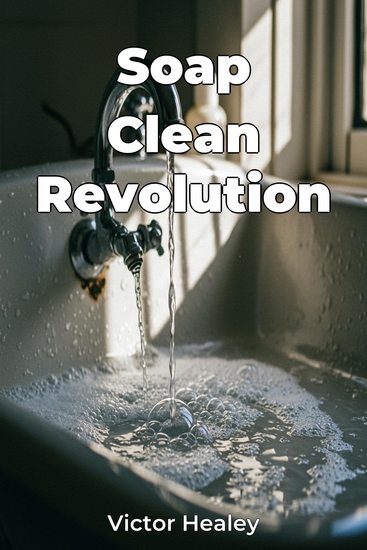
Soap Clean Revolution - cover

Soap Clean Revolution

Victor Healey

Traductor A AI

Editorial: Publifye

  • 0
  • 0
  • 0

Sinopsis

"Soap Clean Revolution" unveils the captivating history of soap, tracing its journey from ancient concoctions to a ubiquitous tool in modern hygiene. The book highlights soap's pivotal role in public health, revealing how this seemingly simple substance has dramatically reduced infectious diseases and improved overall quality of life.

 
Readers will discover how the understanding of germ theory revolutionized soap's purpose, transforming it from a mere cleaning agent to a critical weapon against microbial threats. Learn how, around 2800 BC, Babylonians used rudimentary mixtures, a far cry from the mass-produced soaps available today thanks to the Industrial Revolution.

 
The book explores soap's historical, chemical, and social dimensions, explaining the saponification process in accessible terms and examining the evolution of soap-making techniques across centuries.

 
By integrating historical analysis with scientific insights and public health implications, "Soap Clean Revolution" provides a complete picture of soap's impact on civilization.

 
The narrative progresses chronologically, starting with ancient civilizations, moving through the medieval period, and culminating in discussions about antibacterial soaps and their environmental impact, offering a unique perspective on this often-overlooked aspect of our daily lives.
Disponible desde: 27/02/2025.
Longitud de impresión: 72 páginas.
Otros libros que te pueden interesar

  • Digging Through the Bible - Understanding Biblical People Places and Controversies through Archaeology - cover

    Digging Through the Bible -...

    Richard A Freund

    • 0
    • 0
    • 0
    A “masterful and eminently readable” journey through the fascinating insights and revelations of Biblical archeology (Publishers Weekly, starred review). Many of our religious beliefs are based on faith alone, but archaeology gives us the opportunity to find evidence about what really happened in the distant past—evidence that can have a dramatic impact on what and how we believe. In Digging Through the Bible, archaeologist and rabbi Richard Freund takes readers through digs he has led in the Holy Land, searching for evidence about key biblical characters and events.  Digging Through the Bible presents overviews of the evidence surrounding figures such as Moses, Kings David and Solomon, and Mary the mother of Jesus, as well as new information that can help us more fully understand the life and times in which these people would have lived. Freund also presents new evidence about finding the grave of the Teacher of Righteousness mentioned in the Dead Sea Scrolls, and gives a compelling argument about how the Exodus of the Israelites may have taken place in three separate waves over time, rather than in a single event as presented in the Bible.
    Ver libro
  • Letter play - cover

    Letter play

    Sally Beer

    • 0
    • 0
    • 0
    This book provides a fun range of activities which a parent or carer will be able to undertake with children of pre-school age. Each new activity or exercise has an introductory statement for adults in a panel like this one, and each covers a topic with which small children will feel familiar and comfortable.
    Ver libro
  • A Fragile Life - Accepting Our Vulnerability - cover

    A Fragile Life - Accepting Our...

    Todd May

    • 0
    • 0
    • 0
    It is perhaps our noblest cause, and certainly one of our oldest: to end suffering. Think of the Buddha, Chuang Tzu, or Marcus Aurelius: stoically composed figures impervious to the torments of the wider world, living their lives in complete serenity—and teaching us how to do the same. After all, isn’t a life free from suffering the ideal? Absolutely not, argues Todd May in this provocative but compassionate book. In a moving examination of life and the trials that beset it, he shows that our fragility is actually one of the most important aspects of our humanity. 
     
    May starts with a simple but hard truth: suffering is inevitable. At the most basic level, we suffer physically—a sprained ankle or a bad back. But we also suffer insults and indifference. We suffer from overburdened schedules and unforeseen circumstances, from moral dilemmas and emotional heartaches. Even just thinking about our own mortality—the fact that we only live one life—can lead us to tremendous suffering. No wonder philosophies such as Buddhism, Taosim, Stoicism, and even Epicureanism—all of which counsel us to rise above these plights—have had appeal over the centuries. May highlights the tremendous value of these philosophies and the ways they can guide us toward better lives, but he also exposes a major drawback to their tenets: such invulnerability is too emotionally disengaged from the world, leading us to place too great a distance between ourselves and our experience. Rather than seeking absolute immunity, he argues most of us just want to hurt less and learn how to embrace and accept what suffering we do endure in a meaningful way. 
     
    Offering a guide on how to positively engage suffering, May ultimately lays out a new way of thinking about how we exist in the world, one that reassures us that our suffering, rather than a failure of physical or psychological resilience, is a powerful and essential part of life itself.
    Ver libro
  • Genocide - A Detailed History of the Cambodian and Armenian Genocide - cover

    Genocide - A Detailed History of...

    Kelly Mass

    • 0
    • 0
    • 0
    In this book, we'll discuss two genocides that have cost the lives of millions but have often been overlooked by world historians. These are the following: 
    1 - It’s insane to think that mass murder didn’t stop at the end of World War II. Since the Holocaust, various genocides have taken place in different areas of the world. In this book, we’ll talk about something that has often been shoved under the rug, but was definitely a consequence of the Vietnam War, the bombings by the Americans, and a domino effect into an already fragile political country: The nation of Cambodia. 
    The Cambodian genocide was the methodical abuse and death of Cambodians by the Khmer Rouge, led by Pol Pot, the general secretary of the Communist Party of Kampuchea, who pushed Cambodia towards being an entirely self-dependent agrarian socialist state. Between 1975 and 1979, 1.5 to 2 million people were murdered, representing about a quarter of Cambodia's population in 1975. (c. 7.8 million). 
    2 - Yes, even before World War II, there was a genocide, and not too long before that, actually. We are talking about the Armenian deportations that killed between 1 and 2 million innocent civilians, an atrocity the Turkish government still doesn’t fully acknowledge. Rock bands like System of a Down have complained in their music about it, historians have turned pieces of evidences into large books, and when you talk to Armenians, they still remember what their ancestors told them about it. 
    The Ottoman Empire was collapsing, and in a cruel act of desperation and vengeance, they decided to take out their empirical frustrations on the Armenians and “take care of the Armenian problem.” Mass rapes, murder, deportation, theft, robberies, starvation, and mayhem was the consequence. It became one of the ugliest faces of the First World War in history.
    Ver libro
  • Gaslighting - How to Analyze People & Recognize Hidden Manipulation Mind Control Dark Psychology Reading Body Language Disarm Narcissists Toxic Ex & Healing from Gaslight Effect Narcissistic Abuse - cover

    Gaslighting - How to Analyze...

    Olivia Parent

    • 0
    • 0
    • 0
    Are you questioning your own sanity in your relationship? Do you feel like you're constantly walking on eggshells, confused about what's real and what's not? 
    You're not alone. Many people suffer from the manipulative tactics of narcissists and gaslighters. This book is your essential guide to understanding and overcoming gaslighting, a form of emotional abuse that can leave you feeling isolated, insecure, and powerless.Here's what you'll discover:What gaslighting is and how it works (including the science behind it)Clear signs you're being gaslighted in a relationship or workplaceThe specific words and phrases narcissists use to manipulate youHow to read body language to spot hidden manipulation tacticsProven strategies to disarm a gaslighting manipulatorPractical steps to defend yourself and keep your life gaslighting-freePowerful healing techniques to recover from narcissistic abuseEven if you've never heard of gaslighting before, this book will equip you with the knowledge and tools you need to:Regain your confidence and self-worthSet healthy boundaries in your relationshipsBreak free from the cycle of abuse and reclaim your life 
    Don't wait another day to stop feeling confused and regain control. This book is your path to healing and a life free from gaslighting.Stop feeling like you're crazy! Learn how to identify and stop gaslighting so you can finally have healthy, supportive relationships. Get your copy today!
    Ver libro
  • Square Pegs - Inclusivity compassion and fitting in - a guide for schools - cover

    Square Pegs - Inclusivity...

    Fran Morgan, Ellie Costello

    • 0
    • 0
    • 0
    Over the last few years, changes in education have made it increasingly hard for those children who don't 'fit' the system - the square pegs.
    Budget cuts, the loss of support staff, an overly academic curriculum, problems in the special educational needs and disabilities (SEND) system and difficulties accessing mental health support have all compounded pre-existing problems with behaviour and attendance. The 'attendance = attainment' and zero-tolerance narrative is often at odds with the way schools want to work with their communities, and many school leaders don't know which approach to take.
    This book will be invaluable in guiding leaders and teaching staff through the most effective ways to address this challenge. It covers a broad spectrum of opportunity, from proven psychological approaches to technological innovations. It tests the boundaries of the current system in terms of curriculum, pedagogy and statutory Department for Education guidance. And it also presents a clear, legalese-free view of education, SEND and human rights law, where leaders have been given responsibility for its implementation but may not always fully understand the legal ramifications of their decisions or may be pressured into unlawful behaviour.
    Suitable for all professionals working in education and the related issues surrounding children and young people's mental health, as well as policymakers, academics and government ministers.
    Ver libro