
Junte-se a nós em uma viagem ao mundo dos livros!
Adicionar este livro à prateleira
Grey
Deixe um novo comentário Default profile 50px
Grey
Assine para ler o livro completo ou leia as primeiras páginas de graça!
All characters reduced
A Context Aware Decision-Making Algorithm for Human-Centric Analytics:Algorithm Development and Use Cases for Health Informatics System - cover
LER

A Context Aware Decision-Making Algorithm for Human-Centric Analytics:Algorithm Development and Use Cases for Health Informatics System

Veena A, Gowrishankar S

Editora: Bentham Science Publishers

  • 0
  • 0
  • 0

Sinopse

This reference demonstrates the development of a context aware decision-making health informatics system with the objective to automate the analysis of human centric wellness and assist medical decision-making in healthcare.The book introduces readers to the basics of a clinical decision support system. This is followed by chapters that explain how to analyze healthcare data for anomaly detection and clinical correlations. The next two sections cover machine learning techniques for object detection and a case study for hemorrhage detection. These sections aim to expand the understanding of simple and advanced neural networks in health informatics. The authors also explore how machine learning model choices based on context can assist medical professionals in different scenarios.Key FeaturesReader-friendly format with clear headings, introductions and summaries in each chapterDetailed references for readers who want to conduct further researchExpert contributors providing authoritative knowledge on machine learning techniques and human-centric wellnessPractical applications of data science in healthcare designed to solve problems and enhance patient wellbeingDeep learning use cases for different medical conditions including hemorrhages, gallbladder stones and diabetic retinopathyDemonstrations of fast and efficient CNN models with varying parameters such as Single shot detector, R-CNN, Mask R-CNN, modified contrast enhancement and improved LSTM models.This reference is intended as a primary resource for professionals, researchers, software developers and technicians working in healthcare informatics systems and medical diagnostics. It also serves as a supplementary resource for learners in bioinformatics, biomedical engineering and medical informatics programs and anyone who requires technical knowledge about algorithms in medical decision support systems.ReadershipHealthcare professionals, software developers, engineers, diagnostic technicians, students, academicians and machine learning enthusiasts.
Disponível desde: 16/10/2024.
Comprimento de impressão: 140 páginas.

Outros livros que poderiam interessá-lo

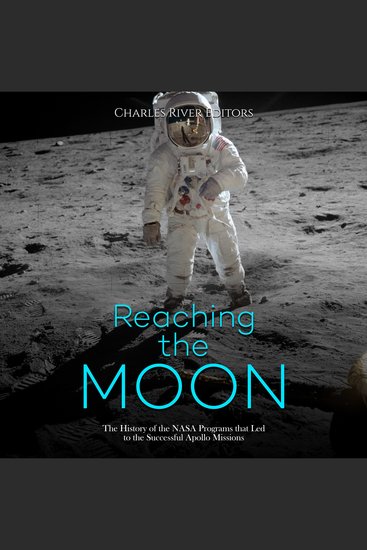
  • Reaching the Moon: The History of the NASA Programs that Led to the Successful Apollo Missions - cover

    Reaching the Moon: The History...

    Editors Charles River

    • 0
    • 0
    • 0
    The Apollo Program is the most famous and celebrated in American history, but the first successful landing of men on the Moon during Apollo 11 had complicated roots dating back over a decade, and it also involved one of NASA’s most infamous tragedies. From 1959-1963, the United States worked toward putting satellites and humans into orbit via the Mercury program, but Eisenhower’s administration was already designing plans for the Apollo program by 1960, a year before the first Russian orbited the Earth and two years before John Glenn became the first American to orbit the Earth. 
    At the same time, America would begin missions to the Moon as early as 1958. On March 27, 1958, Secretary of Defense Neil McElroy announced a lunar project for the International Geophysical Year, consisting of three Air Force launches followed by two Army launches of a JPL-designed lunar probe. ARPA directed the Air Force to launch its probes "as soon as possible consistent with the requirement that a minimal amount of useful data concerning the Moon be obtained." 
    Throughout the 1960s, NASA would spend tens of billions on missions to the Moon, the most expensive peacetime program in American history to that point, and Apollo was only made possible by the tests conducted through earlier missions, including the historic Ranger Program. Conceived as an early part of the attempt to land a man on the Moon, Ranger was designed to photograph the lunar surface in preparation for future landings. Until Ranger, images of the Moon were only available through Earth-based telescopes, which lacked the detail necessary to determine safe sites for landing a spacecraft. Ranger aimed to fill in that gap of knowledge, and like many of NASA’s missions during the 1960s, the program exemplified both the successes and the failures of the agency’s early years.
    Ver livro
  • The Man-Eaters of Tsavo and Other East African Adventures - Lions Against a Railway in East Africa - cover

    The Man-Eaters of Tsavo and...

    J. H. Patterson

    • 0
    • 0
    • 0
    Two lions stopped the building of the Uganda railway in 1898 by eating the workmen - by some counts a hundred and thirty-five of them - until the engineer in charge sat up nights and shot them. Patterson wrote it himself; the skins are in the Field Museum in Chicago and the story has been filmed more than once.
    Ver livro
  • Spiritual Beekeeping - How and why we all need to call back the bees - cover

    Spiritual Beekeeping - How and...

    Paula Carnell

    • 0
    • 0
    • 0
    Spiritual Beekeeping is not just a story- it's a remembering. An invitation to listen, to feel, and to reawaken your own connection with the natural world and the mysteries it holds. Following a dream from 35 years earlier, Paula and her husband Greg chose to give up their lives in the UK and spend a year on the remote Cocos (Keeling) Islands. What seemed like a taste of paradise soon became a spiritual crucible- testing their resilience, and awakening Paula's deepest connection with the bees which uncovered a profound and ancient wisdom that lives within the bees. The printed edition contains colour images to complement the story.
    Ver livro
  • Plastics: Just a Load of Rubbish? - Re-evaluating Plastic and Its Role in Saving the Environment - cover

    Plastics: Just a Load of...

    Alicia Chrysostomou

    • 0
    • 0
    • 0
    The subject is topical, and the author’s angle is provocative, but not contrarian. Acknowledges many of the environmental concerns, but also note that some plastics are not as bad compared to some of the alternatives. Interesting detail about the people behind the invention of plastic. Will appeal to fans of popular science and those with interest in environmental issues.
    Ver livro
  • CISSP - Simple and Effective Strategies for Mastering Information Systems Security from A-Z - cover

    CISSP - Simple and Effective...

    Walker Schmidt

    • 0
    • 0
    • 0
    This book is the best recipe for becoming an expert on information security. If you aspire to be a security expert by taking the CISSP exam, there is no shortage of books that claim to be the ultimate solution to information security. They dupe students into thinking that they are the only books on the market for this specific subject. 
    Well, they may be dubbed as the ultimate but are they the most reader-friendly books for this dry subject? Will there be any juice to be consumed by the reader and fiber to digest? Are those books written easy to under language? If those book authors have crammed their work with technical jargon, I must plead with you to avoid this confusion. 
    What makes this book different from the other books on the market is the fact that it is written in a lucid and coherent form. You will find all the topics well-connected and written in easy and simple language. The book contains the following topics: 
    •Security Principles 
    •Security Threats and Countermeasures 
    •Business Continuity Planning 
    •Incident Response Planning 
    •Security Models and Controls 
    •Secure Communications 
    •And lots more!
    Ver livro
  • Stalking the Great Killer - Arkansas's Long War on Tuberculosis - cover

    Stalking the Great Killer -...

    Larry C. Floyd, Joseph H. Bates

    • 0
    • 0
    • 0
    Stalking the Great Killer is the story of Arkansas's struggle to control tuberculosis, and how the state became a model in its treatment of the disease. 


    To place the story of tuberculosis in Arkansas in historical perspective, the authors trace the origins of the disease. Arkansas suffered some of the worst ravages of the disease, and the authors argue that many of the improvements in the state's medical infrastructure grew out of the desperate need to control it. 


    In the early twentieth century, Arkansas established a sanatorium and thirty years later, the segregated Black sanitorium. These institutions helped slow the disease but at a cost: removed from families and communities, patients suffered from the isolation. Joseph Bates saw this when he delivered an uncle to the sanitorium in the 1940s. In the 1960s, Bates, now a physician, and his colleague Paul Reagan overcame a resistant medical-political system to develop a new approach to treating the disease. 


    In the age of Covid-19, this history offers valuable lessons about community involvement in public health, the potential efficacy of public-private partnerships, and the importance of leadership in the battle to eradicate disease.
    Ver livro