¡Acompáñanos a viajar por el mundo de los libros!
Añadir este libro a la estantería
Grey
Escribe un nuevo comentario Default profile 50px
Grey
Suscríbete para leer el libro completo o lee las primeras páginas gratis.
All characters reduced
Woman Suffrage By Federal Constitutional Amendment - A Call for Equality: Advocating for Women's Voting Rights - cover

Woman Suffrage By Federal Constitutional Amendment - A Call for Equality: Advocating for Women's Voting Rights

Various Various

Editorial: Good Press

  • 0
  • 0
  • 0

Sinopsis

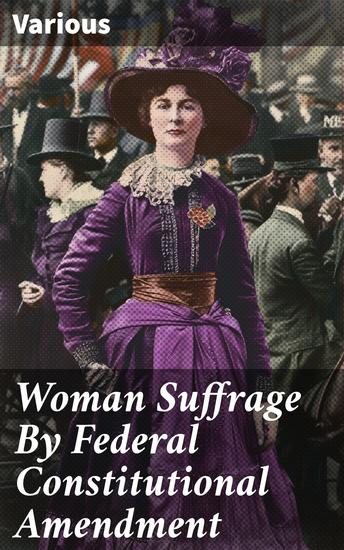
In "Woman Suffrage By Federal Constitutional Amendment," a compilation of seminal essays and documents emerges as a pivotal literary work that chronicles the tireless struggle for women's voting rights in the United States. This anthology boasts a rich diversity of voices and perspectives, offering historical context for the suffrage movement against the backdrop of early 20th-century America. With a literary style that blends passionate rhetoric and legal argumentation, the book reflects a growing societal awareness and evolving concepts of democracy, justice, and equality pertinent to the feminist discourse of the time. The various contributors include prominent suffragists, legal scholars, and reformers, whose own experiences and activism underscore the urgency of the cause. Their collective efforts forged a narrative rooted in both personal stories and strategic political maneuvers, illuminating the intersections of race, class, and gender that shaped the movement. This critical anthology not only exemplifies the zeitgeist of the era but also serves as a testament to the enduring fight for women'Äôs rights, echoing throughout the history of American social movements. This book is an essential read for anyone interested in American history, women's studies, or the legal implications of constitutional amendments. It offers invaluable insight into the fundamental principles of democracy and a clarion call for justice that resonates even today. Readers will find themselves not only informed but also inspired by the resolute voices advocating for equality.
Disponible desde: 12/08/2023.
Longitud de impresión: 52 páginas.

Otros libros que te pueden interesar

  • The Center of the Star - Understanding and Changing the US Healthcare System - cover

    The Center of the Star -...

    Judith Kunisch

    • 0
    • 0
    • 0
    How do we fix a healthcare system that’s too complex, costly, and often unequal? In The Center of the Star, Judith Kunisch offers a groundbreaking perspective on reform, introducing a practical framework that makes sense of healthcare’s tangled web of consumers, providers, payers, policymakers, and the health industrial complex.
    Ver libro
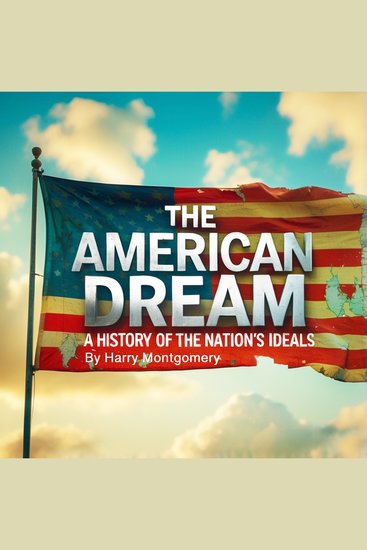
  • The American Dream - A History of the Nation's Ideals - cover

    The American Dream - A History...

    Harry Montgomery

    • 0
    • 0
    • 0
    The roots of the American Dream reach back to the earliest colonial settlements, when European settlers arrived with hopes of building a better life far from the constraints of their homelands. For many, the New World offered something previously unimaginable—land ownership, religious freedom, and the possibility of rising above the station into which they were born. These opportunities, though limited to a select group at the time, laid the foundation for the evolving idea that anyone could succeed through hard work and determination. In this fertile but dangerous land, ambition was a necessity, and the early colonists began to shape a cultural identity around individualism and perseverance. 
    As the colonies grew and developed, tensions with Britain intensified, giving rise to revolutionary ideas that would further fuel the American Dream. The rejection of monarchy and the assertion of natural rights became central to the vision of a new nation. The Revolution itself was not just a fight for independence but also a declaration that ordinary people had the right to govern themselves. The rhetoric of the time emphasized liberty, equality, and the pursuit of happiness—concepts that would become permanently embedded in the national consciousness. The struggle to gain freedom was brutal and uneven, but the ideals expressed during this time continued to inspire generations to believe in the possibility of social mobility and personal fulfillment. 
    One of the most significant documents in American history, the Declaration of Independence, formalized the promise of the American Dream. Its bold claim that "all men are created equal" introduced a national aspiration that transcended the immediate political conflict. Although in practice this equality was far from realized, the statement set a powerful ideal against which future Americans would measure their progress.
    Ver libro
  • Secrets Shadows and the CIA: Inside Covert Operations - Unlock riveting CIA secrets! Dive into thrilling audio lessons for mastering covert operations - cover

    Secrets Shadows and the CIA:...

    Jasper Thornell

    • 0
    • 0
    • 0
    Secrets, Shadows, and the CIA: Inside Covert Operations: 
    ⭐⭐ Simplified Guide & Explanations Included ⭐⭐ 
    Are you looking to delve deeper into the clandestine world of espionage and understand the covert operations of the CIA? 
    Seeking an all-encompassing guide that reveals the hidden truths behind CIA's covert missions? 
    Your search ends here! 
    This guide serves as your ultimate companion for deepening your understanding, applying your knowledge, and engaging in insightful explorations. With this, you're prepared to unlock the secrets. 
    Updated for the latest revelations in CIA covert operations. 
    Key features of this enriched guide: 
    - Profound insights about the inner workings of CIA covert missions 
    - Detailed explanation of key espionage techniques and strategies 
    - Effective methodologies for understanding and analyzing covert operations 
    Our guide stands out with its comprehensive coverage, essential for your grasp of CIA activities. Concepts are not merely touched upon; they are explored with depth and precision. 
    Please note that this guide is not affiliated with any official CIA entity and is purely an independent resource for your benefit. 
    Designed with a clear structure and straightforward language, our guide ensures smooth transitions between topics. Say goodbye to dense jargon and welcome clear, precise, and technically accurate content. 
    So, why wait? Click the BUY NOW button, secure your guide, and begin your journey into the shadows of CIA covert operations!
    Ver libro
  • What Is Property? - An Inquiry into the Principle of Right and of Government - cover

    What Is Property? - An Inquiry...

    Pierre-Joseph Proudhon

    • 0
    • 0
    • 0
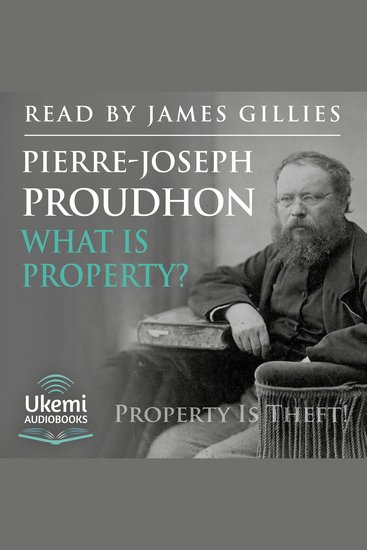
    ‘Property is Theft’, a phrase which has passed into common parlance, was the rallying call of Pierre-Joseph Proudhon’s political treatise What Is Property? Proudhon (1809-1865) was both admired and excoriated. A political theorist of the first order, he was vilified in his native France by the Communists and the Monarchists alike, though admired by Karl Marx as well as many in the nation’s academia and judiciary who valued the clarity of his thought and analytical method.  
     
    He criticised both Right and Left (the very definition of French political thinking), describing them as two sides of the same coin. Their solutions to society’s ills, he said, were like Thesis and Antithesis, based on a common error and both inadequate to the task of healing society. He offered, instead, a third way, which he called his Synthesis. Regarded as the founder of modern Anarchism, his aim was not to engender chaos, as the word anarchy often connotes, but to suggest a workable, political, and economic foundation for society which would promote order and equity for all under the most unfettered conditions of individual liberty.  
     
    Proudhon grew up in poverty, and was home schooled as a child, but received a bursary in his youth sufficient to allow him to attend the City College in his home town (though not sufficient, it seems, to buy him shoes). There, he discovered the library which introduced him to a world, classical and contemporary, previously denied him. Lacking wealth or contacts, he worked variously as a printer, a compositor and proof-reader by day and an essayist by night, learning Latin along the way to assist in his work. In 1830, a friend, a scholar, invited Proudhon to join him in Paris to pursue his philosophical writings full time. When a cholera outbreak forced his return home, Proudhon spent the next few years juggling his two careers. In 1839, he applied for a pension (bursary) at the Academy of Besançon which obliged him to write works on its behalf.  
     
    What Is Property?, published in France in 1840, was his first. It was so controversial that little else followed. However, it established his reputation, and he was eventually able to pursue his philosophical work full time. What Is Property? (First Memoir) attempts to uncover the roots of poverty and associated social ills and examines different attitudes to poverty and wealth from the Greeks to the present day. Proudhon quickly identifies a common thread, property, which he distinguishes from possession, and argues that only a fundamental, though gradual, abandonment of property (as an asset) and all that flows from it, can rescue society from its current conflicts. The memoir seeks to illuminate the underlying causes of war, poverty, slavery, and oppression and points the way to a solution. In effect, it is a practical manual for the survival of mankind. The Second Memoir (1841), included on this recording, is Proudhon’s response to the criticisms of the First Memoir, initially uncomprehending and then self-assured by turns. What Is Property? is Proudhon’s masterwork. It divides opinion, but no one who hears it can come away with their view of their own world unchanged.  
     
    Translation: Benjamin R. Tucker.
    Ver libro
  • Plagues and Their Aftermath - How Societies Recover from Pandemics - cover

    Plagues and Their Aftermath -...

    Brian Michael Jenkins

    • 0
    • 0
    • 0
    From a plague in Athens during the Peloponnesian War in 430 BCE, to another in 540 that wiped out half the population of the Roman empire, down through the Black Death in the Middle Ages and on through the 1918 flu epidemic (which killed between 50 and 100 million people) and this century's deadly SARS outbreak, plagues have been a much more relentless fact of life than many realize. 


    The legacy of epidemics, Brian Michael Jenkins observes, is not only one of lives lost but of devastated economies and social disorder, all of which have severe political repercussions. 


    Thus, each chapter of Plagues and Their Aftermath draws on those historical precursors to focus on one particular aspect of their aftermath: What happens to political systems? What happens in the area of crime and terrorism? Do wars happen? What are the effects on cultures? What was the impact of widespread fear and public hysteria, of increased suspicion and scapegoating, of the spread of rumors and conspiracy theories? 


    Jenkins's sobering analysis is riveting and thought-provoking listening for general listeners and specialists alike, and throws welcome light into what many fear is a dark future.
    Ver libro
  • Exurbia Now - The Battleground of American Democracy - cover

    Exurbia Now - The Battleground...

    David Masciotra

    • 0
    • 0
    • 0
    The suburbs have become too liberal and diverse for many white American conservatives, so "exurbia"—areas outside the cities and their suburbs—are becoming the staging ground for the radical right extremist insurgency . . . 


    Beyond a fanatical devotion to former president Donald Trump, one of the curious things that united the rank and file of the January 6 insurrectionist mob was that many of them were residents of one of America's fastest growing residential areas: Exurbia. In this brilliant work of political and cultural inquiry, veteran political journalist David Masciotra provides a definitive account of what exurbia is, how it came to be, and how it's transforming American life. Zooming in outside the greater metropolitan area of Chicago—where Masciotra grew up—he shows how exurbia has become a safe space to fly the MAGA flag and romanticize the mores of the pre-civil rights, pre-feminist, pre-gay rights 1950s. 


    But, as Masciotra also shows, reactionary white flight is not the whole story of small-town America. The story often lost is the power and persistence of small-town liberals—people who believe in equality, celebrate diversity, and enroll in movements for justice. Exurbia, as it turns out, is ground zero for the fight over a democracy mightily beleaguered, yet still full of promise, and still worth fighting for.
    Ver libro