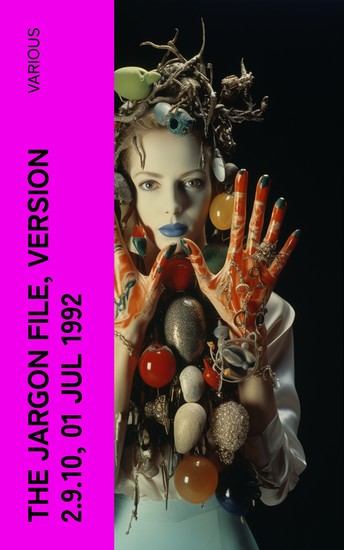
The Jargon File Version 2910 01 Jul 1992 (Annotated) - Enriched Edition A Hacker Culture Dictionary of Early Internet Slang Unix Folklore and Programming Humor
Various Various
Editorial: e-artnow
Sinopsis
The Jargon File, Version 2.9.10, 01 Jul 1992 is a living lexicon of hacker speech, folklore, technical wit, and communal memory. More than a glossary, it records idioms, jokes, origin stories, programming habits, and ethical assumptions from the early networked computing world. Its style is brisk, playful, self-referential, and philologically alert, combining dictionary precision with anecdotal digression. In literary context, it belongs to documentary folk literature as much as to computer history, preserving an oral subculture at the moment it was becoming globally visible. Its author, listed aptly as Various, is the distributed community that produced the language it defines: programmers, system administrators, researchers, and enthusiasts shaped by MIT, Stanford, ARPANET, Unix, and the expanding Internet. Successive maintainers organized and edited the material, but the work's authority derives from collective use. The file reflects the intellectual pleasures, rivalries, and anti-bureaucratic values of those who built and inhabited early digital systems. This book is recommended to readers interested in computing history, linguistics, digital anthropology, or the cultural roots of the Internet. It is indispensable for understanding how technical communities create meaning, identity, and humor through language.

This enriched edition has been carefully crafted to add value to your reading experience.
- An Introduction draws the threads together, discussing why these diverse authors and texts belong in one collection.
- Historical Context explores the cultural and intellectual currents that shaped these works, offering insight into the shared (or contrasting) eras that influenced each writer.
- A combined Synopsis (Selection) briefly outlines the key plots or arguments of the included pieces, helping readers grasp the anthology's overall scope without giving away essential twists.
- A collective Analysis highlights common themes, stylistic variations, and significant crossovers in tone and technique, tying together writers from different backgrounds.
- Reflection questions encourage readers to compare the different voices and perspectives within the collection, fostering a richer understanding of the overarching conversation.
Disponible desde: 29/11/2023.
Longitud de impresión: 529 páginas.