¡Acompáñanos a viajar por el mundo de los libros!
Añadir este libro a la estantería
Grey
Escribe un nuevo comentario Default profile 50px
Grey
Suscríbete para leer el libro completo o lee las primeras páginas gratis.
All characters reduced
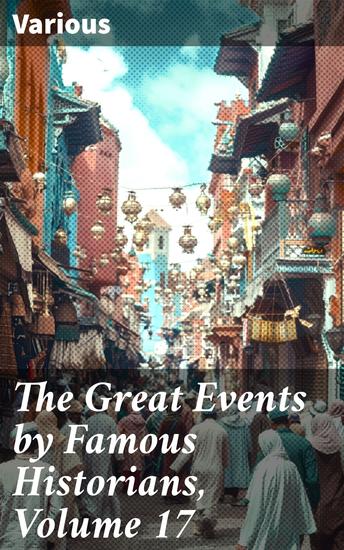
The Great Events by Famous Historians Volume 17 - Exploring the Tapestry of World History - cover

The Great Events by Famous Historians Volume 17 - Exploring the Tapestry of World History

Various Various

Editorial: Good Press

  • 0
  • 0
  • 0

Sinopsis

In "The Great Events by Famous Historians, Volume 17," a diverse array of eminent historians meticulously chronicles pivotal moments that have shaped the course of civilization. This volume continues the tradition of the series, providing an engaging blend of rigorous scholarship and accessible narrative. The contributors, spanning various periods and cultures, employ a distinctive literary style that combines in-depth analysis with vivid storytelling, allowing readers to grasp the significance of events within their broader historical context. Included are insightful examinations of key incidents, revealing the complex interplay of social, political, and economic forces that defined each moment. The compilation features contributions from distinguished historians whose dedicative scholarship stems from a deep passion to bring history alive for contemporary readers. Each historian'Äôs unique perspective is informed by years of academic research and engagement with historical texts, which has endowed them with the ability to convey the nuances of each event in an engaging manner. Their collective efforts highlight the interconnectedness of global history while fostering a greater understanding of humanity's shared past. This volume is an invaluable resource for both history enthusiasts and academic scholars alike. It serves as a compelling gateway into past events, inviting readers to reflect on how these historic milestones continue to resonate in today's world. Whether used for scholarly reference or personal enjoyment, "The Great Events by Famous Historians, Volume 17" promises to enrich your understanding of history through the lens of expert analysis.
Disponible desde: 12/08/2023.
Longitud de impresión: 392 páginas.

Otros libros que te pueden interesar

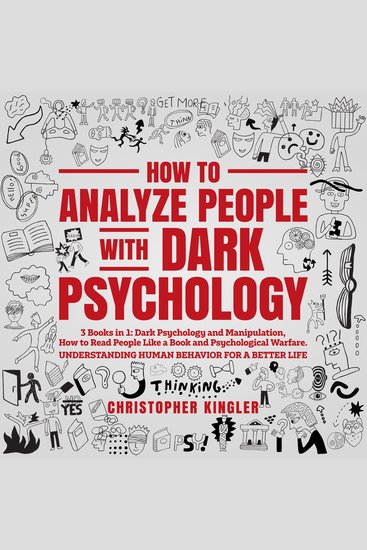
  • How to Analyze People with Dark Psychology - 3 Books in 1: Dark Psychology and Manipulation How to Read People Like a Book and Psychological Warfare Understanding Human Behavior for a Better Life - cover

    How to Analyze People with Dark...

    Christopher Kinger

    • 0
    • 0
    • 0
    This manual provides a cutting-edge distillation of the techniques developed over the centuries by politicians, advertisers, criminals and other masters of their own universe. When applied, they can help you analyse anyone. This will allow you to connect with any personality type you want, forging friendships and social bonds that will last a lifetime! 
    With this collection 3 Books in 1 you will learn: 
    ◆ Dark Psychology - can be seen as the study of the human condition, in relation to the psychological nature of the many different types of people who prey on others. The concept of prey does not always mean that an individual is harmed, but a branch of dark psychology is entirely devoted to this. 
    ◆ How to Analyze People -The non-verbal component constitutes over 65% of overall communication. It is an indispensable skill in any situation or social class. 
    As you have probably already experienced in life the risk of misinterpreting the body language of others, or of sending incorrect and incongruent messages, is very high and can cause a lot of misunderstanding. 
    ◆ Psychological warfare - has existed since the beginning of time. Ancient documents such as The Art of War by Sun Tzu or historical people such as Alexander the Great, Genghis Khan and Niccolò Machiavelli are examples of people who understood the timelessness of military and psychological strategies.With the progress of time, up to the present day, the art of war has become increasingly subtle and difficult to identify.Reading people quickly, deciphering body language, detecting lies and understanding human nature is the best gift you can give yourself in order to improve any area of your life. Start reading people like a book today!
    Ver libro
  • Is This Autism? - A Guide for Clinicians and Everyone Else - cover

    Is This Autism? - A Guide for...

    Sarah Wayland, Donna Henderson,...

    • 0
    • 0
    • 0
    Though our understanding of autism has greatly expanded, many autistic individuals are still missed or misdiagnosed. This highly accessible book clarifies many ways that autism can present, particularly in people who camouflage to hide their autistic traits. 


    The authors take the listener step by step through the diagnostic criteria, incorporating the latest research as well as quotes from over 100 autistic contributors that bring that research to life. They also describe many aspects of autism that are not included in the current diagnostic criteria, such as autistic strengths and co-occurring disorders. Listeners will learn about highly relevant topics, such as different types of empathy, sensory systems that are not well known, neuro-crash and burn out, and relative versus absolute thinking. 


    This book provides a deep, current, and neurodiversity-affirmative understanding of the less obvious presentations of autism. It is relevant to all healthcare professionals, educators, family members, autistic individuals, and anyone who is curious about autism.
    Ver libro
  • Battle of Ravenna The: The History of the Most Famous Battle of the Italian Wars - cover

    Battle of Ravenna The: The...

    Editors Charles River

    • 0
    • 0
    • 0
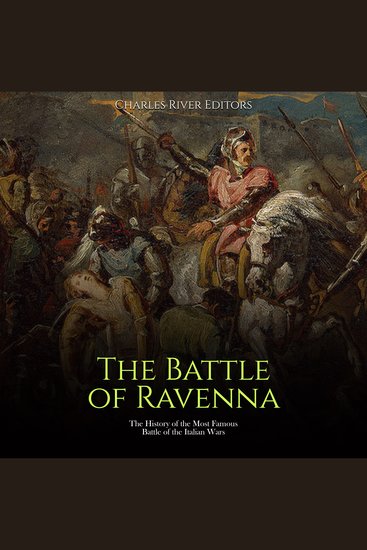
    In 1494, there were five sovereign regional powers in Italy: Milan, Venice, Florence, the Papal States and Naples. In 1536, only one remained: Venice. These decades of conflict precipitated great anxiety among Western thinkers, and Italians responded to the fragmentation of Latin Christendom, the end of self-governance for Italians, and the beginning of the early modern era in various ways. They were always heavily influenced by the lived experience of warfare between large Christian armies on the peninsula. The diplomatic and military history of this 30-year period is a complex one that one eminent Renaissance historian, Lauro Martines, has described as "best told by a computer, so many and tangled are the treatises, negotiations and battles." At the same time, the fighting went in tandem with the Renaissance and was influenced by it.  
    	Before 1494, death tolls were counted in hundreds rather than thousands, but that would change over the next generation, and among the many battles fought, few stood out like the Battle of Ravenna in 1512. Ravenna is an ancient city in northern Italy on the Adriatic Coast that replaced Rome as capital of the Western Roman Empire for much of the 5th century and continued to serve as a regional center for its successor states, including the Ostrogoths, Byzantines, and Papal States. On April 11 of that year, two great armies met near Ravenna, which had been the site of conflict at least six times before on account of its strategic importance. It was a well-protected city with connections to rich Mediterranean ports, and it guarded the routes to central and southern Italy. Over 44,000 troops gathered, a vast number for the time, to fight over Italy’s destiny, which had become important to France, Austria, and Spain, the great powers of the time.
    Ver libro
  • Strange and Mysterious Phenomena - Unexplained Stories from Around the World (5 in 1) - cover

    Strange and Mysterious Phenomena...

    John Harpoon

    • 0
    • 0
    • 0
    This captivating audiobook contains: 
    The Mandela Effect 
     Explore the puzzling phenomenon where thousands share identical false memories. From Nelson Mandela's "remembered" death in prison to changes in familiar logos and movie quotes, discover the theories behind this collective misremembering and the most compelling examples that leave even skeptics questioning what's real. 
    The Corpse That Won World War II 
     Uncover the remarkable true story of Operation Mincemeat, where Allied intelligence used a deceased man with false identity papers to deceive Nazi Germany. Learn how this elaborate deception involving a corpse floating ashore in Spain changed the course of military history and saved countless lives through one of warfare's most audacious acts of espionage. 
    The Lake Filled with Skeletons 
     Journey to the remote Roopkund Lake in the Himalayas, where hundreds of human skeletons were discovered at 16,000 feet above sea level. Investigate the scientific detective work behind identifying these remains from the 9th century, the competing theories about their origins, and why this high-altitude mystery continues to baffle researchers. 
    The Old Book That Predicted Everything 
     Examine the enigmatic Nostradamus prophecies and other historical texts that seem to foretell future events with uncanny accuracy.  
    The Real Moby Dick 
     Discover the true story of the massive sperm whale that inspired Melville's immortal novel—the vengeful albino whale that attacked and sank the Essex whaling ship in 1820. 
    This audiobook brings to life history's most perplexing mysteries through meticulous research and compelling storytelling, inviting listeners to explore the thin boundary between the known world and the unexplainable.
    Ver libro
  • Urbanization and Its Impact - Understanding City Growth - cover

    Urbanization and Its Impact -...

    Lyric Vale

    • 0
    • 0
    • 0
    Urbanization refers to the process by which an increasing proportion of a population comes to reside in urban areas, often transforming rural landscapes into bustling cities. It is a complex and multidimensional phenomenon that encompasses social, economic, cultural, and environmental changes. The rapid expansion of urban areas is one of the most defining features of modern society, reflecting humanity's growing tendency to cluster in cities for opportunities, convenience, and better access to resources. 
    Historically, urbanization began with the establishment of early agricultural settlements, which served as hubs for trade and governance. Over time, these settlements grew into cities as advancements in technology, transportation, and infrastructure facilitated their expansion. The Industrial Revolution, in particular, marked a pivotal moment in the history of urbanization, drawing large numbers of people into urban centers in search of work and prosperity. Today, urbanization continues at an unprecedented pace, driven by industrial growth, globalization, and population migration from rural to urban regions. 
    The scope of urbanization extends far beyond the mere growth of cities. It profoundly influences nearly every aspect of human life, from economic development to social interactions and environmental sustainability. Economically, cities serve as engines of growth, innovation, and creativity, offering concentrated markets, skilled labor, and access to advanced infrastructure. Socially, urban areas often promote cultural exchange and diversity, creating spaces where people from different backgrounds can interact and collaborate. However, this growth also comes with challenges, such as overcrowding, inequality, and the strain on public services and infrastructure.
    Ver libro
  • Urban Crime and Safety - Understanding and Addressing Issues - cover

    Urban Crime and Safety -...

    Lyric Vale

    • 0
    • 0
    • 0
    Urban crime is a complex and pervasive issue that affects millions of people across the globe. As cities continue to grow and evolve, the challenges of maintaining safety and reducing criminal activity become more pressing. Urban areas, often characterized by dense populations, diverse social dynamics, and limited resources, can create an environment where crime thrives. These cities face a unique set of circumstances that contribute to the rise of criminal activities, ranging from petty theft to violent crimes. The relationship between urban crime and safety is multifaceted and requires a comprehensive understanding of its causes, impact, and the strategies necessary for effective crime prevention. 
    The rise in urban crime can be attributed to several factors, including social inequality, economic disparity, inadequate law enforcement, and environmental design issues. High levels of poverty, unemployment, and lack of education in certain neighborhoods often serve as breeding grounds for criminal behavior. In many urban centers, individuals with limited opportunities turn to crime as a means of survival or social mobility. The breakdown of social networks and a lack of community cohesion further exacerbate these challenges, making it difficult to foster a sense of security and mutual trust among residents. 
    Urban crime also places a significant strain on local law enforcement and public resources. Police departments are often overwhelmed by the volume and diversity of crimes that occur in cities. Additionally, urban environments may present logistical challenges for law enforcement agencies, such as limited manpower, insufficient technology, and high crime concentrations in certain areas. This can lead to delayed responses, reduced effectiveness, and strained relations between law enforcement and the communities they serve.
    Ver libro