¡Acompáñanos a viajar por el mundo de los libros!
Añadir este libro a la estantería
Grey
Escribe un nuevo comentario Default profile 50px
Grey
Suscríbete para leer el libro completo o lee las primeras páginas gratis.
All characters reduced
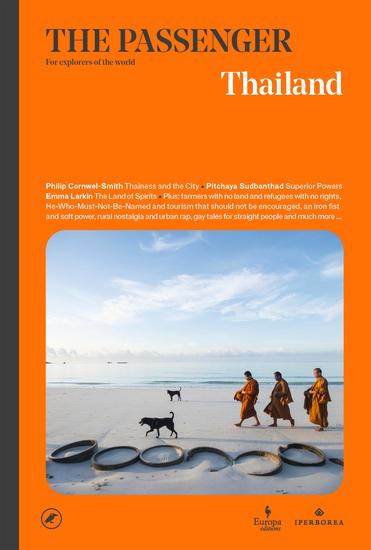
Thailand - The Passenger - cover

Lo sentimos, pero por derechos de la editorial este libro no puede leerse desde el país desde el que te conectas.

Thailand - The Passenger

Various Various

Editorial: The Passenger

  • 0
  • 0
  • 0

Sinopsis

"These books are so rich and engrossing that it is rewarding to read them even when one is stuck at home."—The TLS
The Passenger makes its first stop in Southeast Asia. A journey to one of the world's major tourist destinations.
In this volume: Pitchaya Sudbanthad: Buddhism, the State, and Superpowers • Emma Larkin: The Country of Spirits • Claudio Sopranzetti: Monarchy Under Attack • and, soft power and the working class, the heart of rural Thailand and the separatism of the southern peninsula, the success of Boy Love, the palm oil scandal, and much more...
Recent Thai history is a thrills-and-spills tale filled with street clashes, palace coups, intrigues, attempted revolution, restoration and democratic elections. It is an impossible democracy where the working classes, progressives, and young urban professionals push for reforms and clash with the conservative nobility and business elite. Thailand is perceived as permissive and tolerant, but it hides a prudish core. And yet, one of its main cultural exports is Boy Love stories, romantic tales featuring male protagonists. These stories are the flagship of a cultural revolution and has brought investment in the entertainment industry and Thai soft power to new levels. Behind this sparkling Thailand—exemplified by its capital Bangkok, the most visited city in the world in 2023—are vast regions like Isaan in the Northeast (a third of the area and population) that remain far from the familiar tourist routes. With their ethnic and linguistic diversity and rural character, regions such as these embody the kaleidoscopic soul of a country often overwhelmed by waves of assimilation and centralization. Despite efforts to impose a single culture, ethnicity, and religion, Thailand's true strength seems to be syncretism, religious and otherwise, as demonstrated by the millions of Chinese immigrants who over the past century have increasingly mingled with the local populations to the point of becoming indistinguishable.
Disponible desde: 22/05/2025.
Longitud de impresión: 192 páginas.


Otros libros que te pueden interesar

  • The Manaslu Adventure - Three hapless friends try to climb a big mountain - cover

    The Manaslu Adventure - Three...

    Mark Horrell

    • 0
    • 0
    • 0
    The mountain gods were protective of Manaslu, a two-pronged peak in the Nepal Himalaya, and one of the world’s fourteen 8,000m peaks. 
    Many years ago, a Japanese team tried to climb it, but the gods had sent an avalanche in their wake which destroyed a monastery and set the local people against them. When they returned the next year, they were met with sticks and stones, stripped naked and sent home with red cheeks. 
    Mark Horrell and his two friends Mark and Ian shared a dream to climb an 8,000m peak, but it seemed the gods were against them too. They had made no fewer than eight attempts without success (though they had managed to return with their clothes on). 
    With towering ice walls, monsoon rainstorms, arm-twisting crevasses and – most dangerous of all – welcoming teahouses ready to entrap them, would it be different this time?
    Ver libro
  • Their Heads Are Green and Their Hands Are Blue - cover

    Their Heads Are Green and Their...

    Paul Bowles

    • 0
    • 0
    • 0
    An engaging collection of travel essays by the author of The Sheltering Sky 
    Their Heads are Green, Their Hands are Blue deals largely with places in the world that few Westerners have ever heard of, much less seen—places as yet unencumbered by the trappings, luxuries, and corruptions of modern civilization. Bowles is a sympathetic and discerning observer of these alien cultures, and his eyes and ears are especially alert both to what is bizarre and what is wise in the civilizations in which he settles. 
    Above all, Bowles is a superb and observant traveler—a born wanderer who finds pleasure in the inaccessible and who cheerfully endures the concomitant hardships with resourcefulness, insight, and humor.
    Ver libro
  • The Flying Sabuki - A Father-Son Nature Adventure - cover

    The Flying Sabuki - A Father-Son...

    E.S. Curry

    • 0
    • 0
    • 0
    Do you know what a “Flying Sabuki” is?  
    During a week’s vacation together in the Adirondack Mountains, writer E.S. Curry discovers, through nature and his son Åsmund’s imagination, what this phenomenon is and so much more. This uplifting testament to the joys of fatherhood is a must-read for anyone who wants to learn about the connection and bonding rituals that cement the father-son relationship—electronics and distraction-free.  
    E.S. Curry and his son Åsmund teach us about working together for mutual success, the Danish concept of Hygge, driving character and values through storytelling, and how being amongst nature creates an environment for connectedness. While there are scores of books for expecting fathers, The Flying Sabuki opens an intimate window into the formative Kindergarten years of a father and son relationship with a positive foundation.  
    The Flying Sabuki is a heartwarming tale that’s the perfect holiday or Father’s Day gift and a great book for parents looking for real-world insights on bonding with their child. 
    Stellar Five-Star Reviews 
    If you're a parent seeking ways to connect more closely with your child, or just someone who wants to create a closer bond with another person in your life, treat yourself to this beautiful story. It's about taking time, creating space, and living in the moments that happen when you're fully present with someone you love. The Flying Sabuki is the story of a father being fully present with his young son, and the profound lessons and heartening moments they experience during their vacation at a rustic camp in the Adirondacks. It's a wonderful, heartwarming story. 
    - Wendy Lindstrom, NY Times Bestselling Author
    Ver libro
  • The Adventure Gap - Changing the Face of the Outdoors 10th Anniversary Edition - cover

    The Adventure Gap - Changing the...

    James Edward Mills, Shelton Johnson

    • 0
    • 0
    • 0
    Features a new "where are they now" section, with updates about lives of expedition's original climbers and updated resources based on the "Anti-Racism in the Outdoors" (ARITO) guide. 


    Outdoor journalist James Edward Mills's book, The Adventure Gap, is a groundbreaking volume that is equal parts adventure story, history, and inspiration as it chronicles the first American all-Black summit attempt on Denali in 2013. Mills uses this momentous expedition as a jumping-off point to explore diversity in the outdoors, from Mathew Henson who stood at the North Pole in 1909 to contemporary adventurers such as polar explorer Barbara Hillary and rock climber Kai Lightner. 


    This tenth anniversary edition once again shares the compelling events that unfolded during Expedition Denali's summit bid. But it also provides fresh context: A new thought-provoking afterword by Mills examines what has evolved in and around the outdoor community since that effort. He highlights progress and inspiring stories, such as Full Circle Everest, an expedition led by Phillip Henderson that put an all-Black team on top of the world's highest peak. And he points to places where we can and should all strive for higher achievement. The Adventure Gap has become an essential text in outdoor education and inspiration—a story of our times, now more relevant than ever.
    Ver libro
  • Storm Pegs - A Life Made in Shetland - cover

    Storm Pegs - A Life Made in...

    Jen Hadfield

    • 0
    • 0
    • 0
    This audio edition is read by the author and was recorded in a remote studio in Shetland. 'Storm Pegs perfectly captures the knotting of language and landscape. I was transported.' - Katherine May, Sunday Times bestselling author of WinteringFrom the winner of the T.S. Eliot Prize and the Highland Book PrizeWhat if the answer to ‘Where am I?’ is ‘heaven’?In her late twenties, celebrated poet Jen Hadfield moved to the Shetland archipelago to make her life anew. A scattering of islands at the northernmost point of the United Kingdom, frequently cut off from the mainland by storms, Shetland is a place of Vikings and myths, of ancient languages and old customs, of breathtaking landscapes and violent weather. It has long fascinated travellers seeking the edge of the world.On these islands known for their isolation and drama, Hadfield found something more: a place teeming with life, where rare seabirds blow in on Atlantic gales, seals and dolphins visit its beaches, and wild folk festivals carry the residents through long, dark winters. She found a close-knit community, too, of neighbours always willing to lend a boat or build a creel, of women wild-swimming together in the star-spangled winter seas. Over seventeen years, as bright summer nights gave way to storm-lashed winters, she learned new ways to live.In prose as rich and magical as Shetland itself, Hadfield transports us to the islands as a local; introducing us to the remote and beautiful archipelago where she has made her home, and shows us new ways of living at the edge.
    Ver libro
  • Taisho Era - Democracy and Social Change in a Modernizing Japan - cover

    Taisho Era - Democracy and...

    Rolf Hedger

    • 0
    • 0
    • 0
    The Taisho Era (1912–1926) marked a period of transition in Japan, bridging the highly centralized and authoritarian rule of the Meiji period with the growing democratic movements that characterized the early 20th century. Emperor Taisho ascended to the throne following the death of Emperor Meiji in 1912. Unlike his predecessor, who had been a strong and active ruler, Emperor Taisho was frail and suffered from chronic illness, which significantly limited his ability to govern. As a result, political power gradually shifted away from the emperor and toward elected officials and political parties, paving the way for what would become known as "Taisho Democracy." 
    At the dawn of the Taisho Era, Japan stood at a crossroads between tradition and modernization. The country had rapidly industrialized during the Meiji period, transforming from a feudal society into a modern industrial state. However, with this modernization came social and political unrest. As Japan’s economy expanded, so too did the urban population, leading to the rise of a new middle class that demanded greater political participation and social change. The oligarchic rule of the genrō—elder statesmen who had dominated Meiji politics—faced increasing pressure from political parties, intellectuals, and the general public. 
    The political landscape of early Taisho Japan saw significant changes, including the growing influence of elected politicians. The 1912–1913 Taisho Political Crisis was a defining moment in this shift. When Prime Minister Saionji Kinmochi refused to increase military funding, the army resigned in protest, forcing him to step down. This led to widespread public outrage and a movement advocating for the power of elected officials over military and oligarchic influence. In 1913, the Katsura Tarō government collapsed due to public demonstrations, highlighting the rising political consciousness of the people.
    Ver libro