Junte-se a nós em uma viagem ao mundo dos livros!
Adicionar este livro à prateleira
Grey
Deixe um novo comentário Default profile 50px
Grey
Assine para ler o livro completo ou leia as primeiras páginas de graça!
All characters reduced
Letters from Port Royal - Written at the Time of the Civil War (1862-1868) - cover
LER

Letters from Port Royal - Written at the Time of the Civil War (1862-1868)

Various Various

Editora: DigiCat

  • 0
  • 0
  • 0

Sinopse

"Letters from Port Royal" is a profound collection of correspondence from the inmates of the infamous Port Royal, a former prison in Jamaica, offering an evocative glimpse into the lives of those who endured the harsh realities of incarceration during the 17th century. The letters are marked by their unadorned yet poignant prose, capturing the raw emotional landscapes and moral dilemmas faced by the writers. Set against the backdrop of colonial complexities and the socio-political turmoil of the era, this compilation serves as a rich tapestry of human experience, illuminating themes of despair, hope, and resilience through the lens of personal narrative. The authorship of this collection is diverse, featuring letters penned by prisoners, their families, and various other figures of the time, piecing together a multifaceted view of life in Port Royal. As a location steeped in both naval history and notorious pirate lore, Port Royal's legacy as a site of rebellion and punishment likely influenced these writers, compelling them to express their thoughts, fears, and yearnings in a way that transcends their immediate circumstances. I highly recommend "Letters from Port Royal" to readers interested in historical narratives that reveal the human condition amidst adversity. This collection not only enriches our understanding of this unique historical setting but also invites us to reflect on the timeless struggles for dignity and connection that resonate across centuries.
Disponível desde: 16/09/2022.
Comprimento de impressão: 259 páginas.
Outros livros que poderiam interessá-lo

  • The Silk Road - Trade and Cultural Exchange - cover

    The Silk Road - Trade and...

    Jun Liu

    • 0
    • 0
    • 0
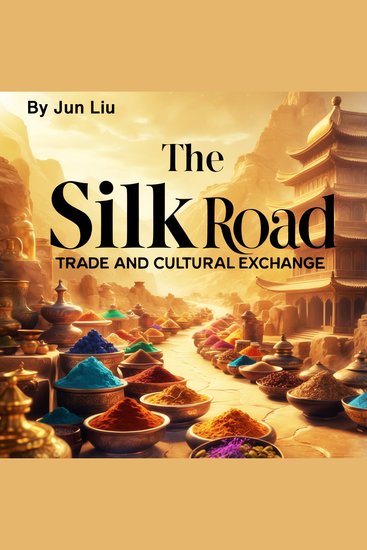
    The origins of the Silk Road trace back more than two thousand years, to a time when empires rose and sought to expand their influence through exploration, diplomacy, and commerce. The foundation of this vast trade network was laid during the Han Dynasty in China, around the 2nd century BCE. Under Emperor Wu of Han, the empire was looking to form alliances and open communication with regions to the west, particularly to counter nomadic threats like the Xiongnu. In pursuit of this goal, the emperor commissioned a young diplomat named Zhang Qian to journey westward, initiating one of the earliest formal missions that would lead to the opening of trade routes between East and West. 
    Zhang Qian’s expeditions proved to be pivotal. Although his initial mission was met with capture and delays, he eventually succeeded in reaching Central Asia and returning with valuable intelligence about distant peoples and lands. His reports detailed the cultures, resources, and military strength of regions far beyond China’s borders, sparking interest in trade and fostering diplomatic relationships. These journeys laid the groundwork for sustained interaction between distant civilizations and demonstrated the strategic and economic potential of linking east to west. 
    As the Han Dynasty expanded its territory and influence, it secured key routes and established military garrisons along the western frontier. These efforts ensured the safety of merchants and travelers, allowing goods to flow more freely across borders. The Silk Road was not a single road, but rather a network of interconnected paths that stretched from China through Central Asia, reaching all the way to the Mediterranean. It connected cities like Chang’an (modern-day Xi’an), Samarkand, and Antioch, forming a bridge between major civilizations of the time.
    Ver livro
  • The Man Who Mistook His Wife for a Hat - cover

    The Man Who Mistook His Wife for...

    Oliver Sacks

    • 0
    • 0
    • 0
    This work provides a concise synthesis of the key insights and analysis from The Man Who Mistook His Wife for a Hat. It is an independent summary, not the original book, and has no affiliation with or endorsement from the original publication. Created for readers who want a clear, thought-provoking overview, it distills the central themes and ideas while preserving the depth and relevance of the work. 
    A collection of fascinating case histories from clinical neurology, describing patients whose brain injuries and disorders lead to bizarre perceptual distortions, memory gaps and identity shifts. Through these stories, the book explores what happens when specific mental functions fail, and what that reveals about the nature of consciousness, self and reality.
    Ver livro
  • The Fairy Gala Community Includes Everyone! - Merlin Fairy Series Book 3 - cover

    The Fairy Gala Community...

    Martha Begley Schade

    • 0
    • 0
    • 0
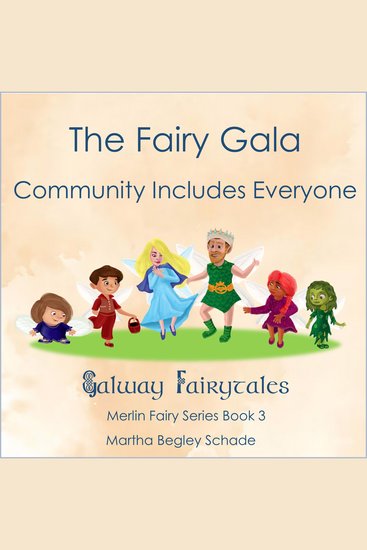
    It's fairy gala time! Fairies from other towns around Ireland come to take part in the Merlin Woods Fairy Gala. They all look so different and there's a strange atmosphere. The locals don’t quite know how to handle the situation. See what happens when they all begin to work together and overcome their differences!Galway Fairytales are a range of books that aim to nurture children's wellbeing through Irish storytelling. These books enable discussions on topics such as bullying, friendships, kindness, teamwork, finding your source of good guidance in life, persevering as a friend, the importance of saying sorry and owning up to wrongdoing, the limits to pranking others, social inclusion, family breakup and coping with anxiety. Each story comes complete with a discussion list and sets of interesting facts about some character or aspect in the story. The Fairy Gala  is the third book of the Merlin Fairy Series and comes complete with a discussion list as well as interesting or fun facts about herbs. Social-emotional learning through enjoyable Irish stories."If you want your children to be intelligent, read them fairy tales. If you want them to be more intelligent, read them more fairy tales."  Albert Einstein
    Ver livro
  • Sovok - (The Memoirs of a Liar) - cover

    Sovok - (The Memoirs of a Liar)

    Kevin McKinney

    • 0
    • 0
    • 0
    Sovok takes you on a front-row view of the transition from Soviet Union to liberated Russia, and her return back to today's tyranny. McKinney describes his interactions for over 20 years with dissidents, billionaires, mob bosses, presidents, bureaucrats, and political leaders, while he constantly breaks laws and bends rules, as do most of the people he works with. Sovok was described by one literary critic as "Jack Kerouac narrating the adventures of Thomas Pynchon's character, Tyrone Slothrop, only in Russia." For a less esoteric summary, a middle American went from washing dishes at a suburban Red Lobster to marrying a Soviet plutonium expert at the request of someone who was likely CIA. When US federal agencies threaten threaten him with prison sentences, the author proceeds to get embroiled in ever wilder escapades 
    By declaring itself to be the story a liar, the author prods the listener to question everyone and everything. Through personal anecdotes, a central theme of Sovok is that a network of loyal and moral friends can, and did, circumvent the world's strictest government regulations, defeat criminal syndicates, and make a lot of money while having more fun than most poor suckers know is possible.
    Ver livro
  • 5 Secrets of Story Structure - How to Write a Novel That Stands Out - cover

    5 Secrets of Story Structure -...

    K.M. Weiland

    • 0
    • 0
    • 0
    Want to take your writing to the next level? Discover the “secrets” of story structure other authors are overlooking!  
    If you’ve read or listened to all the books on story structure and concluded there has to be more to it than just three acts and a couple of plot points, then you’re absolutely right! It’s time to notch up your writing education from “basic” to “black belt”. Internationally published author K.M. Weiland shares five “secret” techniques of advanced story structure.  
    In the multi-award-winning Structuring Your Novel, Weiland showed writers how to use a strong three-act structure to build a story with the greatest possible impact on readers. Now, it’s time to take that knowledge to the next level.  
    In this audiobook, you’ll learn: Why the inciting event isn’t what you’ve always thought it is What your key event is and how to stop putting it in the wrong scene How to identify your pinch points and why they can make the middle of your book easier to write How to create the perfect moment of truth to move your protagonist from reaction to action How to ace your story’s climactic moment, every single time And much more!  
    By the time you’ve finished this quick listen, you’ll know more about story structure than the vast majority of aspiring authors will ever know - and you’ll be ready to write an amazing novel that stands above the crowd.  
    Take the next step in your evolution as a writer!  
    Produced and published by Echo Point Books & Media, an independent bookseller in Brattleboro, Vermont. ©2016 K.M. Weiland.
    Ver livro
  • A Lifetime Doing Nothing - Tales Teachings and Testimonials - cover

    A Lifetime Doing Nothing - Tales...

    Ian McCrorie

    • 0
    • 0
    • 0
    This book is a compilation of teachings told in short stories about the author's attempts to undo the done. He offers this little book as a more ardent, and hopefully lucid, attempt to explain the paramount importance of doing nothing as a way to undo oneself. 
     
    ----------------------------- 
     
    "In my experience, all our problems do indeed stem from this hyperactive and delusional thinking we have acquired over time. 
     
    There is a way to eradicate the light-speed, blind reactions and the habitual confusion. The way is very simple. It boils down to just two words: do nothing. That s it. Do nothing. Sit quietly in a room alone and do nothing. Watch the monkey mind and do not try to fix it or eliminate it or drown it out or engage it. 
     
    This is doing non-doing. Observe the mind, on autopilot as usual, screaming editorial comments from the sidelines like some frenzied play-by-play announcer and do nothing about it. Don't turn the monologue into a dialogue. Do nothing. 'Nothing to see here, folks. Let s keep it moving.'" 
     
    —Ian McCrorie
    Ver livro