Junte-se a nós em uma viagem ao mundo dos livros!
Adicionar este livro à prateleira
Grey
Deixe um novo comentário Default profile 50px
Grey
Assine para ler o livro completo ou leia as primeiras páginas de graça!
All characters reduced
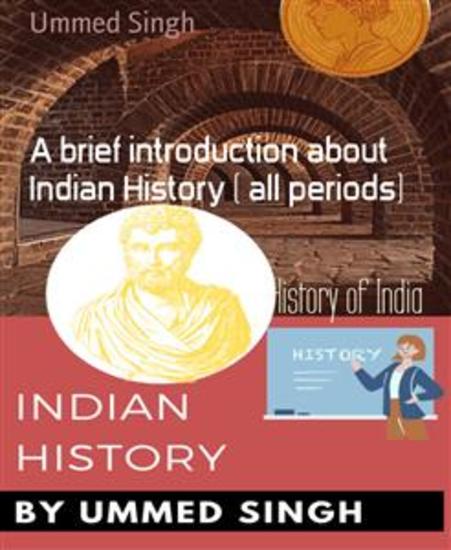
History of India - A brief introduction about Indian History ( all periods) - cover
LER

History of India - A brief introduction about Indian History ( all periods)

Ummed Singh

Editora: BookRix

  • 0
  • 0
  • 0

Sinopse

History is particularly used in two ways. One is the events of ancient or bygone times and the other is the concept of the history of those events (it + ha + as; asthma, ls another man and a word) means " it was sure ". The people of Greece used the term "history" for history. "History" literally means "weave". It is estimated that an attempt was made to weave known events in an orderly manner to present a picture that is meaningful and well-documented. Thus the word history means anecdote group (such as folk tales ), (such as Mahabharat), or historical evidence derived from tradition. The subject we study under history describes chronological events or events related to it in chronological order. In other words, the name of specific human events is history. Or history is the description of events related to mankind, coming from antiquity to newness. These events and historical evidence are authenticated on the basis of fact
Disponível desde: 21/12/2023.
Comprimento de impressão: 26 páginas.

Outros livros que poderiam interessá-lo

  • The Best of Robert Service - cover

    The Best of Robert Service

    Robert Service, Harriett Shlossberg

    • 0
    • 0
    • 0
    This new and revised edition of poems about the men and women of the North features the most loved ballads by Robert Service, and is narrated by Michael Puttonen. While living in Whitehorse, Robert Service wrote The Cremation of Sam McGee, and other well-known poems. He wrote and published into his mid-eighties. He was quoted as saying, I just go for a walk and come back with a poem in my pocket.Gaiety, humor, nostalgia, and pathos fill every page, along with the genuine Service ring of virility which has made his verse loved throughout the English reading world.
    Ver livro
  • Passion to Peace - Transforming Desire into Lasting Serenity - cover

    Passion to Peace - Transforming...

    James Allen, Tim Zengerink

    • 0
    • 0
    • 0
    What if you could channel your strongest passions into a calm center that fuels clarity, purpose, and profound satisfaction? 
    James Allen’s contemplative work examines how strong desires can lead to restlessness and suffering if left unchecked. Adapted for the modern reader, this text guides you to harness your passions wisely—through self-control, ethical conduct, and introspection—ultimately leading to a state of enduring peace and happiness. 
    What You’ll Discover in This Modern Translation: 
    - Strategies to balance passion with wisdom and temperance 
    - How unchecked desires can create turmoil in daily life 
    - The pivotal role of self-control in achieving serenity 
    - Encouraging insights for living a deeply peaceful and purposeful life 
    Imagine a life where your passions become stepping stones toward enlightenment rather than obstacles to peace. James Allen’s timeless counsel illuminates how to turn emotional intensity into a catalyst for spiritual and personal growth. 
    Embrace the path to inner harmony. Get your copy now and transform your passions into lasting fulfillment.
    Ver livro
  • Politics and the English Language - cover

    Politics and the English Language

    George Orwell

    • 0
    • 0
    • 0
    This audiobook is narrated by an AI Voice.   
    MOST people who bother with the matter at all would admit that the English language is in a bad way, but it is generally assumed that we cannot by conscious action do anything about it. Our civilization is decadent, and our language—so the argument runs—must inevitably share in the general collapse. It follows that any struggle against the abuse of language is a sentimental archaism, like preferring candles to electric light or hansom cabs to aeroplanes. Underneath this lies the half-conscious belief that language is a natural growth and not an instrument which we shape for our own purposes. 
    Now, it is clear that the decline of a language must ultimately have political and economic causes: it is not due simply to the bad influence of this or that individual writer. But an effect can become a cause, reinforcing the original cause and producing the same effect in an intensified form, and so on indefinitely. A man may take to drink because he feels himself to be a failure, and then fail all the more completely because he drinks. It is rather the same thing that is happening to the English language. It becomes ugly and inaccurate because our thoughts are foolish, but the slovenliness of our language makes it easier for us to have foolish thoughts. The point is that the process is reversible. Modern English, especially written English, is full of bad habits which spread by imitation and which can be avoided if one is willing to take the necessary trouble. If one gets rid of these habits one can think more clearly, and to think clearly is a necessary first step towards political regeneration: so that the fight against bad English is not frivolous and is not the exclusive concern of professional writers. I will come back to this presently, and I hope that by that time the meaning of what I have said here will have become clearer. Meanwhile, here are five specimens of the English language as it is now habitually written.
    Ver livro
  • Steel Drivin' Man: John Henry the Untold Story of an American Legend - cover

    Steel Drivin' Man: John Henry...

    Scott Reynolds Nelson

    • 0
    • 0
    • 0
    The ballad "John Henry" is the most recorded folk song in American history and John Henry--the mighty railroad man who could blast through rock faster than a steam drill--is a towering figure in our culture. 
    In Steel Drivin' Man, Scott Reynolds Nelson recounts the true story of the man behind the iconic American hero, telling the poignant tale of a young Virginia convict who died working on one of the most dangerous enterprises of the time, the first rail route through the Appalachian Mountains. Using census data, penitentiary reports, and railroad company reports, Nelson reveals how John Henry, victimized by Virginia's notorious Black Codes, was shipped to the infamous Richmond Penitentiary to become prisoner number 497, and was forced to labor on the mile-long Lewis Tunnel for the C&O railroad. Equally important, Nelson masterfully captures the life of the ballad of John Henry, tracing the song's evolution from the first printed score by blues legend W. C. Handy, to Carl Sandburg's use of the ballad to become the first "folk singer," to the upbeat version by Tennessee Ernie Ford. 
    Attractively illustrated with numerous images, Steel Drivin' Man offers a marvelous portrait of a beloved folk song--and a true American legend.
    Ver livro
  • The Daimon and the Soul of the West - Finding identity meaning and purpose in a sacrificial life - cover

    The Daimon and the Soul of the...

    Bernardo Kastrup

    • 0
    • 0
    • 0
    We, Western minds, have forgotten who we are, despite having never once stopped being who we are. We've lost touch with the impersonal, Daimonic forces that give us direction and the sacrificial nature of our existence. No longer do we realize that our lives aren't, have never been, and will never be about ourselves. Consequently, we've lost our ability to sense the immanent context that couches our lives in meaning and purpose. Our alienation from our own inborn nature and role has led to a tragic schism: a divorce between essence and narrative, being and action. This book is an effort to help heal this schism. It's about re-encountering our natural selves and guiding Daimon, retuning into the archetypal dispositions we embody, and relearning how to navigate the choppy waters of life in a spontaneous and fulfilling manner.
    Ver livro
  • Tyrannosaurus Rex and Velociraptors: The History of the Cretaceous Period’s Most Famous Carnivores - cover

    Tyrannosaurus Rex and...

    Editors Charles River

    • 0
    • 0
    • 0
    The massively popular 1990 novel Jurassic Park by Michael Crichton and its subsequent movie adaptations led to a huge resurgence in interest in dinosaurs and the prehistoric world. That interest continues to the present day, even though most of the dinosaurs in Jurassic Park weren’t actually from the Jurassic period. Triceratops, Velociraptor, Tyrannosaurus Rex and the huge sauropods such as Brachiosaurus that feature in the book and movies all actually belong to the Late Cretaceous period, more than 40 million years after the end of the Jurassic. Regardless, certain kinds of dinosaurs remain instantly recognizable, and among them, the “king” is undoubtedly the Tyrannosaurus.  
    The first discovery of a Tyrannosaurus was made in 1902 and the largest carnivorous dinosaur ever found at the time quickly gripped the popular imagination. Even its name was dramatic - Tyrannosaurus Rex means “King of the Tyrant Lizards.” The T-Rex as it quickly became known didn’t appear until the last age of the Late Cretaceous period, the Maastrichtian, but when it did, it was the biggest and most terrifying of all the theropod predators.  
    	Thanks to the movie, there has been some unwitting confusion over the identity of the Velociraptor, and this confusion was due in large part to the fact the name sounds far more scary than the creature to which the name originally belonged. Moreover, the creature to which the label was applied in the novel and movie was actually a distant cousin named Deinonychus, but as the story goes, the author, Michael Crichton, thought “Velociraptor” sounded “more dramatic.” The actual Velociraptor lived not in the badlands of North America, but in the badlands of central-eastern Asia, and it was not nearly as intimidating as Deinonychus. In fact, the main species of genus Velociraptor - Velociraptor mongoliensis - was no bigger than a turkey.
    Ver livro