Junte-se a nós em uma viagem ao mundo dos livros!
Adicionar este livro à prateleira
Grey
Deixe um novo comentário Default profile 50px
Grey
Assine para ler o livro completo ou leia as primeiras páginas de graça!
All characters reduced
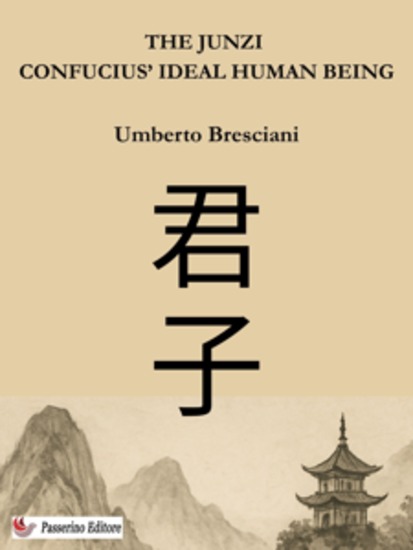
The Junzi - Confucius’ ideal human being - cover
LER

The Junzi - Confucius’ ideal human being

Umberto Bresciani

Editora: Passerino

  • 0
  • 0
  • 0

Sinopse

It is a deeply rooted habit among the Chinese to divide people into two categories: the junzi (gentlemen, decent people, those with a sense of justice, noble-spirited men) and the xiaoren (petty men, mean-spirited individuals who look only to personal profit and never to the common good). This habit, too, is a legacy of Confucius, who transformed the meaning of these two labels.The term junzi — rendered kunshi in Japanese, kwunca in Korean, and quân tử in Vietnamese — already existed before Confucius, and its original meaning was simply to indicate a person’s social status. As a social designation, junzi meant “son (zi) of a feudal lord (jun)” or of an aristocrat, and thus a member of the noble class that governed under that system. In Confucius’s time, society was divided into two classes: the junzi (the aristocrats) and the xiaoren (the common people, the masses).The original meaning occasionally resurfaces in the Analects, as we will point out in due course. But in most cases, the term is used with a different sense. Confucius transformed it into a moral qualification: from “son of a feudal lord (or an aristocrat)” to “a person who has the ideal qualities of a feudal lord or an aristocrat.”From a social qualification (“noble man by blood”) to an ethical one (“noble man by spirit”).The junzi is, according to Confucius, the ideal human being.Naturally, its opposite, the xiaoren, then does not (in most cases) mean someone of humble social origin, but rather a petty, selfish man, unable to see beyond his own narrow personal interests. As we will see, the junzi of Confucius is not a hereditary condition; it is an ideal of life, a goal to be achieved, which any person may aspire to, not just those of noble birth.The descriptions Confucius gives us of the personality of the junzi, or conversely the xiaoren, are in fact his definitions of the ideal human being — how, in his view, a person worthy of the name “human” should or should not behave.Umberto Bresciani1942 Born in Ca’d’Andrea, Cremona, Italy.1962 High School Graduate (Maturità Classica), Liceo Ballerini, Seregno (MI), Italy.1968 Licentiate of Philosophy & Theology, Studentato Teologico Saveriano, Parma, Italy.1969 Entered Chinese Language Institute (Annexed to Fujen University, Taipei, Taiwan).1973 B.A. (major: History; minor: Chinese Studies), University of Maryland (U.S.A.), Far East Division.1975 M.A. Chinese Literature, National Taiwan University, Taipei, Taiwan.1983 Ph. D. Chinese Literature, National Taiwan University, Taipei, Taiwan.Professor of Italian Language: National Taiwan Normal University, Taipei (since 1974).Professor, Dept. of Italian Language & Culture, Fujen University, Xinzhuang, Taipei, Taiwan (since 2003).Umberto Bresciani has lived in Taiwan for over 40 years.His main interest is Chinese philosophical and religious thought and comparative theological studies.Main publicationsBooks:Xifang hanxuejia yanjiu wenshidongyi de shangdui (Evaluation of research by Western sinologists on the Wenshidongyi), dissertation for the Ph.D., Chinese Literature, Taipei: National Taiwan University, May 1983.Reinventing Confucianism: The New Confucian Movement, Taipei: Ricci Institute, 2001.La filosofia cinese nel ventesimo secolo – I nuovi confuciani, Roma: Urbaniana University Press, 2009.Il primo principio della filosofia confuciana, Gaeta: Passerino Editore, 2014.
Disponível desde: 01/07/2025.

Outros livros que poderiam interessá-lo

  • Faithful Futures - Sacred Tools for Engaging Younger Generations - cover

    Faithful Futures - Sacred Tools...

    Josh Packard

    • 1
    • 1
    • 0
    Research-based strategies for Christian leaders to engage Gen Z and Gen Alpha 
     
    In a world where young people are increasingly disconnected from traditional religious institutions and influenced by social media, church leaders face an urgent challenge: how to authentically engage Gen Z and Gen Alpha in meaningful faith conversations. Faithful Futures offers a research-based lifeline with practical tools and strategies designed specifically for connecting with younger generations in today's rapidly changing cultural landscape. 
     
    This actionable resource provides church leaders with 
     
    ● research-based insights - fresh data on Gen Z and Gen Alpha faith patterns, digital behaviors, and cultural values; 
    ● practical ministry strategies - proven methods for building trust and fostering belonging; 
    ● digital-age tools - effective approaches for engaging youth who grew up online and think in micronarratives; 
    ● relationship-building frameworks - how to establish relational authority and create authentic connections with younger generations; and 
    ● ready-to-use resources - exercises, charts, tables, and discussion questions. 
     
    Traditional youth ministry approaches are often outdated and ineffective for digital natives who grew up online. Sociologist Josh Packard advocates a revolutionary approach that emphasizes relational authority, cultivates genuine belonging, and understands faith as an ongoing conversation rather than a one-time decision. 
     
    Drawing on fresh data, innovative practices, and more than twenty years of sociological experience, this comprehensive guide equips religious leaders to understand and engage younger generations authentically. It translates complex concepts into practical strategies, addressing the unique cultural and digital landscapes of today's youth and offering new ways to resonate with their realities. 
     
    Whether you're a senior pastor, youth minister, church staff member, or volunteer leader, this book provides the research-backed tools you need to build meaningful relationships with Gen Z and Gen Alpha.
    Ver livro
  • Lady Maybe - Revised 10th Anniversary Edition - cover

    Lady Maybe - Revised 10th...

    Julie Klassen

    • 1
    • 3
    • 0
    One final cry of terror, and suddenly her world shifted violently, until a blinding collision scattered her mind and shook her bones. Then, the pain. The freezing water. And as all sensation drifted away, a hand reached for hers before all faded into darkness. . . .  
     
    In the midst of a fierce storm, a carriage carrying Sir John Mayfield, Lady Marianna Mayfield, and her lady's companion careens off a narrow cliff road, changing their fates forever. When the wreckage is found, Sir John is gravely injured, and a woman is discovered unconscious wearing a valuable ring. As the woman regains consciousness in a strange house, she grapples with fragmented memories of the accident, unsettling dreams of a child in peril, and a deep mystery tied to the ring on her finger. Surrounded by unfamiliar faces and haunted by a sense of foreboding, the survivor realizes she cannot trust anyone and must uncover the truth of what happened that stormy night, even as danger mounts and enemies conspire against her.  
     
    In this revised and updated 10th anniversary edition of Julie Klassen's acclaimed novel, a woman's startling secrets lead her into unexpected danger and romance in Regency England. 
     
    Lady Maybe is a clean Regency romance full of mystery, adventure, and a search for identity. This novel will delight fans of the amnesia trope, Julia Quinn, Jane Austen, and Mimi Matthews.
    Ver livro