Junte-se a nós em uma viagem ao mundo dos livros!
Adicionar este livro à prateleira
Grey
Deixe um novo comentário Default profile 50px
Grey
Assine para ler o livro completo ou leia as primeiras páginas de graça!
All characters reduced
The Collected Works - cover
LER

The Collected Works

U.G. Krishnamurti

Editora: DigiCat

  • 0
  • 0
  • 0

Sinopse

In "The Collected Works," U. G. Krishnamurti presents a profound exploration of consciousness and self-identity, weaving together reflections that challenge conventional spiritual paradigms. His unconventional literary style, marked by a conversational yet incisive tone, compels readers to confront their preconceived notions of enlightenment and personal awakening. The collection encapsulates a wide array of thought-provoking essays, dialogues, and teachings, all of which reflect Krishnamurti's unique stance against traditional philosophical systems and his emphasis on direct experience over dogmatic belief. Krishnamurti, often seen as a maverick in spiritual circles, was deeply influenced by his own transformative experiences and a divergence from societal norms. His disavowal of the guru-disciple framework illustrates his belief that true liberation comes from within. Having traveled extensively and engaged with diverse thinkers, his insights emerge from a life lived authentically, marked by an insistence on the importance of inquiry and observation. For readers seeking to deepen their understanding of consciousness and to question the very foundations of their beliefs, "The Collected Works" stands as an essential text. It serves not only as a provocative journey into the nature of existence but also as an invitation to engage with the profound questions that lie at the heart of human experience.
Disponível desde: 11/10/2022.
Comprimento de impressão: 667 páginas.
Outros livros que poderiam interessá-lo

  • Top 10 Short Stories The - European 19th - The top ten short stories written in the 19th Century by European authors - cover

    Top 10 Short Stories The -...

    Victor Hugo, Robert Louis...

    • 0
    • 0
    • 0
    The Top 10 – The European 19th Century – an Introduction 
     
    A century of change.  Some catastrophic, some fantastical.  Europe reaches out its national tentacles in a global grab for Empire.  At home, revolutions erupt and decay.  Literature gains a widespread audience through advancing technology.  Here, in this volume, authors absorb and then reveal their wondrous stories. 
     
    Short stories have always been a sort of instant access into an author’s brain, their soul and heart.  A few pages can lift our lives into locations, people and experiences with a sweep of landscape, narration, feelings and emotions that is difficult to achieve elsewhere. 
     
    In this series we try to offer up tried and trusted ‘Top Tens’ across many different themes and authors. But any anthology will immediately throw up the questions – Why that story? Why that author?  
     
    The theme itself will form the boundaries for our stories which range from well-known classics, newly told, to stories that modern times have overlooked but perfectly exemplify the theme.  Throughout the volume our authors whether of instant recognition or new to you are all leviathans of literature. 
     
    1 - Top 10 - The European 19th Century 
    2 - The Body Snatcher by Robert Louis Stevenson 
    3 - The Lady with the Dog by Anton Chekhov 
    4 - The Cloak by Nikolai Gogol also known as 'The Overcoat' 
    5 - The Necklace by Guy de Maupassant 
    6 - The Story of B24 by Arthur Conan Doyle 
    7 - The District Doctor by Ivan Turgenev 
    8 - A Fight with a Cannon by Victor Hugo 
    9 - A Legend of Old Egypt by Boleslaw Prus 
    10 - A Passion in the Desert by Honoré de Balzac 
    11 - The Bundle of Letters by Moritz Jokai 
     
    1 - Top 10 - The European 19th Century 
    2 - The Body Snatcher by Robert Louis Stevenson 
    3 - The Lady with the Dog by Anton Chekhov 
    4 - The Cloak by Nikolai Gogol also known as 'The Overcoat' 
    5 - The Necklace by Guy de Maupassant 
    6 - The Story of B24 by Arthur Conan Doyle 
    7 - The District Doctor by Ivan Turgenev 
    8 - A Fight with a Cannon by Victor Hugo 
    9 - A Legend of Old Egypt by Boleslaw Prus 
    10 - A Passion in the Desert by Honoré de Balzac 
    11 - The Bundle of Letters by Moritz Jokai
    Ver livro
  • The Brothers Karamazov - cover

    The Brothers Karamazov

    Fyodor Dostoyevsky

    • 0
    • 0
    • 0
    Fyodor Dostoyevsky's final novel, considered to be the culmination of his life's work, "The Brothers Karamazov" is the story of the murder of Father Karamazov, whose four sons are all to some degree complicit in the crime. Within the context of this crime story evolves a brilliant philosophical debate of religion, reason, liberty, and the nature of guilt in society. Considered by Sigmund Freud as "The most magnificent novel ever written", the excellent translation of Constance Garnett is presented here in this edition of "The Brothers Karamazov".
    Ver livro
  • Kaya Mijikenda - The Nine Tribes - cover

    Kaya Mijikenda - The Nine Tribes

    Ibrahim Mwafrika

    • 0
    • 0
    • 0
    Based on a true culture, way of life in the year 1500 AD. The Kaya Mijikenda Community of the Bantu Origin namely Kambe, Ribe, Jibana, Kauma, Rabai, Chonyi, Giriama, Duruma and Digo, lived a life worth remembering. Here is their Story.
    Ver livro
  • Science and Religion : Neuroscience(Telepathy of hearing voices) - cover

    Science and Religion :...

    Attah Blessed

    • 0
    • 0
    • 0
    This book was first written by young science student student in his 18s who believed that people should be more educated concerning science, it's views on evolution, it's connection with religion and with the brain of each individual. This book also give more details of telepathy amoung humans, mutations and the meaning and effects of both nature and synthetic telepathy.
    Ver livro
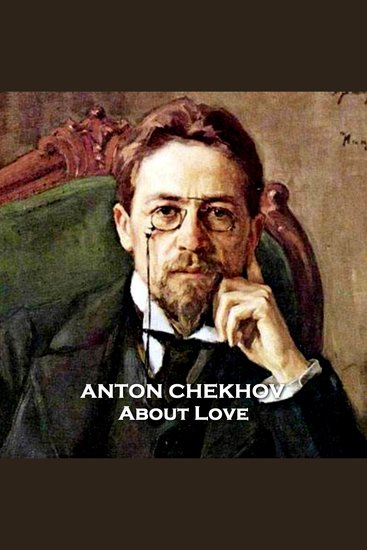
  • About Love - From their pens to your ears genius in every story - cover

    About Love - From their pens to...

    Anton Chekhov

    • 0
    • 0
    • 0
    Anton Pavlovich Chekhov was born on 29th January 1860 in Taganrog, on the south coast of Russia.  
    His family life was difficult; his father was strict and over-bearing but his mother was a passionate story-teller, a subject Chekhov warmed to. As he later said; ‘our talents we got from our father, but our soul from our mother’.  
    At school Chekhov was distinctly average. At 16 his father mis-managed his finances and was declared bankrupt. His family fled to Moscow. Chekhov remained and eked out a living by various means, including writing and selling short sketches to newspapers, to finish his schooling. That completed and with a scholarship to Moscow University obtained he rejoined his family. 
    He was able to help support them by selling satirical sketches and vignettes of Russian lifestyles and gradually obtained further commissions. In 1884, he qualified as a physician and, although it earned him little, he often treated the poor for free, he was fond of saying ‘Medicine is my lawful wife, and literature is my mistress.’ 
    His own health was now an issue as he began to cough up blood, a symptom of tuberculosis.  Despite this his writing success enabled him to move the family into more comfortable accommodation.  
    Chekhov wrote over 500 short stories which included many, many classics including ‘The Kiss’ and ‘The Lady with a Dog’.  His collection ‘At Dusk’ won him the coveted Pushkin Prize when was only 26.  
    He was also a major playwright beginning with the huge success of ‘Ivanov’ in 1887.   
    In 1892 Chekhov bought a country estate north of Moscow. Here his medical skills and money helped the peasants tackle outbreaks of cholera and bouts of famine. He also built three schools, a fire station and a clinic.  It left him with less time for writing but the interactions with real people gained him detailed knowledge about the peasantry and their living conditions for his stories.  
    His most famous work, ‘The Seagull’ was received disastrously at its premiere in St Petersburg. It was later restaged in Moscow to highlight its psychological aspects and was a huge success. It led to ‘Uncle Vanya’, ‘The Three Sisters’ and ‘The Cherry Orchard’.  
    Chekhov suffered a major lung hemorrhage in 1897 while visiting Moscow. A formal diagnosis confirmed tuberculosis and the doctors ordered changes to his lifestyle.  
    Despite a dread of weddings the elusive literary bachelor quietly married the actress Olga Knipper, whom he had met at rehearsals for ‘The Seagull’, on 25th May 1901. 
    By May 1904 with his tuberculosis worsening and death imminent he set off for the German town of Badenweiler writing cheerful, witty letters to his family and assuring them his health was improving.  
    On 15th July 1904 Anton Chekhov died at Badenweiler.  He was 44.
    Ver livro
  • Sociology of Social Structures - Understanding Social Systems and Institutions (5 in 1) - cover

    Sociology of Social Structures -...

    Fred Grandsen

    • 0
    • 0
    • 0
    This book provides an in-depth exploration of the intricate social systems that shape human behavior, societal norms, and everyday life.  
    The Sociology of Crime examines the complex relationship between social structures and criminal behavior. It looks into how crime is defined, why individuals commit crimes, and how societal reactions to crime shape both law enforcement and criminal justice policies. 
    The Sociology of Deviance delves into behaviors that deviate from societal norms and the social processes that label them as deviant. This section explores how norms are constructed, the role of social institutions in defining deviance, and the impact of these labels on individuals and groups. 
    The Sociology of Education explores the role of education in society, focusing on how educational institutions serve as agents of socialization, reproduction of social structures, and vehicles for upward mobility. 
    The Sociology of Work highlights the changing nature of work, labor markets, and employment practices in contemporary society. It covers the evolution of work structures, from industrial labor to service-oriented economies, and the social implications of labor practices on individuals and communities. 
    The Sociology of Consumption looks at the cultural and social aspects of consumption, including how consumer behaviors are influenced by economic forces, marketing, and social norms. This book explores the relationship between identity and consumption, how consumer culture reflects social values, and the environmental and ethical implications of consumerism.  
    Together, these five books offer a comprehensive understanding of the key social structures and institutions that influence human behavior and societal development.
    Ver livro