¡Acompáñanos a viajar por el mundo de los libros!
Añadir este libro a la estantería
Grey
Escribe un nuevo comentario Default profile 50px
Grey
Suscríbete para leer el libro completo o lee las primeras páginas gratis.
All characters reduced
Clean Naturally - Make Safe and Simple Cleaners from Pantry Ingredients - cover

Clean Naturally - Make Safe and Simple Cleaners from Pantry Ingredients

T.S Avini

Editorial: T.S. AVINI

  • 1
  • 0
  • 0

Sinopsis

Transform your cleaning routines with "Clean Naturally," a guide to crafting safe, effective cleaning products from everyday pantry ingredients. Break free from dependency on harsh chemicals with easy-to-follow recipes that present an eco-friendly alternative to conventional cleaners. - Uncover essential natural ingredients like vinegar, baking soda, and essential oils, and learn how they can tackle dirt and grime with powerful results.- Dive into chapters dedicated to individual ingredients, providing scientific insights and practical uses to effortlessly incorporate them into your daily cleaning routine.Whether you're driven by environmental concerns, costs, or a desire for a healthier home environment, "Clean Naturally" offers the knowledge and practical tools needed to build a cleaner, greener lifestyle. Embrace the simplicity and effectiveness of natural cleaning products and take control of your home's cleanliness and your family's well-being today!
Disponible desde: 06/08/2025.
Longitud de impresión: 200 páginas.


Otros libros que te pueden interesar

  • Oncology - Cancer Biology and Therapeutics - cover

    Oncology - Cancer Biology and...

    Ava Westwood

    • 0
    • 0
    • 0
    Oncology is the branch of medicine that focuses on the diagnosis, treatment, and prevention of cancer. It encompasses a wide range of practices, including understanding the biology of cancer, identifying risk factors, exploring therapeutic approaches, and addressing the challenges faced by patients with cancer. The discipline is vital to improving the lives of millions of people worldwide, with ongoing research aimed at advancing our knowledge and capabilities in combating the disease. 
    Cancer, a term used to describe a group of diseases characterized by uncontrolled cell growth, has been a significant health concern for centuries. It occurs when normal cells acquire genetic mutations that enable them to grow and divide uncontrollably, forming tumors or affecting other parts of the body. Despite significant advances in medical science, cancer remains a leading cause of death, highlighting the need for continued innovation in oncology. 
    The importance of oncology lies not only in the treatment of cancer but also in early detection and prevention. Through advancements in diagnostic techniques, clinicians can identify cancers at an earlier stage when treatment options are more effective, leading to better outcomes. The evolving field of oncology also involves interdisciplinary care, combining surgery, radiation, chemotherapy, immunotherapy, and targeted therapies to provide personalized treatment regimens that are tailored to the individual needs of patients.
    Ver libro
  • Winning the Right Game - How to Disrupt Defend and Deliver in a Changing World - cover

    Winning the Right Game - How to...

    Ron Adner

    • 0
    • 0
    • 0
    The basis of competition is changing. Rivalry is shifting from well-defined industries to broader ecosystems: automobiles to mobility platforms; banking to fintech; television broadcasting to video streaming. Your competitors are coming from new directions and pursuing different goals from those of your familiar rivals. In this world, succeeding with the old rules can mean losing the new game. Winning the Right Game introduces the concepts, tools, and frameworks necessary to confront the threat of ecosystem disruption and to develop the strategies that will let your organization play ecosystem offense. 


    To succeed in this world, you need to change your perspective on competition, growth, and leadership. Strategy expert Ron Adner offers a new way of thinking, illustrating breakthrough ideas with compelling cases. How did a strategy of ecosystem defense save Wayfair and Spotify from being crushed by Amazon and Apple? How did Oprah Winfrey redraw industry boundaries to transition from television host to multimedia mogul? How did a shift to an alignment mindset enable Microsoft's cloud-based revival? Each was rooted in a new approach to competitors, partners, and timing that you can apply to your own organization. For today's leaders the difference between success and failure is no longer simply winning, but rather being sure that you are winning the right game.
    Ver libro
  • Infectious Disease - A Very Short Introduction - cover

    Infectious Disease - A Very...

    Marta Wayne, Benjamin Bolker

    • 0
    • 0
    • 0
    Infectious disease is a moving target: new diseases emerge every year, old diseases evolve into new forms, and ecological and socioeconomic upheavals change the transmission pathways that spread disease. But where does disease come from? How is it transmitted from one person to another? And why are some individuals more susceptible than others? 


    In this Very Short Introduction, Marta Wayne and Benjamin Bolker address these questions through the lenses of ecology and evolution. Assessing the management of outbreaks of diseases such as influenza, HIV/AIDS, cholera, and COVID-19, they provide specific examples to illustrate why major diseases still threaten populations all over the world.
    Ver libro
  • American Cryptids - In Pursuit of the Elusive Creatures - cover

    American Cryptids - In Pursuit...

    Kenney W. Irish, Katy Elizabeth,...

    • 0
    • 0
    • 0
    Welcome to the United States of Cryptids . . . please enjoy your stay! 


    Each year across the United States, there are mysterious and unexplainable firsthand encounters by average people. These encounters beg the question, do monsters exist? From east to west across the US, professionals are actively researching these encounters to prove once and for all that these creatures do exist. 


    American Cryptids takes you on a journey across the country, visiting each state along the way. On this adventure, renowned "cryptopunkologist," Kenney W. Irish, reviews historical data of each state, detailing Native American lore and chilling creature encounters with such cryptids as Sasquatch, Mothman, and Champ the Lake Champlain Monster, to name a few.
    Ver libro
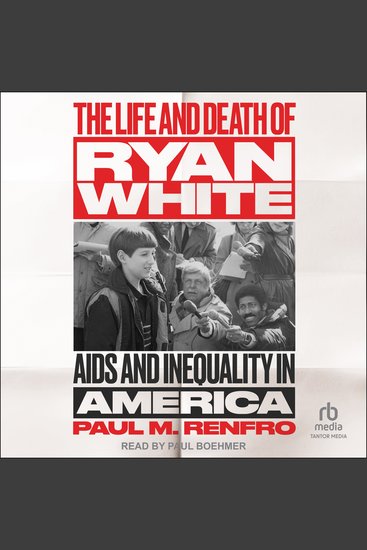
  • The Life and Death of Ryan White - AIDS and Inequality in America - cover

    The Life and Death of Ryan White...

    Paul M. Renfro

    • 0
    • 0
    • 0
    In the 1980s, as HIV/AIDS ravaged queer communities and communities of color in the United States and beyond, a straight white teenager named Ryan White emerged as the face of the epidemic. Diagnosed with hemophilia at birth, Ryan contracted HIV through contaminated blood products. In 1985, he became a household name after he was barred from attending his Indiana middle school. As Ryan appeared on nightly news broadcasts and graced the covers of popular magazines, he was embraced by music icons and well-known athletes, achieving a curious kind of stardom. Analyzing his struggle and celebrity, Paul M. Renfro's powerful biography grapples with the contested meanings of Ryan's life, death, and afterlives. 


    As Renfro argues, Ryan's fight to attend school forced the American public to reckon with prevailing misconceptions about the AIDS epidemic. Yet his story also reinforced the hierarchies at the heart of the AIDS crisis. Because the "innocent" Ryan had contracted HIV "through no fault of his own," as many put it, his story was sometimes used to blame presumably "guilty" populations for spreading the virus. Reexamining Ryan's story through this lens, Renfro reveals how the consequences of this stigma continue to pervade policy and cultural understandings of HIV/AIDS today.
    Ver libro
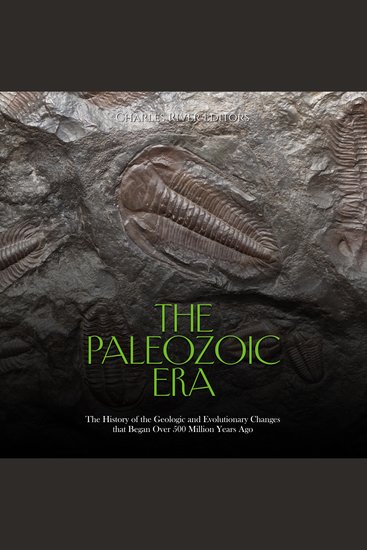
  • Paleozoic Era The: The History of the Geologic and Evolutionary Changes that Began Over 500 Million Years Ago - cover

    Paleozoic Era The: The History...

    Editors Charles River

    • 0
    • 0
    • 0
    The current view of science is that Earth is around 4.6 billion years old, and the first 4 billion years of its development are known as the Precambrian period. For the first billion years or so, there was no life in Earth. Then the first single-celled life-forms, early bacteria and algae, began to emerge. It’s unclear where they came from or even if they originated on this planet at all, but this gradual development continued until around four billion years ago when suddenly (in geological terms) more complex forms of life began to emerge.  
    	Scientists call this time of an explosion of new forms of life the Paleozoic Era, and it stretched from around 541 to 250 million years ago. In the oceans and then on land, new creatures and plants began to appear in bewildering variety, and by the end of this period, life on Earth had diversified into a myriad of complex forms that filled virtually every habitat and niche available in the seas and on the planet’s only continent, Pangea. 
    	The Precambrian Period is divided into three eons: the Hadean, the Archaean, and the Proterozoic. One layer of carbon in rocks that date to the Archaean Eon, found on islands west of Greenland, seems to have fossilized tracks that may have been left by some form of organic life, but scientists simply are not certain. The oldest confirmed remains of life date from the same eon and were found in rocks in Western Australia, which were found to contain fossilized bacteria estimated to be 3.46 billion years old. It seems likely that there were thousands, perhaps even millions of forms of life in these early periods, and most seem to have been microscopic in size and very simple in developmental terms.
    Ver libro