¡Acompáñanos a viajar por el mundo de los libros!
Añadir este libro a la estantería
Grey
Escribe un nuevo comentario Default profile 50px
Grey
Suscríbete para leer el libro completo o lee las primeras páginas gratis.
All characters reduced
The Responsability for the European War - cover

The Responsability for the European War

Tommaso Tittoni

Editorial: Edizioni Aurora Boreale

  • 0
  • 0
  • 0

Sinopsis

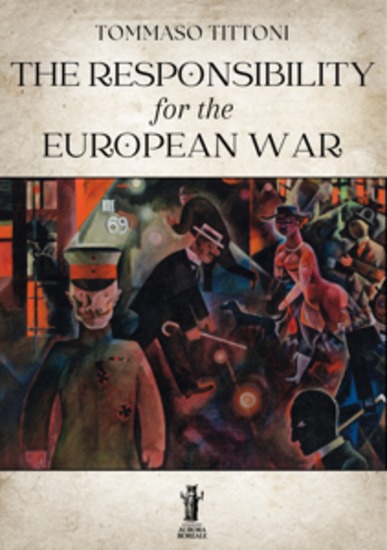
Tommaso Tittoni, born in Rome on November 16, 1855, was a diplomat and politician of the Kingdom of Italy, as well as a Freemason.We present to our readers the full text of the speech The Responsibility for the European War, which Tommaso Tittoni, in his capacity as Italian Ambassador to France, delivered at the Sorbonne in Paris on June 21, 1916.This speech stands as a masterclass in wartime diplomacy and a pivotal document of the First World War. At the time of this address, Tittoni was serving as the Italian Ambassador to France, having already navigated the highest corridors of power as Italy's Prime Minister and Minister of Foreign Affairs. His words were not merely intended for the illustrious audience in Paris, but were broadcast to a world still reeling from the unprecedented slaughter of the "Great War".Tittoni’s primary objective in this discourse is to dismantle the Central Powers’ narrative regarding the war's origins. With the cold precision of a seasoned diplomat, he moves beyond the immediate catalyst of the Sarajevo assassination to reveal what he terms the "true source" of the conflict: the systematic aggression of Austria-Hungary against Serbia. By meticulously quoting the previous peaceful declarations of Austrian statesmen—such as Count Berchtold—Tittoni utilizes their own past rhetoric to condemn their present actions, famously declaring, “Ex ore tuo te judico” (Out of thine own mouth will I judge thee).This text is particularly significant for its defense of Italy’s geopolitical shift. Having been a loyal member of the Triple Alliance for decades, Italy’s decision to join the Entente in 1915 was branded a betrayal by Vienna and Berlin. Tittoni counters this by arguing that it was Austria, through its violation of treaties and its disregard for the Balkan balance of power, that first abandoned the alliance. He positions Italy not as a turncoat, but as a guardian of international law and a defender of the "immortal soul of truth" against the "clay of illusion" cast by Austro-German propaganda.
Disponible desde: 13/02/2026.
Otros libros que te pueden interesar

  • JFK Assassination - What They Told Me - cover

    JFK Assassination - What They...

    William Holiday

    • 0
    • 0
    • 0
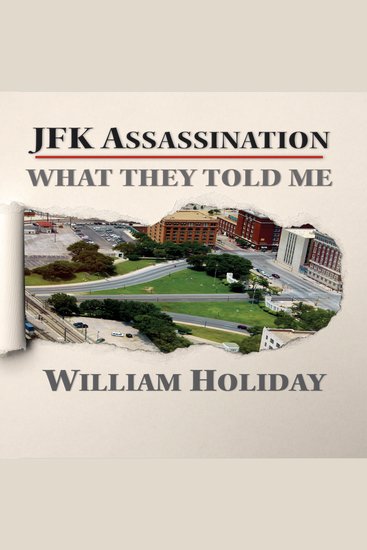
    "JFK Assassination—What They Told Me" unveils a treasury of knowledge crafted by William Holiday, a dedicated educator with a passion for unraveling the truths behind the JFK assassination. In this book lies an extensive compendium of photographs, film segments, interviews, recordings, and documents, offering listeners a journey through the event's multifaceted dimensions. 
    A career educator, not a traditional researcher, William Holiday spent over five decades sharing his profound insights with students. From his years at Dummerston Elementary School to Brattleboro Union High School, and through his tenure at Keene State College and Castleton University, he fostered intellectual growth. His teachings on the JFK assassination, which spanned more than 50 years, extended most recently to the CALL Program at Keene State, where his classes often involved field studies in Dallas, Texas. 
    Notably, Holiday refrains from adopting the labels of "conspiracy theorist" or a staunch advocate of the "lone nut assassin" theory endorsed by the Warren Commission. Instead, he serves as a conduit for the firsthand accounts he has accumulated over time. The witnesses he introduces, ranging from researchers to doctors, provide unique perspectives that challenge conventional narratives. The book echoes the voices of those who were on the scene, including a young lady, an ambulance driver, an automobile salesman, and a deaf observer—all of whom recount their experiences in Dealey Plaza on November 22. 
    PLEASE NOTE: When you purchase this title, the accompanying PDF will be available in your Audible Library along with the audio.
    Ver libro
  • Morning After the Revolution: Book Summary and Analysis - cover

    Morning After the Revolution:...

    Briefly Summaries

    • 0
    • 0
    • 0
    This is a concise summary and analysis of Morning After the Revolution, by Nellie Bowles.
     
    It is not the original book and is not affiliated with or endorsed by Nellie Bowles.
     
    Ideal those seeking a quick and insightful overview.


    Morning After the Revolution takes you on a gripping journey through the aftermath of a progressive movement that promised sweeping change but struggled with practical realities. The author reflects on their personal experiences within the rise of New Progressivism, analyzing the lofty ideals, the disappointments, and the unintended consequences that unfolded in key cities like San Francisco. Through a critical examination of issues such as homelessness, identity politics, and the influence of financial backing, this audiobook delivers a sobering yet insightful exploration of how well-intended policies can sometimes miss their mark.
     
    Narrated with clarity and purpose, this audiobook dives deep into the challenges of balancing idealism with pragmatism in a rapidly changing world. The author critiques the ways in which progressive movements, while striving for justice, often lose sight of the very people they aim to uplift, becoming bogged down in ideological purity and short-term fixes. With a dynamic and thought-provoking tone, this audiobook offers listeners not just a critique of social movements, but also a call to rethink how we can make real, lasting progress.
    Ver libro
  • Animals and the Greco-Roman World: The History of the Ways the Ancient Greeks and Romans Used Animals in Religion and Daily Life - cover

    Animals and the Greco-Roman...

    Editors Charles River

    • 0
    • 0
    • 0
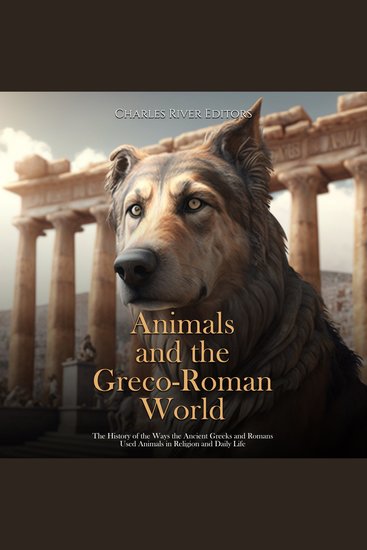
    There were approximately 1,500 Greek city-states (poleis) in the Classical era, and sacrifices featured in every one of them. As such, animals were constantly involved in the core elements of Greek society and cults, and this centrality could be found in the numerous depictions of animals on coins and vases throughout Greece and Greek colonies. Greek thinkers and philosophers also endlessly debated issues relating to animals, which resulted in the Greeks acquiring formidable knowledge about the creatures with whom they came in contact. All the while, animals were important sources of food, companionship, and labor, and they also featured significantly in warfare. 
    Another use for foreign animals was in the preparation of medicines. Animals captured during military conflicts were considered spoils of war, suggesting their status was that of an object. On the other hand, reflecting the Greek ambiguity and ambivalence toward their status, various philosophical debates of the time indicate that animals could also be prosecuted for committing crimes and punished accordingly. It is also apparent that ancient Greeks knew a considerable amount about their animals, as various written works that survived often reflected the ethical and scientific debates surrounding them. 
    Other than the tale of the she-wolf with Romulus and Remus, the overriding images and stories of Roman animals that have come down through popular culture to modern times largely concern the vicious animal fights put on in the Colosseum, stories of Christians being thrown to the lions, and Hannibal's invasion of Italy with elephants. Indeed, the widely accepted view is that Romans were uncommonly brutal to their animals and had little empathy for them, and in terms of the Romans' scientific knowledge about animals, it appears much of it came to them from the Greeks.
    Ver libro
  • Gilded Age - The Rapid Urbanization and Development in 19th Century USA - cover

    Gilded Age - The Rapid...

    Kelly Mass

    • 0
    • 0
    • 0
    The Gilded Age was a period in American history that covered the late 19th century, from the 1870s till around 1900. The Gilded Age was a period of great financial development in the United States, specifically in the North and West. The time saw an increase of countless European immigrants as American incomes were considerably higher than those in Europe, specifically for experienced workers, while industrialization demanded an ever-increasing common labor force. 
    Between 1860 and 1890, the quick growth of market led to a sixty percent boost in real salaries, which was dispersed over an ever-increasing manpower. The typical annual wage for a commercial worker (consisting of men, women, and kids) increased by 48 percent from $380 in 1880 to $564 in 1890. On the other hand, the Gilded Age was also a time of severe poverty and inequality, as countless immigrants-- many from poor parts-- gathered to the United States, bringing with them a high concentration of wealth that ended up being more obvious and controversial.
    Ver libro
  • Great Britain - History of Scotland Ireland and England - cover

    Great Britain - History of...

    Kelly Mass

    • 0
    • 0
    • 0
    This is a book with 10 different topics, all related to the history of Great Britain. The topics are the following: 
    Horatio Nelson 
    The British Raj 
    The Cathars 
    The Great Fire of London 
    Partition of Ireland 
    The Irish Potato Famine 
    Ghosts of Scotland 
    Scottish History 
    Wars of Scottish Independence 
    William Wallace
    Ver libro
  • Politics - A Treatise on Government - cover

    Politics - A Treatise on Government

    Aristotle

    • 0
    • 0
    • 0
    This profound exploration delves into the nature of human societies, governance, and the pursuit of the good life. Aristotle meticulously analyzes various political systems, the role of citizens, and the virtues necessary for a just society. Essential reading for anyone seeking to understand the principles underpinning modern political theory and the quest for justice.
    Ver libro