Junte-se a nós em uma viagem ao mundo dos livros!
Adicionar este livro à prateleira
Grey
Deixe um novo comentário Default profile 50px
Grey
Assine para ler o livro completo ou leia as primeiras páginas de graça!
All characters reduced
The City of the Sun - cover
LER

The City of the Sun

Tommaso Campanella

Editora: BookRix

  • 0
  • 0
  • 0

Sinopse

The City of the Sun is a philosophical work by the Italian Dominican philosopher Tommaso Campanella. It is an important early utopian work. The work was written shortly after Campanella's imprisonment for heresy and sedition.

The book is presented as a dialogue between "a Grandmaster of the Knights Hospitaller and a Genoese Sea-Captain". Inspired by Plato's Republic and the description of Atlantis in Timaeus, it describes a theocratic society where goods, women and children are held in common. It also resembles the City of Adocentyn in the Picatrix, an Arabic grimoire of astrological magic. In the final part of the work, Campanella prophesies —in the veiled language of astrology— that the Spanish kings, in alliance with the Pope, are destined to be the instruments of a Divine Plan: the final victory of the True Faith and its diffusion in the whole world. While one could argue that Campanella was simply thinking of the conquest of the New World, it seems that this prophecy should be interpreted in the light of a work written shortly before The City of the Sun, The Monarchy in Spain, in which Campanella exposes his vision of a unified, peaceful world governed by a theocratic monarchy.
Disponível desde: 19/12/2023.
Comprimento de impressão: 68 páginas.


Outros livros que poderiam interessá-lo

  • Down to Earth Dharma - Insight Meditation to Awaken the Heart - cover

    Down to Earth Dharma - Insight...

    Rebecca Bradshaw

    • 0
    • 0
    • 0
    Buddhist teachings and heart-centered practices from the "feminine paradigm" to embrace receptivity and bring more balance to your life, relationships, and the world. 


    With deeply thoughtful, lyrical prose, this book invites listeners to engage with the world from a unique perspective that encourages feeling, intuitive understanding, embodiment, interdependence, and sacredness. Weaving together classical Theravada Buddhist teachings and mindfulness practices, the book teaches us when and how to channel our receptive and active orientations—sometimes called the feminine and masculine paradigms—to feel more at home in ourselves and the world and drop more deeply into the Buddhist teachings on suffering and happiness. 


    Rebecca Bradshaw, a respected Buddhist teacher in the Insight Meditation community, offers teachings that are simple yet require us to explore aspects of ourselves that go against much of our social conditioning that values goal-oriented busyness, productivity, independence, outgoing energy, and other “active” qualities. When overemphasized, this orientation can cause destructive emotions and behaviors, but we can counter them by embracing more receptive qualities. The receptive or feminine paradigm takes us deeper into the heart of the classical Buddhist teachings, leading to openness and freedom of the heart-mind.
    Ver livro
  • Learner Circle - cover

    Learner Circle

    Tenzim Norzom

    • 0
    • 0
    • 0
    Inspired by storytelling, this woman entrepreneur pivoted her learning initiative into an ed-tech startup
    Ver livro
  • Artificial Intelligent Future - cover

    Artificial Intelligent Future

    Raphael Terra

    • 0
    • 0
    • 0
    This audiobook has been recorded using Text to speech (TTS). 
     
    The days of a secure and peaceful future are over. Man is on the brink of a new world filled with danger, adventure, and a potential threat from an artificial intelligence unlike anything ever seen. 
     
    The world we live in is on the cusp of a dangerous new era: the emergence of intelligent artificial systems, or “agents”, that will profoundly reshape humanity’s relationship with technology. We will explore the murky landscape ahead, and seek to uncover the future of mankind’s relationship with these revolutionary new technologies. 
     
    Advancements in artificial intelligence are happening faster than ever before, and with them comes a potential risk unseen in the history of digital technology. We explore the implications of this rapid development, from extreme wealth disparity to cyber–security threats, and examine how these systems might impact the lives of citizens everywhere. At the center of this book stands the ethical dilemma posed by these agents: how can we ensure that our choices respect and protect our values, interests, and communities? 
     
    This is just the beginning. As we venture deeper into this new, complex, and sometimes intimidating world, you will witness stunning stories of amazing innovations and emerging opportunities that promise to change our lives forever. From artificial intelligence and its associated robotic hardware, to the advocates and opponents of these remarkable creations, this book promises to be an eye-opening exploration of the world that’s to come.
    Ver livro
  • Dark Psychology: Practical Techniques to Protect Against Mind Control Lies and Manipulation (Art of Covert Manipulation Gaslighting and Psychological Warfare) - cover

    Dark Psychology: Practical...

    James Segler

    • 0
    • 0
    • 0
    Dark Psychology: Practical Techniques to Protect Against Mind Control, Lies, and Manipulation is your essential defense manual against the hidden tactics used to exploit, deceive, and control. In a world where psychological manipulation is everywhere—from personal relationships to media and politics—understanding how it works is no longer optional. 
    This book reveals the covert strategies used by manipulators and how you can recognize, resist, and counter them with confidence. 
    Inside, you’ll uncover:The core principles of dark psychology and how they’re used in everyday lifeThe subtle signs of covert manipulation and emotional controlHow to identify and protect yourself from gaslighting and psychological warfarePractical techniques to build mental resilience and defend your mindReal-world scenarios to help you detect deception, lies, and toxic influence 
    Whether you're looking to protect your personal boundaries or simply understand the psychology behind manipulation, this book equips you with the tools to stay aware, stay strong, and stay in control. 
    Knowledge is power—and this book puts that power in your hands.
    Ver livro
  • Cheka The: The History of the Soviet Agency that Eventually Became the KGB - cover

    Cheka The: The History of the...

    Editors Charles River

    • 0
    • 0
    • 0
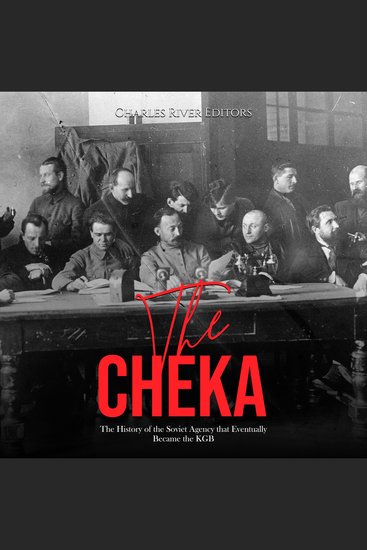
    The KGB is one of the most famous abbreviations of the 20th century, and it has become synonymous with the shadowy and often violent actions of the Soviet Union’s secret police and internal security agencies. In fact, it is often used to refer to the Soviet state security agencies throughout its history, from the inception of the inception of the Cheka (Extraordinary Commission) in 1917 to the official elimination of the KGB in 1992. Whether it’s associated with the Russian Civil War’s excesses, Stalin’s purges, and even Vladimir Putin, the KGB has long been viewed as the West’s biggest bogeyman during the second half of the 20th century. 
    	However, the KGB did not appear out of thin air. Naturally, the earliest Soviet leaders utilized intelligence agencies that collected information both abroad and within the Soviet Union, targeting foreign opponents and domestic opponents alike. Lenin did not imagine the scale of the opposition he would have to face after the revolution, and he quickly came to the conclusion that "a special system of organized violence" must be created to implement the dictatorship of the proletariat. 
    	Thus, from nearly the beginning of the Bolshevik takeover of Russia, Lenin and his successors established and relied on a particularly ruthless agency: the All-Russian Extraordinary Commission for Combating Counter-Revolution and Sabotage, later abbreviated to the Extraordinary Commission. Known colloquially as the Cheka (Extraordinary Commission), it soon became as feared by non-socialists as the Tsar’s secret police had ever been. The main means approved by the Council of People's Commissars on December 20, 1917, which the Cheka had to use to fight the counter-revolution, were "seizure of property, resettlement, deprivation of cards, publication of lists of enemies of the people, etc."
    Ver livro
  • The Mythology of the Incas - Gods Legends and Rituals of Ancient Peru - cover

    The Mythology of the Incas -...

    Odessa Nightshade

    • 0
    • 0
    • 0
    The mythology of the Incas is a fascinating tapestry of gods, legends, and rituals that shaped the spiritual and cultural identity of one of the most powerful civilizations in the Americas. Unlike written traditions found in other ancient cultures, Incan mythology was passed down orally, with each generation preserving and refining the stories that explained the origins of the world, the forces of nature, and the role of human beings in the cosmos. These myths were deeply intertwined with the daily lives of the Inca people, influencing everything from their agricultural practices to their political structures.  
      
    At the heart of Incan mythology was a complex belief system that divided the universe into three realms: Hanan Pacha, the upper world of the gods; Kay Pacha, the earthly realm of humans; and Uku Pacha, the underworld where spirits and ancestors resided. These realms were connected by sacred mountains, rivers, and celestial bodies, all of which were considered divine. The gods of the Incan pantheon, led by Viracocha, the supreme creator, played a central role in shaping the world and maintaining balance within these realms. Inti, the sun god, was revered as the divine ancestor of the ruling class, while Pachamama, the earth goddess, was honored for providing sustenance and fertility.  
      
    Rituals and ceremonies were essential to maintaining harmony between the natural and supernatural worlds. The Inca performed elaborate festivals, such as Inti Raymi, the Festival of the Sun, to honor their deities and ensure the continuation of prosperity. Priests and oracles played a crucial role in interpreting the will of the gods, often conducting sacrifices—both animal and human—as acts of devotion and appeasement. Sacred sites, including Coricancha in Cusco and Machu Picchu, served as centers of worship where offerings were made to the gods. 
    Ver livro