¡Acompáñanos a viajar por el mundo de los libros!
Añadir este libro a la estantería
Grey
Escribe un nuevo comentario Default profile 50px
Grey
Suscríbete para leer el libro completo o lee las primeras páginas gratis.
All characters reduced
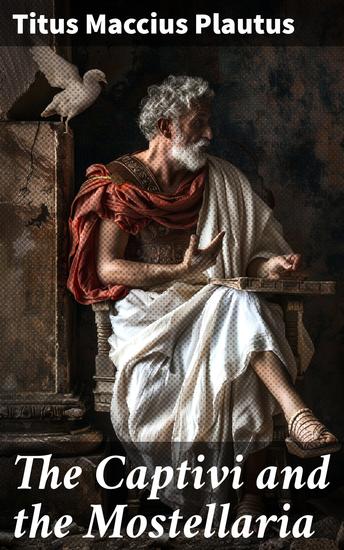
The Captivi and the Mostellaria - Timeless Laughter and Intrigue in Ancient Rome - cover

The Captivi and the Mostellaria - Timeless Laughter and Intrigue in Ancient Rome

Titus Maccius Plautus

Traductor Henry T. Riley

Editorial: Good Press

  • 0
  • 0
  • 0

Sinopsis

In "The Captivi" and "The Mostellaria," Titus Maccius Plautus showcases his mastery of Roman comedic theater through the exploration of themes such as deception, identity, and societal norms. The plays utilize sharp wit and engaging dialogue, characteristic of Plautus's style, merging farcical elements with intricate character developments. "The Captivi" intricately depicts the emotional turmoil of a father searching for his son, reflecting on the knotted relationships inherent in familial bonds, while "The Mostellaria" presents a humorous yet thought-provoking façade of illusions, unraveling the complexities of trust and appearances in societal interactions. Plautus's work is foundational in the evolution of comedy in the Roman era, serving as a precursor to later Western dramatic traditions. Titus Maccius Plautus, born around 254 BCE in Sarsina, Italy, is a seminal figure in the realm of Roman literature. His background as a former slave and his experiences in the vibrant cultural landscape of the Roman Republic informed his comedic insights and social commentary. His ability to merge everyday life with the fantastical elements of theater reflects the human experience with wit and profundity, making his works resonate across time. "The Captivi" and "The Mostellaria" are essential readings for anyone interested in the origins of comedy and the evolution of theater. Plautus's keen observations and humorous narratives not only entertain but also challenge readers to reflect on societal values, making this collection a significant addition to both literary and theatrical studies.
Disponible desde: 17/11/2023.
Longitud de impresión: 104 páginas.

Otros libros que te pueden interesar

  • Little Wars (Unabridged) - cover

    Little Wars (Unabridged)

    H. G. Wells

    • 0
    • 0
    • 0
    Little Wars is a set of rules for playing with toy soldiers, written by English novelist H. G. Wells in 1913. The book, which had a full title of Little Wars: a game for boys from twelve years of age to one hundred and fifty and for that more intelligent sort of girl who likes boys' games and books, provided simple rules for miniature wargaming. Although first printed in 1913.
    Ver libro
  • The Iliad - cover

    The Iliad

    Homer Homer

    • 0
    • 0
    • 0
    "The Iliad" is an ancient Greek epic poem attributed to the poet Homer, thought to have been composed in the 8th century BCE. The poem primarily focuses on the Trojan War and is specifically centered around the wrath of the Greek hero Achilles, whose rage is one of the epic's main themes. "The Iliad" encompasses high drama, heroic feats, and deep philosophies about honor, fate, and the human condition. It is considered one of the cornerstones of Western literature and has been translated into numerous languages over the centuries.
    Ver libro
  • The Parting of the Ways - cover

    The Parting of the Ways

    Lucy Maud Montgomery

    • 0
    • 0
    • 0
    Lucy Maud Montgomery (November 30, 1874 – April 24, 1942), published as L. M. Montgomery, was a Canadian author best known for a series of novels beginning in 1908 with Anne of Green Gables. The book was an immediate success. The title character, orphan Anne Shirley, made Montgomery famous in her lifetime and gave her an international following.
    The Parting of The Ways: Mrs. Longworth crossed the hotel piazza, descended the steps, and walked out of sight down the shore road with all the grace of motion that lent distinction to her slightest movement. Her eyes were very bright, and an unusual flush stained the pallor of her cheek. Two men who were lounging in one corner of the hotel piazza looked admiringly after her.
    Ver libro
  • Crome Yellow - cover

    Crome Yellow

    Aldous Huxley

    • 0
    • 0
    • 0
    Crome Yellow, first novel by Aldous Huxley, published in 1921. The book is a social satire of the British literati in the period following World War I. The book revolves around the hapless love affair of Denis Stone, a sensitive poet, and Anne Wimbush. Anne’s uncle, Henry Wimbush, hosts a party at his country estate, Crome, that brings together a humorous coterie of characters. Aldous Leonard Huxley was an English writer and philosopher. He wrote nearly 50 books—both novels and non-fiction works—as well as wide-ranging essays, narratives, and poems. Born into the prominent Huxley family, he graduated from Balliol College, Oxford, with an undergraduate degree in English literature
    Ver libro
  • Christmas Eve at a Cornish Manor House - From their pens to your ears genius in every story - cover

    Christmas Eve at a Cornish Manor...

    Clara Venn

    • 0
    • 0
    • 0
    The bookshelves of British literature are incredible collections that have gathered together centuries of very talented authors.  From these Isles their fame spread and whilst among their number many are now forgotten or neglected their talents endure.  Among them is Clara Venn.
    Ver libro
  • Lot No 249 - cover

    Lot No 249

    Arthur Conan Doyle

    • 0
    • 0
    • 0
    Lot No. 249 is a Gothic horror short story by British writer Arthur Conan Doyle, first published in Harper's Magazine in 1892. The story tells of a University of Oxford athlete named Abercrombie Smith who notices a strange series of events surrounding Edward Bellingham, an Egyptology student who owns many ancient Egyptian artefacts, including a mummy. After seeing his mummy disappear and reappear, and two instances of Bellingham's enemies getting attacked, Smith concludes that Bellingham is reanimating his mummy. Smith confronts Bellingham, who denies this is the case; the next day, Smith is attacked by the mummy and escapes. Smith then forces Bellingham to destroy his mummy and the associated artefacts at gunpoint.Written during a period of great European interest in Egyptian culture known as Egyptomania, "Lot No. 249" was inspired by Doyle's interests in the supernatural, crime and Egyptology. Though reanimated mummies had previously appeared in English literature, Doyle's story was the first to portray one as dangerous. The story has been widely anthologised and received positive reviews from critics, including praise from authors H. P. Lovecraft and Anne Rice. Critics have compared the story to the writings of Edgar Allan Poe and H. Rider Haggard and interpreted it as containing themes of imperialism and masculinity. "Lot No. 249" has been adapted for film and television, and has significantly influenced subsequent media that depicts mummies, as well as other works of horror fiction.
    Ver libro