¡Acompáñanos a viajar por el mundo de los libros!
Añadir este libro a la estantería
Grey
Escribe un nuevo comentario Default profile 50px
Grey
Suscríbete para leer el libro completo o lee las primeras páginas gratis.
All characters reduced
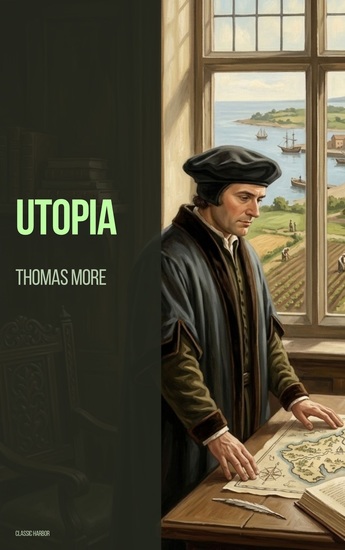
Utopia - cover

Utopia

Thomas More

Editorial: Classic Harbor

  • 0
  • 0
  • 0

Sinopsis

Enter Thomas More's imagined society and explore enduring questions about politics, justice, wealth, work, and human nature.

Thomas More's Utopia presents an imagined island society that provides the framework for a wide-ranging examination of European political and social life.

Through conversations and descriptions of the fictional society, More explores government, property, labor, education, religion, law, wealth, and social organization. The work invites readers to question whether the institutions of their own society truly produce justice and happiness.

Since its publication in the sixteenth century, Utopia has remained a foundational work of political philosophy and social thought.

Discover Thomas More's influential vision and explore timeless questions about how societies should be organized and governed.
Disponible desde: 07/10/2026.
Longitud de impresión: 155 páginas.

Otros libros que te pueden interesar

  • Common Ground - Second Language Acquisition Theory Goes to the Classroom - cover

    Common Ground - Second Language...

    Florencia G. Henshaw, Maris D....

    • 0
    • 0
    • 0
    "Common Ground is accessible to teachers at all levels yet firmly rooted in current questions of second language acquisition (SLA). One of its primary strengths is the authors themselves, both of whom are accomplished language teachers who understand the challenges and opportunities in communication-focused language teaching. Their experience, expertise, insight, and enthusiasm for language teaching translate into a book that is refreshingly practical for teachers, especially teachers who are striving to break from traditional drills commonly presented in textbooks. I hope this book finds its way into the hands of every language teacher who is looking for concrete examples of how SLA principles meet the realities of the classroom." —Stacey Margarita Johnson, Vanderbilt University
    Ver libro
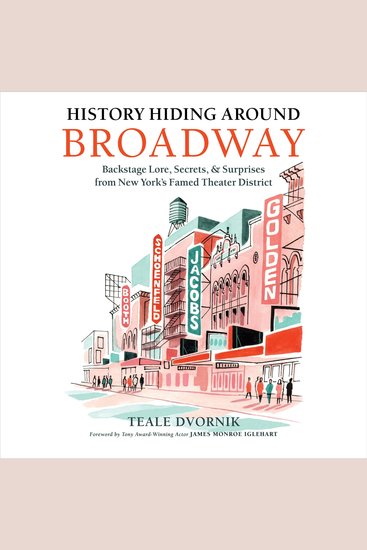
  • History Hiding Around Broadway - Backstage Lore Secrets and Surprises from New York's Famed Theater District - cover

    History Hiding Around Broadway -...

    Teale Dvornik, James Monroe...

    • 0
    • 0
    • 0
    Go behind the scenes of the Great White Way with this illustrated guide to the Theater District’s hidden history--an essential book for your explorations of the district from a seasoned Broadway guide. Broadway is one of New York’s greatest treasures, and where there is treasure, there is a backstory. When it comes to Broadway, that backstory is fittingly juicy, dramatic, and unexpected. And no one knows these hidden histories like Teale Dvornik, who has been leading Broadway fans on tours of the theater district since 2017. With her immense knowledge and passion for the theater, Dvornik now takes readers on her one-of-a-kind tour of Broadway, “stopping” at each of the 41 theaters to tell us fun facts, lesser-known history, ghost tales, and interesting stories about actors, performances, stage flukes, blunders, and more, involving the biggest names and productions in theater history.  Learn about the Tiffany chandeliers of the Belasco Theater, the trove of hidden jewels at the Gershwin (which houses years of history from the beloved musical Wicked), and the impresarios and players who influenced Broadway. Readers will also learn the fascinating back stories of theater myths, legends, and traditions. Where did the stage ghost light come from? What started the tradition of intermissions? Which theaters have secret connecting hallways? And much, much more!  Along the way, Teale takes detours to explain stage lingo and dives into some of Broadways most popular shows, including CATS, Hello, Dolly!, and Rent. 
    Ver libro
  • Refugees - The Crisis of Displacement and the Search for Solutions - cover

    Refugees - The Crisis of...

    Marcus Klein

    • 0
    • 0
    • 0
    The refugee crisis is one of the most pressing humanitarian challenges of our time. Across the globe, millions of individuals are forced to flee their homes due to conflict, violence, persecution, and natural disasters. These displaced individuals, known as refugees, face an uncertain future, often enduring unimaginable hardships in their quest for safety and stability. As of recent estimates, more than 100 million people have been forcibly displaced, with a significant portion seeking refuge in countries that already face their own social, political, and economic challenges. The sheer scale and complexity of the crisis demand urgent attention from governments, international organizations, and civil society to find sustainable solutions. 
      
    The root causes of displacement are multifaceted. Armed conflicts, such as the civil war in Syria and the ongoing conflict in Ukraine, have displaced millions, while ethnic and religious persecution continues to push people from their homelands. Climate change is also playing an increasingly significant role, with droughts, floods, and rising sea levels displacing whole communities. The combination of political instability, economic hardship, and environmental degradation has created a perfect storm of displacement, and the numbers continue to rise. 
      
    Despite the challenges refugees face, their resilience and determination to rebuild their lives are evident. In host countries, refugees contribute to their new communities, often starting businesses, integrating into the workforce, and enriching cultural diversity. However, their journey is far from easy. Many refugees face barriers to legal recognition, limited access to basic services, and widespread xenophobia and discrimination. The experience of displacement is often marked by a sense of loss—of home, identity, and a sense of belonging.
    Ver libro

  • Ion - cover

    Ion

    Plato

    • 0
    • 0
    • 0
    "Ion" is a dialogue by Plato that explores the nature of artistic inspiration and the role of the artist in society. The main character, Ion, is a rhapsode who specializes in reciting epic poetry by Homer. Socrates engages Ion in a conversation, and the discussion unfolds as Socrates questions Ion about the source of his ability to recite poetry. Socrates argues that Ion's talent is not the result of his own knowledge or expertise, but rather a divine inspiration. He compares Ion to a magnetic ring that is capable of attracting and transmitting the power of the gods through his recitation. Socrates also points out that Ion's expertise is limited only to the works of Homer, and he has no real knowledge of the subjects he is reciting about. Read in English, unabridged.
    Ver libro
  • Jewish Palestine Arab Palestine - A History of Conflict - cover

    Jewish Palestine Arab Palestine...

    Debra Cohen

    • 0
    • 0
    • 0
    Author-narrated nonfiction outline of comprehensive details of the Israeli-Palestinian Conflict, based on recently discovered documents found in the UK Archives.  These secret documents reveal the true story of events leading up to the statehood of Israel, while explaining why the Arab Palestinians refused statehood when Palestine was under British rule.  This author chooses not to offer a Two-State Solution (although she has one).  Rather, she hope that the readers will come to their own conclusions while realizing that the previous "solutions" could never work with neighbors who continually attack the Jews since being given lands known as Gaza and the West Bank.
    Ver libro
  • From Whispers to Shouts - The Ways We Talk About Cancer - cover

    From Whispers to Shouts - The...

    Elaine Schattner

    • 0
    • 0
    • 0
    It’s hard today to remember how recently cancer was a silent killer, a dreaded disease about which people rarely spoke in public. In hospitals and doctors’ offices, conversations about malignancy were hushed and hope was limited. In this deeply researched book, Elaine Schattner reveals a sea change—from before 1900 to the present day—in how ordinary people talk about cancer. From Whispers to Shouts examines public perception of cancer through stories in newspapers and magazines, social media, and popular culture. It probes the evolving relationship between journalists and medical specialists and illuminates the role of women and charities that distributed medical information. Schattner traces the origins of patient advocacy and activism from the 1920s onward, highlighting how, while doctors have lost control of messages about cancer, survivors have gained visibility and voice. The book’s final section lays out provocative questions facing the cancer community today—including distrust of oncologists, concerns over financial burdens, and disparities in cancer treatments and care. Schattner considers how patients and their loved ones struggle to make decisions amid conflicting information and opinions. She explores the ramifications of so much openness, good and bad, and asks an important question: Has awareness backfired? Instead, Schattner contends, we need greater understanding of cancer’s treatability.
    Ver libro