¡Acompáñanos a viajar por el mundo de los libros!
Añadir este libro a la estantería
Grey
Escribe un nuevo comentario Default profile 50px
Grey
Suscríbete para leer el libro completo o lee las primeras páginas gratis.
All characters reduced
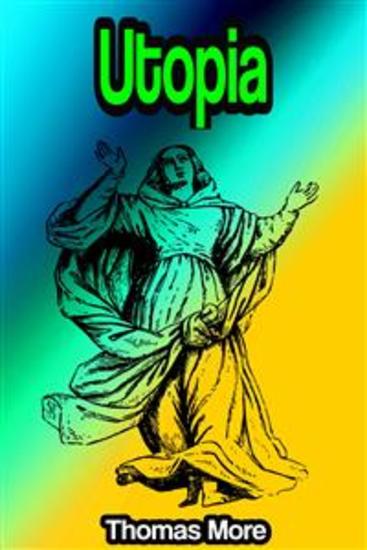
Utopia - cover

Utopia

Thomas Moore

Editorial: Memorable Classics eBooks

  • 0
  • 0
  • 0

Sinopsis

Utopia by Thomas More "A little, true book, not less beneficial than enjoyable, about how things should be in a state and about the new island Utopia") is a work of fiction and socio-political satire by Thomas More (1478–1535), written in Latin and published in 1516.

The book is a frame narrative primarily depicting a fictional island society and its religious, social, and political customs. Many aspects of More's description of Utopia are reminiscent of life in monasteries.

The first created original name was even longer: Libellus vere aureus, nec minus salutaris quam festivus, de optimo rei publicae statu deque nova insula Utopia. This translates, "A truly golden little book, no less beneficial than entertaining, of a republic's best state and of the new island Utopia".

Utopia is derived from the Greek prefix "ou-" (οὔ), meaning "not", and topos (τόπος), "place", with the suffix -iā (-ίᾱ) that is typical of toponyms; the name literally means "nowhere", emphasizing its fictionality. In early modern English, Utopia was spelled "Utopie", which is today rendered Utopy in some editions.
In fact, More's very first name for the island was Nusquama, the Latin equivalent of "no-place", however he eventually opted for the Greek-influenced name.
Disponible desde: 03/06/2022.

Otros libros que te pueden interesar

  • Embracing Autonomy - Latin American–US Relations in the Twenty-First Century - cover

    Embracing Autonomy - Latin...

    Gregory Weeks

    • 0
    • 0
    • 0
    Gregory Weeks's Embracing Autonomy departs from other general treatments of Latin American-US relations not by putting US policy aside but by bringing in the Latin American and global contexts more closely and thus avoiding the incomplete picture provided by a narrow focus solely on the policies of the United States. 


    The core of autonomy for Latin America from the United States is seen in new, deeper, and more numerous relationships that do not include the United States. The book is not a study of rebellion against the United States, or even a critique of US policy. Instead, it is an examination of the major shifts that have taken place in the region in recent decades and how they have shaped Latin American-US relations. 


    Weeks's book provides a clearer understanding of where Latin America stands vis-à-vis the United States in the early twenty-first century. In doing so, we gain a better sense of the trajectory of Latin American-US relations and how they develop in turbulent times.
    Ver libro
  • Without Exception - Reclaiming Abortion Personhood and Freedom - cover

    Without Exception - Reclaiming...

    Pam Houston

    • 0
    • 0
    • 0
    Without Exception is an unflinching call for freedom by way of abortion rights. 


    "A story told with honesty. I thank Pam Houston for this timely and timeless book" —CAMILLE T. DUNGY, Soil: The Story of a Black Mother's Garden 


    Written with equal parts candor and lyricism, Pam Houston illuminates the interconnected histories of abortion in the United States and in her own life during the decades when Roe v. Wade was the law of the land. Houston guides us through the shifting landscapes of politics, the law, and self-determination in a country where access to medical care and the power to determine your own destiny are increasingly—and once again—dependent on geography and circumstance.
    Ver libro
  • The Radical Imagination of Black Women - Ambition Politics and Power - cover

    The Radical Imagination of Black...

    Pearl K. Ford Dowe

    • 0
    • 0
    • 0
    Including interviews with Black women holding political office at the national, state, and local levels, as well as focus group data, The Radical Imagination of Black Women challenges political science's current approach to political ambition by exploring how Black women decide to seek political office. Pearl K. Ford Dowe argues that ambition for Black women cannot be measured only by political candidacies and ascents of the political chain of power. Black women are uniquely positioned within their communities to influence politics and public policy, which stems from unique variables of socialization, gender and racial identity, and marginalization that shape the political attitudes of Black women. Thus, Dowe asserts that Black women's political ambition often manifests outside formal politics, in activism and community building, a process that is linked to a wider radical vision for a full democracy. This is ambition that occurs in a specific context of marginalization, and both motivation and the conditions surrounding such motivation are critical to understanding the full range of Black women's political work. By focusing on Black women's experiences in elite politics, The Radical Imagination of Black Women is a much-needed intervention in the literature on electoral ambition, women in politics, and candidates and elections.
    Ver libro
  • American Injustice - My Battle to Expose the Truth - cover

    American Injustice - My Battle...

    John Paul Mac Isaac

    • 0
    • 0
    • 0
    As seen on Tucker Carlson Tonight! 


    This is the story of how I tried to get the Hunter Biden laptop evidence to the authorities. 


    My life changed forever on April 12, 2019, when Hunter Biden stumbled into my shop requesting data recovery from one of his liquid-damaged laptops. After his father announced his candidacy for president of the United States, and Hunter failed to pay for and collect his computer, fear for my safety grew. There was paperwork in Hunter's possession giving me permission to examine and copy his data—someone was going to come looking for the laptop, and come looking for me. Concerned that I was sitting on evidence in a criminal investigation, I set out to hand everything over to the FBI. But, feeling betrayed by the FBI's inaction in providing the laptop as evidence during the impeachment trial, I then turned to Congress, and ultimately, to a lawyer for the president, Rudy Giuliani. When the story broke, Big Tech and social and mainstream media blocked the reporting. I was instantly labeled as a hacker and a criminal. My actions were labeled Russian disinformation, and it didn't take long before people started attacking my business and my character, forcing me to close my shop and flee the state.
    Ver libro
  • Abolition Democracy - Beyond Empire Prisons and Torture - cover

    Abolition Democracy - Beyond...

    Angela Y. Davis

    • 0
    • 0
    • 0
    Revelations about U.S. policies and practices of torture and abuse have captured headlines ever since the breaking of the Abu Ghraib prison story in April 2004. Since then, a debate has raged regarding what is and what is not acceptable behavior for the world's leading democracy. It is within this context that Angela Davis, one of America's most remarkable political figures, gave a series of interviews to discuss resistance and law, institutional sexual coercion, politics, and prison. Davis talks about her own incarceration, as well as her experiences as "enemy of the state," and about having been put on the FBI's "most wanted" list. She talks about the crucial role that international activism played in her case and the case of many other political prisoners. 


    Throughout these interviews, Davis returns to her critique of a democracy that has been compromised by its racist origins and institutions. Discussing the most recent disclosures about the disavowed "chain of command," and the formal reports by the Red Cross and Human Rights Watch denouncing U.S. violation of human rights and the laws of war in Guantánamo, Afghanistan, and Iraq, Davis focuses on the underpinnings of prison regimes in the United States.
    Ver libro
  • Limits of Liberty The: Book Summary & Analysis - cover

    Limits of Liberty The: Book...

    Briefly Summaries

    • 0
    • 0
    • 0
    This is a concise summary and analysis of The Limits of Liberty, by James M. Buchanan.
     
    It is not the original book and is not affiliated with or endorsed by 
    James M. Buchanan.
    Ideal those seeking a quick and insightful overview.
     
    The Limits of Liberty explores the delicate balance between individual freedom and collective governance. It delves into how societal rules emerge from the tension between self-interest and the need for cooperation, examining the social contracts that shape modern democracies. The book provides a compelling analysis of how these agreements can both enable liberty and impose constraints, offering profound insights into the foundations of political order and the challenges of achieving sustainable governance.
    Ver libro