Junte-se a nós em uma viagem ao mundo dos livros!
Adicionar este livro à prateleira
Grey
Deixe um novo comentário Default profile 50px
Grey
Assine para ler o livro completo ou leia as primeiras páginas de graça!
All characters reduced
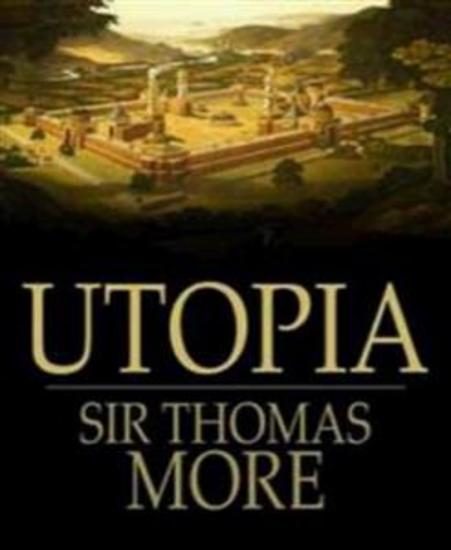
Thomas More’s Utopia - cover
LER

Thomas More’s Utopia

Thomas Moore

Editora: BookRix

  • 0
  • 0
  • 0

Sinopse

Utopia is a work of fiction and political philosophy by Thomas More. The book is a frame narrative primarily depicting a fictional island society and its religious, social and political customs. 

There is no private property on Utopia, with goods being stored in warehouses and people requesting what they need. There are also no locks on the doors of the houses, which are rotated between the citizens every ten years. Agriculture is the most important job on the island. Every person is taught it and must live in the countryside, farming for two years at a time, with women doing the same work as men. Parallel to this, every citizen must learn at least one of the other essential trades: weaving (mainly done by the women), carpentry, metalsmithing and masonry. There is deliberate simplicity about these trades; for instance, all people wear the same types of simple clothes and there are no dressmakers making fine apparel. All able-bodied citizens must work; thus unemployment is eradicated, and the length of the working day can be minimised: the people only have to work six hours a day (although many willingly work for longer). More does allow scholars in his society to become the ruling officials or priests, people picked during their primary education for their ability to learn. All other citizens are however encouraged to apply themselves to learning in their leisure time.

Slavery is a feature of Utopian life and it is reported that every household has two slaves. The slaves are either from other countries or are the Utopian criminals. These criminals are weighed down with chains made out of gold. The gold is part of the community wealth of the country, and fettering criminals with it or using it for shameful things like chamber pots gives the citizens a healthy dislike of it. It also makes it difficult to steal as it is in plain view. The wealth, though, is of little importance and is only good for buying commodities from foreign nations or bribing these nations to fight each other. Slaves are periodically released for good behaviour. Jewels are worn by children, who finally give them up as they mature.

Other significant innovations of Utopia include: a welfare state with free hospitals, euthanasia permissible by the state, priests being allowed to marry, divorce permitted, premarital sex punished by a lifetime of enforced celibacy and adultery being punished by enslavement. Meals are taken in community dining halls and the job of feeding the population is given to a different household in turn. Although all are fed the same, Raphael explains that the old and the administrators are given the best of the food. Travel on the island is only permitted with an internal passport and any people found without a passport are, on a first occasion, returned in disgrace, but after a second offence they are placed in slavery. In addition, there are no lawyers and the law is made deliberately simple, as all should understand it.
Disponível desde: 19/12/2023.
Comprimento de impressão: 175 páginas.

Outros livros que poderiam interessá-lo

  • Middle Ages - Medieval Events Crusades and the Black Death (3 in 1) - cover

    Middle Ages - Medieval Events...

    Kelly Mass

    • 0
    • 0
    • 0
    This is a combo book about the middle ages, which comprises the following titles: 
    1 - Middle Ages: In the history of Europe, the Middle Ages or Middle Ages time period lasted around from the fifth to the late 15th centuries, likewise to the postclassical period of worldwide history. It started with the fall of the Western Roman Empire and transitioned into the Renaissance and the Age of Discovery. 
    2 - Black Death: Here we have it: We may be looking at the years 2020-2021 and think a certain virus has been bad for the world population. However, what happened in these two years is nothing, proportionally, to the hundreds of millions of people who got wiped out by rat infestations spreading insanitary bacteria, resulting in the disease and death of huge parts of the European population in the mid-centuries. 
    The genesis or origin of the Black Death is a point of contention. The epidemic started in Central Asia or East Asia, but it wasn't till 1347 that it made its conclusive presence in Crimea. It spread out through the Mediterranean Basin, reaching Africa, Western Asia, and the remainder of Europe through Constantinople, Sicily, and the Italian Peninsula, probably brought by fleas surviving on black rats carried by Genoese servant ships. 
    3 - Crusaders: The Crusades are one of those dark chapters in history that we would rather forget, especially religious people. In name of the church, or other religions, like the Muslim faith, people killed, destroyed, looted, and burned cities to the ground. There is nothing “holy” about attacking and plundering, yet this is what they did. 
    The Crusades were a series of spiritual fights in the Middle Ages period that were begun, supported, and sometimes ordered by the Latin Church.
    Ver livro
  • The Prince - A New Translation for Today's Readers - cover

    The Prince - A New Translation...

    Niccolò Machiavelli, Leafiq...

    • 0
    • 0
    • 0
    Timeless wisdom. Modern language. Powerful insight. 
    For over five centuries, The Prince has stood as one of the most influential works on power, politics, and human nature. Yet for many readers, the original text can feel distant—locked in the language and context of the Renaissance. 
    This new audiobook translation brings Machiavelli’s brilliant ideas into the 21st century with clarity and force. Written in clear, modern English, it captures the sharp wit, realism, and boldness of Machiavelli’s voice—without the heavy, old-fashioned phrasing that often clouds his message. 
    Whether you’re a leader, entrepreneur, student, or thinker, this fresh translation will help you:Understand how power really works—in politics, business, and everyday life.Learn Machiavelli’s timeless lessons on leadership, strategy, and persuasion.Hear The Prince the way it was meant to be heard—direct, daring, and utterly relevant. 
    Perfect for modern listeners, this audiobook offers an accessible experience that respects Machiavelli’s original intent while making it engaging, practical, and easy to follow. 
    Includes:A faithful yet modern translation for today’s readers and listeners.A short introduction explaining Machiavelli’s world and why his ideas still matter. 
    Discover why “Machiavellian” has come to define cunning leadership—and why The Prince remains essential listening for anyone who seeks to understand power.
    Ver livro
  • Nothing Wasted - Struggling Well through Difficult Seasons - cover

    Nothing Wasted - Struggling Well...

    Kim Patton, Jenn Hesse

    • 0
    • 0
    • 0
    Difficult seasons catch us off guard and make us feel like life won’t ever make sense again. 
    On our worst days, it’s hard to believe that God will guide us through the mess. Even on our good days, when we feel we have done all the right things, we may wonder: 
    Why am I working this job? 
    Am I making a difference? 
    How do I know the way to go? 
    Why can’t I seem to be content? 
    In Nothing Wasted, we see how we mature in time. Like fog dissipating, we recognize how God is gently leading us through each season of our lives. We may be struggling, but we are moving forward. 
    Our faith is not unseen. 
    Our moments are not wasted. 
    All the pain that comes in these seasons does lead to a full, rich life, growing in relationship with God and with others.
    Ver livro
  • How to Write a Novel - From Idea to Book - cover

    How to Write a Novel - From Idea...

    Joanna Penn

    • 0
    • 0
    • 0
    Writing a novel will change your life. 
    It might not be in the way that you expect, but when you hold your book in your hand and say, “I made this,” something will shift.  
    The process of getting to that point will light a spark in your creative soul and help you discover unexpected aspects of yourself. It will be one of the things you are most proud of in your life. 
    I’m Joanna (J.F.) Penn, award-nominated, New York Times and USA Today bestselling author of 18 novels and novellas with nearly a million books sold in over one hundred countries. 
    This book will help you write your first novel, or improve your creative process so you can write more books and reach more readers. It covers mindset, ideas and research, plotting/outlining and discovery writing, aspects of craft from character to setting to voice and much more, how to write a first draft, and work through an editing process to a finished book.  
    If you want to (finally) write your novel, then buy How to Write a Novel today.
    Ver livro
  • The Anti-Greed Gospel - Why the Love of Money Is the Root of Racism and How the Church Can Create a New Way Forward - cover

    The Anti-Greed Gospel - Why the...

    Malcolm Foley

    • 0
    • 0
    • 0
    "A forceful call to recognize the roots of American inequality and a solid starting point for Christians who want to help fix them." —Publishers Weekly 


    Racism is not about hate and ignorance. It's about greed. And it always has been. 


    Black Christian historian Malcolm Foley explores this idea in The Anti-Greed Gospel, showing how the desire for power and money—what some call "racial capitalism"—causes violence and exploitation. 


    Foley reviews the history of racial violence in the United States and connects the killings of modern-day Black Americans to the history of lynching in America. He helps the contemporary church wrestle with the questions racial violence brings up: How can we become communities that show generosity and resist greed? What is the next step in the journey for racial justice? 


    Listeners will walk away with a better understanding of how they can resist greed that exploits others, love their neighbor more completely, and build communities of deep solidarity, anti-violence, and truth telling.
    Ver livro
  • Being Victorian - How it felt then Why it matters now - cover

    Being Victorian - How it felt...

    Jamie Camplin

    • 0
    • 0
    • 0
    Writers and poets, academics and art critics, mathematicians and experimental scientists, churchmen and politicians, women of strong opinions gather for a summer weekend in the 1870s. Is it real, or is it a fantasy? One thing's sure: their debates – about life's aims, rural and urban living, love and money, civilization and belief, the social framework, the past, the present and the future take us to the heart of the Victorian dream and its reality: the idea that their society exemplified 'Progress'. What did 'Progress' mean? Were things (and which things) getting better? What did 'better' mean? And for whom? The history of the world before the Victorians, from Aberdeen to Africa, showed a particular form of equality for almost everyone: an equality of poverty and no prospects, with kindness often in short supply. Victorians wanted to change that world, thought they were changing it, did change it. They did it in a human way: a melange of muddle, vision, certainty, doubt, too slow for many, too fast for some. Yet their changes were decisive both for creating the modern world, but also for revealing the dilemmas attached to mass living in urban, technological societies, as well as the moral flaws in imposing one civilization's or one person's beliefs on another. Most remarkably of all, the upheaval in making major transitions in every area of life, which produced revolutions and violence across Europe, in the Americas and in Asia, was carried out – at least in Britain itself – almost entirely peacefully. The past will always be a foreign country for those unwilling to engage with its people. Whether viewing the lives of rulers or the ruled, 'Being Victorian' corrects innumerable preconceptions.
    Ver livro