Junte-se a nós em uma viagem ao mundo dos livros!
Adicionar este livro à prateleira
Grey
Deixe um novo comentário Default profile 50px
Grey
Assine para ler o livro completo ou leia as primeiras páginas de graça!
All characters reduced
Jack the Ripper - The Killer Who Vanished - cover
LER

Jack the Ripper - The Killer Who Vanished

Thomas Loki

Editora: Heritage Books

  • 0
  • 0
  • 0

Sinopse

For over a century, the identity of Jack the Ripper has remained one of history’s most chilling mysteries. In the shadowy streets of Victorian London, a string of gruesome murders terrorized the city, leaving behind fear, speculation, and unanswered questions. Who was the man behind the legend? How did he evade capture despite the intense investigation?


This book delves deep into the heart of the case, examining the victims, the evidence, and the suspects who have intrigued historians and detectives for generations. Through historical records, eyewitness accounts, and modern theories, it explores the psychological and social factors that shaped one of the most infamous serial killers in history.


Step into the dark alleys of Whitechapel and uncover the terrifying legacy of the killer who vanished without a trace.
Disponível desde: 05/03/2025.
Comprimento de impressão: 82 páginas.

Outros livros que poderiam interessá-lo

  • Summary of Anabel Hernandez's Narcoland - cover

    Summary of Anabel Hernandez's...

    Falcon Press

    • 0
    • 0
    • 0
    Buy now to get the main key ideas from Anabel Hernandez's Narcoland 
      
    The world of Mexican drug cartels has become notorious for its extreme violence and wealth, but also its secrecy. Anabel Hernandez’s Narcoland (2014) dives into this world and uncovers its history, its day-to-day operations, and the men behind it. Today's cartels began as small local gangs selling narcotics. As they grew and banded together, they began bribing authorities for protection. Soon, many Mexican officials were participating in the industry rather than trying to stop it. Drug lords gained incredible amounts of power and wealth, but rivals were always trying to eliminate them. 
    Hernandez sees no end to this cycle of violence and corruption until kids in poverty receive opportunities outside of drug trafficking. Otherwise, Mexico will continue being known as "Narcoland."
    Ver livro
  • The Alice Crimmins Case - cover

    The Alice Crimmins Case

    Anais Renevier

    • 0
    • 0
    • 0
    New York, Summer of 1965. 


    One hot summer, two young children disappeared from their first-floor apartment in the Kew Gardens neighborhood of Queens, New York. Their mother, Alice Crimmins, reported them missing to the police. Later that day, the body of four-year-old Missy was found in a vacant lot, showing signs of having been strangled. The body of five-year-old Eddie, Jr., was found several days later. 


    Police were immediately suspicious of the mother. Recently divorced, with teased red hair and heavy makeup, Alice Crimmins did not fit the maternal ideal held by the predominantly Catholic police detectives on the case. Her every action was scrutinized: Was she behaving like a grief-stricken mother or like a coldhearted killer? After three years of police surveillance, Alice was charged with the murder of her children in 1968 in a highly publicized trial. Ultimately found guilty of manslaughter, Alice spent a decade in prison before being released on parole in 1977. 


    But was she truly guilty, or just the victim of police bias and misogynistic judgment? Journalist Anaïs Renevier revisits the case, exploring one of the most famous and divisive trials in recent American history.
    Ver livro
  • The Utøya Monster - The Disturbing Evolution of Anders Breivik - cover

    The Utøya Monster - The...

    Davis Truman

    • 0
    • 0
    • 0
    "The Utøya Monster: The Disturbing Evolution of Anders Breivik" is a gripping and thought-provoking exploration of one of the most haunting episodes in modern history. This meticulously researched book delves deep into the life, mindset, and actions of Anders Breivik, the man behind the tragic Utøya Island massacre and the Oslo bombing. With sensitivity and insight, it unravels the complex web of influences and experiences that led to his transformation from an ordinary individual to a cold-blooded killer. 
    The book meticulously analyzes his manifesto, uncovering the sources and ideas that shaped his extremist ideology, as well as the distorted worldview and conspiracy theories that fueled his actions. 
    "The Utøya Monster" goes beyond the surface to offer a nuanced psychological profile of Anders Breivik, exploring his personality traits, including narcissism and misogyny, as well as the role of emotional deprivation and social isolation in his actions. It delves into his acquisition of firearms and explosives, as well as the methods he employed to evade detection, exposing the chilling lengths he went to carry out his sinister plan. 
    This groundbreaking book is a must-read for those seeking a deeper understanding of Anders Breivik's disturbing evolution and the profound impact his actions had on individuals, communities, and the world. With its powerful narrative and insightful analysis, "The Utøya Monster" is a poignant reminder of the importance of addressing the root causes of radicalization and fostering a society built on compassion, tolerance, and peace.
    Ver livro
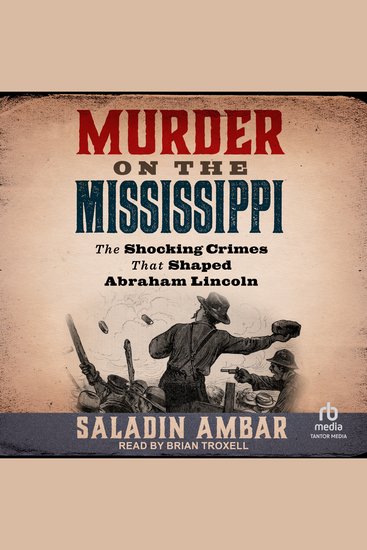
  • Murder on the Mississippi - The Shocking Crimes That Shaped Abraham Lincoln - cover

    Murder on the Mississippi - The...

    Saladin Ambar

    • 0
    • 0
    • 0
    Murder, mob rule, and the making of Abraham Lincoln—the story of three racially motivated murders in Mississippi River towns from 1835 to 1838 that inspired the speech that put Lincoln on the national map—the Lyceum Address.Lynched: Five white gamblers suspected of aiding a slave insurrection in Vicksburg, Mississippi. 
    Burned Alive: A Black man implicated in the death of a constable in St. Louis, Missouri. 
    Gunned Down: A white abolitionist in Alton, Illinois.These weren't just acts of mob violence—they were warnings of a nation on the edge of collapse. 
    In Murder on the Mississippi, award-winning historian Saladin Ambar unearths the horrors that shaped a young Abraham Lincoln's worldview, pushing him to find his political voice in one of the earliest and most pivotal speeches of his career. Confronted by lawlessness, racial terror, and his own inner demons, Lincoln's battle was political and deeply personal. 
    From the flames of mob violence rose a young Lincoln, forged in fire and soon to contend with a nation at war with itself.
    Ver livro
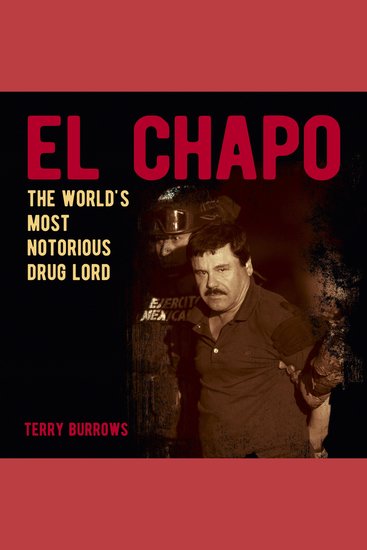
  • El Chapo - The Story of the World’s Most Notorious Drug Lord - cover

    El Chapo - The Story of the...

    Terry Burrows

    • 0
    • 0
    • 0
    The diminutive Joaquín Guzmán Loera, known universally by his nickname of 'El Chapo' ('Shorty' in Spanish), is the highest-profile narco-terrorist since the demise of Pablo Escobar in the 1990s. Loera began work at the age of nine as a gomero - a farmhand harvesting opium - and as he grew up he shot and murdered his way to the top. In 2009, he made the Forbes annual billionaires list and, before his capture by Mexican marines in 2016, the Sinaloa cartel which he commanded was turning over more than $11 billion in annual sales to North America, supplying more than 10 per cent of all illegal narcotics used on that continent. This made him Public Enemy Number One in the USA. 
     
    El Chapo was among the most powerful individuals in the world. In Sinaloa, he was a folk hero and the subject of popular songs known as 'narcocorridos'. Meanwhile, America's Drug Enforcement Agency (the DEA) had sworn to hunt him down. Featuring the remarkable tale of El Chapo's arrest in Guatemala in 1993, how he continued to run his cartel from his cell in a Mexican jail and his subsequent escape in a prison laundry cart, along with his recapture in 2014, and ultimate extradition to the US for the Trial of the Century, this book gives you the inside track on the dog-eat-dog world of international drugs trafficking.
    Ver livro
  • Mexican History - Drug Cartels Wars and Heroes (3 in 1) - cover

    Mexican History - Drug Cartels...

    Kelly Mass

    • 0
    • 0
    • 0
    This book includes three titles about Mexico's history: 
    Cristero War - The Cristero War, also known as the Cristero Rebellion or La Cristiada [la kistjaa], was a widespread and deeply significant conflict that unfolded in central and western Mexico during the late 1920s. It was primarily driven by a violent response to the secularist and anti-clerical provisions of the 1917 Mexican Constitution, which sought to curtail the influence of the Catholic Church over the country's political and social life. The Constitution introduced sweeping reforms, including the restriction of church property rights and the severe limitations placed on the clergy’s ability to engage in public life. 
    Mexican Drug Cartels - The Mexican drug war, also known as the Guerra contra el narcotráfico en México, is the Mexican theater of the global war on drugs, a campaign led by the United States federal government. This war has resulted in a protracted, asymmetric low-intensity conflict between the Mexican government and various drug trafficking organizations. The Mexican government’s main objective when it intervened militarily in 2006 was to curb drug-related violence, which had escalated in the preceding years. The government’s stated aim, in collaboration with U.S. officials, was to eliminate the cartels and reduce the demand for drugs trafficking. 
    Pancho Villa - Francisco Villa, better known as Pancho Villa, was a key figure in the Mexican Revolution, known for his transformation from a bandit to one of the revolution’s most influential commanders. Villa’s rise to prominence in the early 20th century marked him as a central player in the violent upheavals that reshaped Mexico’s political landscape. In 1911, Villa became a significant actor in the revolutionary violence that led to the overthrow of President Porfirio Díaz, ushering in Francisco I. Madero’s government.
    Ver livro