¡Acompáñanos a viajar por el mundo de los libros!
Añadir este libro a la estantería
Grey
Escribe un nuevo comentario Default profile 50px
Grey
Suscríbete para leer el libro completo o lee las primeras páginas gratis.
All characters reduced
FAR FROM THE MADDING CROWD (British Classics Series) - Enriched edition Historical Romance Novel - cover

FAR FROM THE MADDING CROWD (British Classics Series) - Enriched edition Historical Romance Novel

Thomas Hardy

Editorial: Good Press

  • 0
  • 0
  • 0

Sinopsis

In "Far From the Madding Crowd," Thomas Hardy masterfully weaves a richly textured narrative set in the idyllic yet harsh landscape of rural Wessex. This novel, a compelling exploration of love, ambition, and the complexities of human relationships, features the strong-willed Bathsheba Everdene, whose choices create a web of entanglements among her suitors'—a shepherd, a farmer, and a soldier. Hardy's evocative prose and naturalistic style reflect the Victorian era's tension between traditional pastoral life and the encroaching modernity, offering readers profound insights into the human condition and social themes such as gender and class dynamics. Thomas Hardy, an esteemed figure in English literature, drew upon his own experiences in the countryside to create the vivid world of Wessex. Born in 1840 and originally trained as an architect, Hardy developed a passion for storytelling that transcended his professional background. His deep understanding of rural life and the struggles faced by its inhabitants is evident in this work, amplifying its emotional depth and cultural significance. Hardy's skepticism about societal norms and institutional constraints infuses the narrative with a profound sense of realism. "Far From the Madding Crowd" is a must-read for anyone seeking a nuanced exploration of love and resilience amidst life's trials. Hardy's keen observations and intricate character studies provide readers with an unforgettable journey through emotional landscapes. This novel remains a cornerstone of British literature and deserves a place on every thoughtful reader's shelf.

In this enriched edition, we have carefully created added value for your reading experience:
- A succinct Introduction situates the work's timeless appeal and themes.
- The Synopsis outlines the central plot, highlighting key developments without spoiling critical twists.
- A detailed Historical Context immerses you in the era's events and influences that shaped the writing.
- An Author Biography reveals milestones in the author's life, illuminating the personal insights behind the text.
- A thorough Analysis dissects symbols, motifs, and character arcs to unearth underlying meanings.
- Reflection questions prompt you to engage personally with the work's messages, connecting them to modern life.
- Hand‐picked Memorable Quotes shine a spotlight on moments of literary brilliance.
- Interactive footnotes clarify unusual references, historical allusions, and archaic phrases for an effortless, more informed read.
Disponible desde: 13/01/2024.
Longitud de impresión: 407 páginas.


Otros libros que te pueden interesar

  • Babbitt - cover

    Babbitt

    Sinclair Lewis

    • 0
    • 0
    • 0
    'Babbitt respected bigness in anything: in mountains, jewels, muscles, wealth or words.'
    
    First published in 1922, Babbitt is a scathing satirical novel that wittily condemns the vacuous and superficial lives of the middle class in early twentieth-century America.
    
    George F. Babbitt, a successful real estate agent in the fictional city of Zenith in the Midwest, is openly conservative: he embraces proper social etiquette, business success and traditional values. But secretly, a disillusion with the American Dream begins to take root. As he begins to question the emptiness of his life, Babbitt goes to extreme lengths to uncover a novel sense of personal freedom. But when the pressures of societal expectation and fear of nonconformity threaten to destroy the life he once loved, Babbitt is forced to reconsider his actions. A masterclass in satire and literary realism, Babbitt remains an American classic for the ages.
    Sinclair Lewis (1885 – 1951) was an American novelist, short story writer and dramatist. In 1930, he was awarded the Nobel Prize in Literature. His work often critiqued capitalism and the materialist nature of inter-war America, and is still widely read to this day.
    Ver libro
  • 1984 - cover

    1984

    George Orwell

    • 0
    • 0
    • 0
    "1984" is a dystopian novel that was published in 1949. The story is set in Airstrip One (formerly known as Great Britain), a province of the superstate Oceania in a world of perpetual war, government surveillance, and manipulation of truth. The novel follows the life of Winston Smith, a low-ranking member of the Party who becomes disillusioned with the oppressive regime led by the enigmatic figure known as Big Brother.
    Ver libro
  • La Constantin - cover

    La Constantin

    Alexandre Dumas

    • 0
    • 0
    • 0
    "La Constantin" by Alexandre Dumas is a tale of intrigue, ambition, and betrayal set in the vibrant world of 19th-century theater. The story follows La Constantin, a talented and ambitious actress whose rise to fame is fraught with personal and professional challenges. As she navigates the complexities of love, rivalry, and societal expectations, her journey becomes a battleground for identity and independence. Dumas masterfully explores themes of art, passion, and the sacrifices demanded by success, painting a vivid picture of the theatrical world and its larger-than-life personalities. A blend of drama and emotion, the novel delves into the tension between authenticity and ambition, celebrating the resilience of those who dare to pursue their dreams against all odds.
    Ver libro
  • The Pickwick Papers Volume 4 - cover

    The Pickwick Papers Volume 4

    Charles Dickens

    • 0
    • 0
    • 0
    In "The Pickwick Papers Volume 4," Charles Dickens delivers a triumphant conclusion to the whimsical journeys of Mr. Pickwick and his companions. Amidst humorous escapades and unexpected trials, the Pickwickians explore profound depths of friendship and honor. As Mr. Pickwick faces a pivotal courtroom drama, themes of justice and integrity shine through, capping this beloved narrative with heartwarming resolutions and a celebration of life’s enduring joys and follies.
    Ver libro
  • Victorian Tales - Short Stories - cover

    Victorian Tales - Short Stories

    Sir Aarthur Conan Doyl, Edith...

    • 0
    • 0
    • 0
    Track List 
     
    A Scandal in Bohemia           Sir Arthur Conan Doyle 
     
    Mrs. Manstey's View Edith Wharton  
     
    A Native of Winby    Sarah Orne Jewett      
     
    A New England Nun Mary E. Wilkins Freeman
    Ver libro
  • The Park of Kings - From their pens to your ears genius in every story - cover

    The Park of Kings - From their...

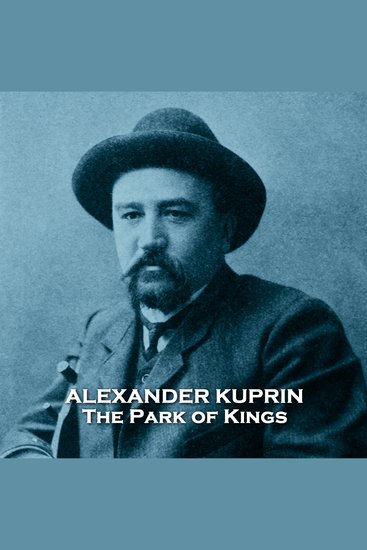
    Alexander Kuprin

    • 0
    • 0
    • 0
    Alexander Kuprin was born in Narovchat, Penza in Russia on 7th September 1870. 
    At 3 his Father died and he and mother moved to Moscow. By 10 he was enrolled at the Second Moscow Military High School and there his interest in literature began. The Alexander Military Academy followed and two years later he was a sub-lieutenant and posted to an Infantry Regiment for a further four years. 
    Despite his duties he was a now a keen writer and published his first short story at this time. His military duties also garnered him experiences for his breakthrough work ‘The Duel’.  Leaving the military he left for Kiev to work for local newspapers.  He continued to publish both stories and novels and by 1901 he was in St Petersburg becoming part of a group that included Chekhov, Ivan Bunin, Maxim Gorky and Leonid Andreyev.  
    In the years that followed further controversial works and acclaim followed.  His comments on the regime meant he was also put under secret police surveillance.   
    As World War I erupted, Kuprin opened a military hospital but was then given command of an infantry company in Finland. He was soon discharged on grounds of ill health.  
    The October Revolution saw him praise Lenin, but he warned that the Bolsheviks threatened Russian culture and might cause further widespread suffering to the peasants.  As Civil War raged he took his family to Helsinki and then on to Paris. 
    Exile saw his talents decline further and his succumbing to alcoholism. He became lonely and withdrawn. The family's poverty increased his malaise.   
    In May 1937, the Kuprin’s returned to Moscow.  He now saw his work published but wrote almost nothing new.  In 1938 his health rapidly deteriorated.  Already suffering from a kidney problems and sclerosis, he had now developed cancer of the oesophagus.  
    Alexander Kuprin died on 25th August 1938.
    Ver libro