

Join us on a literary world trip!
Add this book to bookshelf
Grey
Write a new comment Default profile 50px
Grey
Subscribe to read the full book or read the first pages for free!
All characters reduced
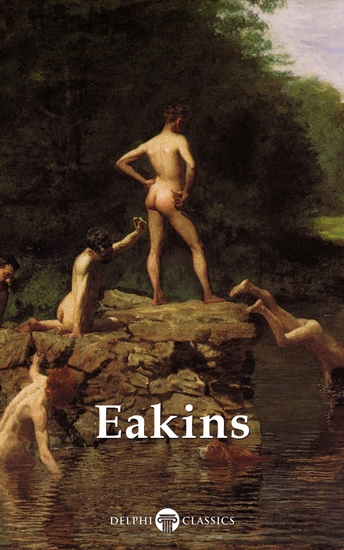
Delphi Complete Works of Thomas Eakins Illustrated - cover

Delphi Complete Works of Thomas Eakins Illustrated

Thomas Eakins

Publisher: Delphi Publishing Ltd

  • 0
  • 0
  • 0

Summary

Thomas Eakins is now widely acknowledged as one of the most important American artists, though during his lifetime he was a controversial figure whose work received little recognition. He worked exactingly from life, choosing as his subject the people of his hometown of Philadelphia. He produced several hundred portraits, usually of friends, family members, or prominent people in the arts and sciences, carrying the tradition of nineteenth century Realism to perhaps its highest achievement. His art was never compromised by the need to flatter patrons or sitters, and honesty was his only policy. His work served as an impetus for the burst of realism in American painting during the early years of the twentieth century, especially in the work of George Bellows and his circle. Delphi’s Masters of Art Series presents the world’s first digital e-Art books, allowing readers to explore the works of great artists in comprehensive detail. This volume presents Eakins’ complete paintings, with concise introductions, hundreds of high quality images and the usual Delphi bonus material. (Version 1)
 
* The complete paintings of Thomas Eakins – over 750 images, fully indexed and arranged in chronological and alphabetical order* Includes reproductions of rare works* Features a special ‘Highlights’ section, with concise introductions to the masterpieces, giving valuable contextual information* Enlarged ‘Detail’ images, allowing you to explore Eakins’ celebrated works in detail, as featured in traditional art books* Hundreds of images in colour – highly recommended for viewing on tablets and smartphones or as a valuable reference tool on more conventional eReaders* Special chronological and alphabetical contents tables for the paintings* Easily locate the artworks you wish to view* Includes Eakins’ drawings and sculptures – explore the artist’s varied works
 
CONTENTS:
 
The HighlightsThe Champion Single Sculls (1871)The Biglin Brothers Turning the Stake (1873)The Gross Clinic (1875)The Chess Players (1876)The Fairman Rogers Four-in-Hand (1880)Singing a Pathetic Song (1881)Arcadia (1883)Swimming (1885)Portrait of Walt Whitman (1888)The Agnew Clinic (1889)Portrait of Miss Amelia Van Buren (1890)The Concert Singer (1892)Portrait of Maud Cook (1895)Salutat (1898)Self Portrait (1902)William Rush and His Model (1908)
 
The PaintingsThe Complete PaintingsAlphabetical List of Paintings
 
Other ArtworksList of Artworks
Available since: 04/29/2023.
Print length: 1151 pages.

Other books that might interest you

  • The Blues - A Very Short Introduction - cover

    The Blues - A Very Short...

    Elijah Wald

    • 0
    • 0
    • 0
    Praised as "suave, soulful, ebullient" (Tom Waits), Elijah Wald is one of the leading popular music critics of his generation. In The Blues, Wald surveys a genre at the heart of American culture. 


    It has been defined by lyrical structure, or as a progression of chords, or as a set of practices reflecting West African "tonal and rhythmic approaches," using a five-note "blues scale." He traces its roots in work and praise songs, and shows how it was transformed by such professional performers as W. C. Handy, who first popularized the blues a century ago. He follows its evolution from Ma Rainey and Bessie Smith through Bob Dylan and Jimi Hendrix; identifies the impact of rural field recordings of Blind Lemon Jefferson, Charley Patton, and others; explores the role of blues in the development of both country music and jazz; and looks at the popular rhythm and blues trends of the 1940s and 1950s, from the uptown West Coast style of T-Bone Walker to the "down home" Chicago sound of Muddy Waters. Wald brings the story up to the present, touching on the effects of blues on American poetry, and its connection to modern styles such as rap. 


    As with all of Oxford's Very Short Introductions, The Blues tells you—with insight, clarity, and wit—everything you need to know to understand this quintessentially American musical genre.
    Show book
  • Futurism - A Very Short Introduction - cover

    Futurism - A Very Short...

    Ara H. Merjian

    • 0
    • 0
    • 0
    Modern technology radically transformed urban life by the first decade of the twentieth century. As one of Western Europe's least industrialized countries, Italy appeared impervious to such developments. It was this state of affairs at which the Futurist movement took aim. With its founding in 1909, the poet and impresario F. T. Marinetti called for a revitalization of aesthetic expression by means of "movement and aggression." A growing cadre of Futurist painters, poets, authors, and musicians exchanged Italy's cultural patrimony for new technologies, media, and metaphors, championing machine-propelled speed and its salutary hazards.The movement's challenge to twentieth-century culture lay not in any specific set of images or objects, but a more comprehensive revolution of sensibility. By the mid-1910s there circulated several dozen Futurist proclamations on everything from men's clothing to set design, photography to film, dance to politics. That political impetus proved relentlessly paradoxical in origin and upshot. From its base in Milan, Futurist activity spread throughout the entire peninsula. Prefiguring and then propagandizing Fascist imperialism, Futurism also galvanized a range of progressive modernist phenomena. More than a century later, the "activist model" of the Futurist avant-garde remains deeply fraught in its historical implications.
    Show book
  • Timeless Adventures - The Unofficial Story of How Doctor Who Conquered Television - cover

    Timeless Adventures - The...

    Brian J. Robb

    • 0
    • 0
    • 0
    This critical history of Doctor Who covers the series 60 years, from the creation of the show to its triumph as Britain's number one TV drama.
    
    Opening with an in-depth account of the creation of the series within the BBC of the early 1960s, each decade of the show is tackled through a unique political and pop cultural historical viewpoint, exploring the links between contemporary Britain and the stories Doctor Who told, and how such links kept the show popular with a mass television audience.
    
    Timeless Adventures reveals how Doctor Who is at its strongest when it reflects the political and cultural concerns of a mass British audience (the 1960s, 1970s and 21st Century), and at its weakest when catering to a narrow fan-based audience (as in the 1980s). The book also addresses the cancellation of the show in the late 1980s (following the series becoming increasing self-obsessed) and the ways in which a narrowly-focused dedicated fandom contributed to the show's demise and yet was also instrumental in its regeneration for the 21st Century under Russell T. Davies, and analyses the new series to reveal what has made it so popular, reflecting real world issues like consumerism and dieting.
    Show book
  • Imperial Chinese Foundations - Uniting the Land (3 in 1) - cover

    Imperial Chinese Foundations -...

    Rolf Hedger

    • 0
    • 0
    • 0
    The story of China's imperial unification represents one of history's most consequential political transformations. "Imperial Chinese Foundations: Uniting the Land" explores the three dynasties that forged China's imperial system—a political structure that would endure for over two millennia. 
    The brief but revolutionary Qin Dynasty (221-206 BCE) ended centuries of warring states by conquering all rivals under the leadership of the First Emperor, Qin Shi Huang. Through military might, standardized writing, currency, measurements, and a unified legal code, the Qin created China's first centralized bureaucratic empire—though their harsh Legalist policies triggered rebellion after the emperor's death. 
    The Western Han Dynasty (206 BCE-9 CE) consolidated imperial rule through a more pragmatic blend of Confucian ideology and centralized governance. Under Emperor Wu's dynamic leadership, the Han expanded Chinese territory, opened the Silk Road, established the civil service examination system, and created cultural and political institutions that would define Chinese civilization for millennia. 
    As power shifted to the Eastern Han (25-220 CE), the dynasty initially flourished before facing mounting challenges from natural disasters, court intrigues, and the Yellow Turban Rebellion. Yet even as political cohesion weakened, this period saw remarkable innovations—including paper, the seismograph, and advances in mathematics and medicine—while Buddhism began its profound influence on Chinese civilization. 
    Through examining these three foundational dynasties, we witness the birth and evolution of the imperial Chinese state that would serve as a template for governance across East Asia and continue to influence Chinese identity into the modern era.
    Show book
  • The Chromatics Camp At The Musical Mountain - cover

    The Chromatics Camp At The...

    Julie Kirchhubel

    • 0
    • 0
    • 0
    There’s a rumour spreading quickly on the farm that triggers immediate emergency escape plans for this unknowing bunch of fruit and vegetables. And there’s a certain upcoming birthday to celebrate, but it’s too dangerous to stay on the farm. Where can they flee to? Make no mistake; this is a day full of twists and turns. Just how does an ordinary Saturday morning lead to an unexpected adventure of mysterious cave exploring? The fact that a beautiful creature is living all alone in such cold temperatures is intriguing, and so are those motionless objects…. Rapping, knocking, tapping, clapping, stomping – not to mention booming beats, spooky silence, eerie echoes, windy whistling, strange shadows and objects – all give this cave a creepy feel. Luckily, it doesn’t last, and it’s not long before the strains of music and birthday singing drown out those scary sounds.Join this cute bunch of Pentatonics and Diatonics as they journey from the farm to the mountains and then to the City. What else do they see along the way? These likeable little characters, renamed as the Chromatics, certainly have a lot to learn about themselves – and so do you! There’s fun, excitement, humour, adventure, and so much more, and don’t forget that Big Ride either!
    Show book
  • The Tenderness of Silent Minds - Benjamin Britten and his War Requiem - cover

    The Tenderness of Silent Minds -...

    Martha C. Nussbaum

    • 0
    • 0
    • 0
    The human body is the primary instrument of war, yet those waging war often confront soldiers' bodies in a detached or merely intellectual way. In The Tenderness of Silent Minds, Martha C. Nussbaum, a leading thinker on emotion, morality, and justice, conducts a pioneering study of Benjamin Britten's musical representations of the tender male body amidst the brutality of war, and their ability to transform consciousness by evoking potent, non-personal emotions. 


    Offering a reading of Britten's views about the value and beauty of the body that situates these in the context of his thirty-nine year partnership with his lover, the singer Peter Pears, and also surveying pacifist themes in works written both before and after War Requiem, Nussbaum presents a compelling framework for critically assessing Britten's oeuvre. Nussbaum engages with a remarkably wide range of Britten's works, examining his treatment of aggression and its roots in his collaborations with the poet W. H. Auden, offering readings of the value placed on the body in early partnerships with Britten's beloved and singer Peter Pears, and surveying pacifist themes in Britten's earlier works. The analysis throughout is enriched with perspectives from Britten's personal letters and thoughtful study of the social and political backdrop of fear and homophobic disgust in mid-twentieth century Britain.
    Show book
