¡Acompáñanos a viajar por el mundo de los libros!
Añadir este libro a la estantería
Grey
Escribe un nuevo comentario Default profile 50px
Grey
Suscríbete para leer el libro completo o lee las primeras páginas gratis.
All characters reduced
The Inevitable Crimes of Celibacy - Enriched edition The Vices of Convents and Monasteries Priests and Nuns - cover

The Inevitable Crimes of Celibacy - Enriched edition The Vices of Convents and Monasteries Priests and Nuns

Thomas E. Watson

Editorial: DigiCat

  • 0
  • 0
  • 0

Sinopsis

In "The Inevitable Crimes of Celibacy," Thomas E. Watson delves into the psychological and societal ramifications of celibacy, framing it as a harbinger of moral and ethical dilemmas. Watson employs a candid literary style, blending personal anecdotes with sociological insights, creating a compelling narrative that challenges the conventional notions of sexual abstinence. The book emerges against the backdrop of early 20th-century America, a period marked by shifting attitudes towards sexuality and personal freedom, thereby positioning celibacy both as a personal choice and a societal construct fraught with tension. Thomas E. Watson, known for his incisive commentary on social issues, was influenced by his own experiences and the cultural zeitgeist of his time. As a prominent figure in the Populist movement, Watson's explorations of morality often intersect with themes of individual liberty and societal expectation. His background in law and journalism informed his critical perspective, allowing him to dissect the complexities surrounding intimate relationships and their implications in a rapidly modernizing society. This book is highly recommended for readers seeking a thought-provoking exploration of celibacy's broader implications. Watson's incisive analyses encourage critical reflection on the nature of desire and societal norms, making it an essential read for anyone interested in the intersections of sexuality, morality, and social structures.

In this enriched edition, we have carefully created added value for your reading experience:
- A succinct Introduction situates the work's timeless appeal and themes.
- The Synopsis outlines the central plot, highlighting key developments without spoiling critical twists.
- A detailed Historical Context immerses you in the era's events and influences that shaped the writing.
- A thorough Analysis dissects symbols, motifs, and character arcs to unearth underlying meanings.
- Reflection questions prompt you to engage personally with the work's messages, connecting them to modern life.
- Hand‐picked Memorable Quotes shine a spotlight on moments of literary brilliance.
- Interactive footnotes clarify unusual references, historical allusions, and archaic phrases for an effortless, more informed read.
Disponible desde: 04/09/2022.
Longitud de impresión: 35 páginas.
Otros libros que te pueden interesar

  • Thoughts for the Times of War and Death - cover

    Thoughts for the Times of War...

    Sigmund Freud

    • 0
    • 0
    • 0
    In this insightful essay Sigmund Freud delves into the psychological roots of war, the nature of human aggression, and the profound impact of death on society.
    
    Written during the tumultuous years of World War I, Freud explores how conflict shapes the psyche and why humanity is drawn to violence despite the consequences.
    Ver libro
  • Black America - History of Slavery Revolutions Political Activists and Conflicts - cover

    Black America - History of...

    Kelly Mass

    • 0
    • 0
    • 0
    In this combo with several books in one, you'll find the following topics: 
    1 - African American History 
    2 - Haitian Revolution 
    3 - Martin Luther King 
    4 - Malcolm X 
    5 - Abraham Lincoln
    Ver libro
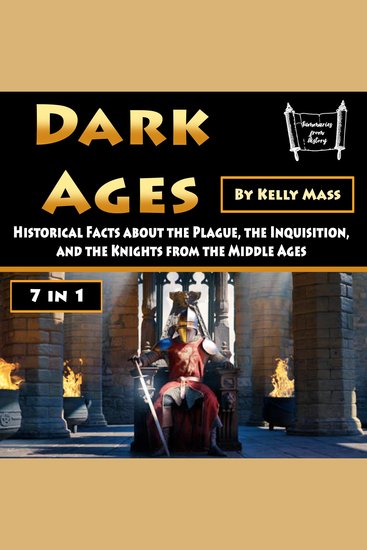
  • Dark Ages - Historical Facts about the Plague the Inquisition and the Knights from the Middle Ages - cover

    Dark Ages - Historical Facts...

    Kelly Mass

    • 0
    • 0
    • 0
    This book contains the following titles: 
    Crusaders - The Crusaders is one of those dark chapters in history that we would rather forget, especially religious people. In name of the church, or other religions, like the Muslim faith, people killed, destroyed, looted, and burned cities to the ground. 
    Middle Ages - In the history of Europe, the Middle Ages or middle ages time period lasted around from the 5th to the late 15th centuries, likewise to the Post-classical period of worldwide history. 
    William Shakespeare - William Shakespeare is the celebrated script writer of the most popular plays in the English language. By writing both tragedies, romances, and comedies in the 16th century, he made a name for himself and became successful in the art of drama. 
    Black Death - Here we have it: We may be looking at the years 2020-2021 and think a certain virus has been bad for the world population. However, what happened in these two years is nothing, proportionally, to the hundreds of millions of people who got wiped out by rat infestations. 
    Anglo-Saxons - In the Early Middle Ages, the Anglo-Saxons were a cultural group that resided in England. They traced their roots back to the arrival of incomers to Britain in the fifth century, who originated from the North Sea coastlands of continental Europe. 
    Viking History - We all have a typical image of Vikings, from the horns on their helmets to the beards and the clothes they wear. Their ships have a certain charm, and their reputation is that they were brutal, raw, and believed in multiple gods. 
    Inquisition - Perhaps you have heard of the horrible stories of the Spanish, Portuguese, or French inquisition, the Catholic body of persecutors who would arrest the supposed “heathens” and accuse them of witchcraft, heresies, blasphemy, adultery, and a whole list of other sins or crimes.
    Ver libro
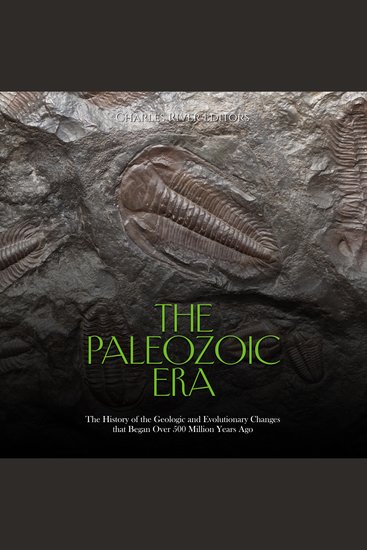
  • Paleozoic Era The: The History of the Geologic and Evolutionary Changes that Began Over 500 Million Years Ago - cover

    Paleozoic Era The: The History...

    Editors Charles River

    • 0
    • 0
    • 0
    The current view of science is that Earth is around 4.6 billion years old, and the first 4 billion years of its development are known as the Precambrian period. For the first billion years or so, there was no life in Earth. Then the first single-celled life-forms, early bacteria and algae, began to emerge. It’s unclear where they came from or even if they originated on this planet at all, but this gradual development continued until around four billion years ago when suddenly (in geological terms) more complex forms of life began to emerge.  
    	Scientists call this time of an explosion of new forms of life the Paleozoic Era, and it stretched from around 541 to 250 million years ago. In the oceans and then on land, new creatures and plants began to appear in bewildering variety, and by the end of this period, life on Earth had diversified into a myriad of complex forms that filled virtually every habitat and niche available in the seas and on the planet’s only continent, Pangea. 
    	The Precambrian Period is divided into three eons: the Hadean, the Archaean, and the Proterozoic. One layer of carbon in rocks that date to the Archaean Eon, found on islands west of Greenland, seems to have fossilized tracks that may have been left by some form of organic life, but scientists simply are not certain. The oldest confirmed remains of life date from the same eon and were found in rocks in Western Australia, which were found to contain fossilized bacteria estimated to be 3.46 billion years old. It seems likely that there were thousands, perhaps even millions of forms of life in these early periods, and most seem to have been microscopic in size and very simple in developmental terms.
    Ver libro
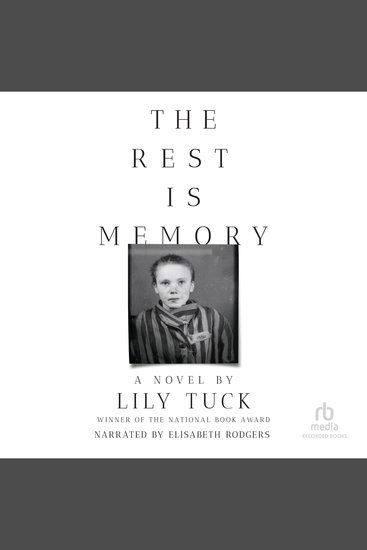
  • The Rest Is Memory - cover

    The Rest Is Memory

    Lily Tuck

    • 0
    • 0
    • 0
    THE HEARTBREAKING STORY OF A YOUNG CATHOLIC GIRL TRANSPORTED TO AUSCHWITZ BECOMES A RASHOMON-LIKE RONDO BY ONE OF OUR GREATEST NOVELISTS. 
     
    First glimpsed riding on the back of a boy’s motorcycle, fourteen-year-old Czeslawa comes to life in this mesmerizing novel by Lily Tuck, who imagines her upbringing in a small Polish village before her world imploded in late 1942.  
     
    Stripped of her modest belongings, shorn, and tattooed number 26947 on arriving at Auschwitz, Czeslawa is then photographed. Three months later, she is dead. 
     
    How did this happen to an ordinary Polish citizen? This is the question that Tuck grapples with in this haunting novel, which frames Czeslawa’s story within the epic tragedy of six million Poles who perished during the German occupation. A decade prior to writing The Rest Is Memory, Tuck read an obituary of the photographer Wilhelm Brasse, who took more than 40,000 pictures of the Auschwitz prisoners. Included were three of Czeslawa Kwoka, a Catholic girl from rural southeastern Poland. Tuck cut out the photos and kept them, determined to learn more about Czeslawa, but she was only able to glean the barest facts: the village she came from, the transport she was on, that she was accompanied by her mother and her neighbors, her tattoo number, and the date of her death. From this scant evidence, Tuck’s novel becomes a remarkable kaleidoscopic feat of imagination, something only our greatest novelists can do. 
     
    “Beautifully written, all the while instilling a sense of horror” (Susanna Moore), Tuck’s language swirls about, yet not a word is out of place. The subtly rotating images tumble out at us, accelerating as we learn about Czeslawa’s tragic stay in Auschwitz, the lives of real people such as the barbaric Commandant Rudolf Höss; his unconscionable wife, Hedwig; the psychiatrist and child rescuer Janusz Korczak; and the mordant Polish short story writer Tadeusz Borowski. 
     
    Although we are certain of Czeslawa’s fate, we have no choice but to keep turning the pages, thoroughly mesmerized by Tuck’s near otherworldly prose. 
     
    In Lily Tuck’s hands, The Rest Is Memory becomes an unforgettable work of historical reclamation that rescues an innocent life, one previously only recalled by a stark triptych of photographs. 
     
    “The Rest Is Memory is a literary resurrection, as shattering as it is astonishing. Lily Tuck has done the impossible; from darkness and hideous cruelty, she has woven an unforgettable paean to hope, to life, to justice.”—Junot Diaz
    Ver libro
  • Distracted - A Philosophy of Cars and Phones - cover

    Distracted - A Philosophy of...

    Robert Rosenberger

    • 0
    • 0
    • 0
    Although the dangers of texting while driving are widely known, many people resist the idea that phone usage will impair their driving. And connectivity features in new cars have only made using technology behind the wheel more tempting. What will it take to change people's minds and behavior? Robert Rosenberger contends that a better understanding of why this combination of technologies is so dangerous could effectively adjust both habits and laws. 


    Rosenberger brings together ideas from philosophy and cognitive science to leverage a postphenomenological perspective that reveals how our smartphones make us such bad drivers. Reviewing decades of empirical studies in cognitive science, he shows that we have developed habits of perception regarding our compulsive technology use—habits that may wrest our attention away from the road. 


    Distracted develops innovative concepts for understanding technology-related habits and the ways that our relationships to our devices influence how we perceive the world. In turn, these ideas can help drivers be more cognizant of the effect that smartphone usage has on their perceptions, better inform efforts to enact stricter regulations, and help us all to be more reflective about the technologies that shape our lives.
    Ver libro