¡Acompáñanos a viajar por el mundo de los libros!
Añadir este libro a la estantería
Grey
Escribe un nuevo comentario Default profile 50px
Grey
Suscríbete para leer el libro completo o lee las primeras páginas gratis.
All characters reduced
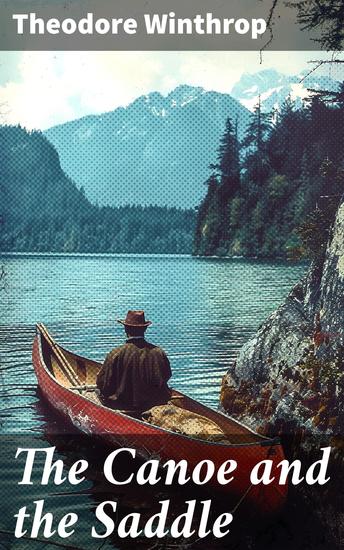
The Canoe and the Saddle - Historical Adventure Novel - cover

The Canoe and the Saddle - Historical Adventure Novel

Theodore Winthrop

Editorial: Good Press

  • 0
  • 0
  • 0

Sinopsis

In "The Canoe and the Saddle," Theodore Winthrop masterfully intertwines adventure, nature, and introspection through the narrative of a young man's journey across the uncharted landscapes of the Pacific Northwest. This 1850s travelogue is characterized by Winthrop's poetic prose, rich descriptive imagery, and an insightful exploration of the American frontier spirit. With a keen sense of observation, Winthrop captures the untamed beauty of the wilderness and the transformative power it holds over individuals, offering readers not only an outdoor adventure but also a philosophical engagement with the concept of exploration and identity in a rapidly changing America. Winthrop, an ardent supporter of exploration and a fervent believer in the American ideal, was deeply influenced by his experiences in both literature and nature. His background as a writer and a soldier in the Civil War lends a unique perspective to his narrative, highlighting themes of courage and self-discovery. As a pioneer of American literature, Winthrop sought to capture the spirit of his era'Äîa time of discovery, expansion, and confrontation with the sublime forces of nature. This compelling work is highly recommended for readers who cherish nature writing and the spirit of adventure. "The Canoe and the Saddle" offers a profound reflection on the human experience in the wilderness and is essential reading for those interested in understanding the roots of American literature and its vibrant landscapes.
Disponible desde: 26/12/2023.
Longitud de impresión: 181 páginas.

Otros libros que te pueden interesar

  • Samuel Ringgold Ward - A Life of Struggle - cover

    Samuel Ringgold Ward - A Life of...

    R.J.M. Blackett

    • 0
    • 0
    • 0
    Born on the Eastern Shore of Maryland, Samuel Ringgold Ward (1817–c. 1869) escaped enslavement and would become a leading figure in the struggle for Black freedom, citizenship, and equality. He was extolled by his contemporary Frederick Douglass for his "depth of thought, fluency of speech, readiness of wit, logical exactness." Until now, his story has been largely untold. 


    Ward, a newspaper editor, Congregational minister, and advocate for the temperance movement, was considered one of the leading orators of his time. After the passage of the Fugitive Slave Act of 1850 he fled to Canada, where he lectured widely to improve conditions for formerly enslaved people who had settled there. Ward then went to Britain as an agent of the Canadian Antislavery Society and published his influential book Autobiography of a Fugitive Negro. He never returned to the United States, and he died in obscurity in Jamaica. 


    Despite Ward's prominent role in the abolitionist movement, his story has been lost because of the decades he spent in exile. In this book, R. J. M. Blackett brings light to Ward's life and his important role in the struggle against slavery and discrimination, and to the personal price he paid for confronting oppression.
    Ver libro
  • Witness - Stories - cover

    Witness - Stories

    Jamel Brinkley

    • 0
    • 0
    • 0
    What does it mean to really see the world around you—to bear witness? And what does it cost us, both to see and not to see? 
     
    In these ten stories, each set in the changing landscapes of contemporary New York City, a range of characters—from children to grandmothers to ghosts—live through the responsibility of perceiving and the moral challenge of speaking up or taking action. Though they strive to  
    connect with, stand up for, care for, and remember one another, they often fall short, and the structures they build around these ambitions and failures shape their futures as well as the legacies and prospects of their communities and their city. 
     
    In its portraits of families and friendships lost and found, the paradox of intimacy, the long shadow of grief, and the meaning of home, Witness enacts its own testimony. Here is a world where fortunes can be made and stolen in just a few generations, where strangers might sometimes  
    show kindness while those we trust—doctors, employers, siblings—too often turn away, where joy comes in snatches: flowers on a windowsill, dancing in the street, glimpsing your purpose, change on the horizon. 
     
    With prose as upendingly beautiful as it is artfully, seamlessly crafted, Jamel Brinkley offers nothing less than the full scope of life and death and change in the great, unending drama of the city.
    Ver libro
  • On the Duty of Civil Disobedience - cover

    On the Duty of Civil Disobedience

    Henry David Thoreau

    • 0
    • 0
    • 0
    Henry David Thoreau's essay, On the Duty of Civil Disobedience, is a masterful exploration of the moral imperative to resist unjust laws and unjust governmental systems. By deploying a carefully crafted philosophical argument, Thoreau contends that citizens have an obligation to disobey any law that violates their conscience or enshrines injustice. Read in English, unabridged.
    Ver libro
  • Mourt's Relation - A Journal of the Pilgrims at Plymouth - cover

    Mourt's Relation - A Journal of...

    Edward Winslow, William Bradford

    • 0
    • 0
    • 0
    Mourt's Relation was written between November 1620 and November 1621, and it gives a detailed descriptionof what happened from the landing of the Mayflower Pilgrims on Cape Cod in Provincetown Harbor through their exploring and eventual settling of Plymouth Colony. It was written primarily by Edward Winslow, although William Bradford appears to have written most of the first section. The book describes their relations with the surrounding Native Americans, up to what is commonly called the first Thanksgiving and the arrival of the ship Fortune in November 1621.
    Ver libro
  • Taken - A True Story of the Pain and Scandal of Forced Adoption - cover

    Taken - A True Story of the Pain...

    Michelle Pearson

    • 0
    • 0
    • 0
    In 1972, Michelle Pearson gave up her son for adoption. 
    As ‘one of those girls’, she was expected to hide her shame with secrecy. No one should ever find out she’d had a child. 
    But she never forgot the son who was taken from her. 
    In the years that followed she struggled with PTSD, traumatic memory loss, agoraphobia and anxiety – impacting every area of her life. 
    This is Michelle’s story of love, loss and hope; of how over 50 years she has managed the consequences of living with her secret, survived the emotional pain, and finally, after being reunited with her son, the journey to rebuild their lives together.
    Ver libro
  • A Lesson on a Tortoise - From their pens to your ears genius in every story - cover

    A Lesson on a Tortoise - From...

    D H Lawrence

    • 0
    • 0
    • 0
    David Herbert Lawrence was born on the 11th September 1885 in Eastwood, Nottinghamshire, a coal mining town where the reality of a harsh life was only useful as experiences for future literary works. 
    He was educated at Beauvale Board School and became the first local boy to receive a scholarship to attend Nottingham High School. After 3 years he became a junior clerk in Haywood’s surgical appliances factory. He was also attempting a literary career which, in the short term, led to a teacher training position in Eastwood and later a teaching qualification from University College, Nottingham.  
    Lawrence’s first efforts were poems, short stories and a draft of ‘The White Peacock’. Moving to London and a teaching position in Croydon his writing attracted the attention of Ford Madox Ford, editor of The English Review, and he commissioned him to write ‘Odour of Chrysanthemums’.  
    Wanting to write full-time he now began work on what would become ‘Sons and Lovers.   
    In 1912 he met the older and married mother-of-three Frieda Weekley. They eloped to Germany and here Lawrence could see for himself the growing tensions with France.  So keen was his interest that he was arrested and accused of being a British spy.  
    In early 1914 Frieda obtained her divorce and they returned to Britain to be married just days before the outbreak of war. Owing to her German parentage, and his own public dislike of militarism and violence, the couple were treated with contempt and suspicion throughout the war years.  
    Despite this he continued to write but his reputation in England was so tarnished and, mirrored by his own disdain for the country, he and Frieda left England in November 1919, first for Europe and then America via Ceylon and Australia. 
    They bought a ranch in Taos, New Mexico and visited Mexico several times. The third visit in March 1925 caused a near fatal attack of malaria. To convalesce they moved to Florence. Here he continued work on ‘Lady Chatterley’s Lover’ which for many years would cause controversy. A renewed interest in oil painting resulted in an exhibition in 1929 which was raided by the police and several works were confiscated.  
    D H Lawrence died of complications arising from a bout of tuberculosis on the 2nd of March 1930 in Vence, France.  He was 44.
    Ver libro