

¡Acompáñanos a viajar por el mundo de los libros!
Añadir este libro a la estantería
Grey
Escribe un nuevo comentario Default profile 50px
Grey
Suscríbete para leer el libro completo o lee las primeras páginas gratis.
All characters reduced
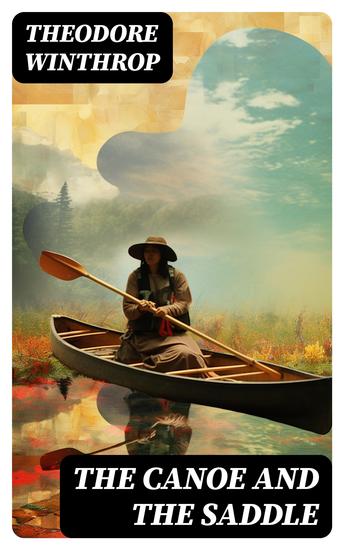
The Canoe and the Saddle - Historical Adventure Novel - cover

The Canoe and the Saddle - Historical Adventure Novel

Theodore Winthrop

Editorial: DigiCat

  • 0
  • 0
  • 0

Sinopsis

In "The Canoe and the Saddle," Theodore Winthrop intricately weaves together his dual passions for outdoor adventure and the exploration of the American landscape. This semi-autobiographical narrative combines vivid descriptions of the majestic Pacific Northwest with philosophical musings about society and natural beauty. Written in the mid-19th century, the book is marked by a romantic literary style reflective of the Transcendentalist movement, echoing the works of contemporaries like Emerson and Thoreau. Winthrop's narrative transcends mere travelogue; it is a profound meditation on the interplay between humanity and nature, showcasing his keen observations of both the land and the indigenous cultures encountered along the journey. Theodore Winthrop was a scholar, writer, and passionate advocate for the expansion of the American frontier. His experiences as a traveler and a Union soldier during the Civil War profoundly influenced his literary endeavors. Winthrop's fascination with the untamed landscapes of the West and his desire for a deeper understanding of the American identity motivated him to craft this work, capturing the spirit of exploration and the quest for self-discovery that marked his era. "The Canoe and the Saddle" is a must-read for those interested in the intersection of literature and the American experience. Winthrop's lyrical prose and compelling reflections offer valuable insights into the relationship between environment and identity. This book not only serves as a historical document but also invites readers to engage with the enduring themes of adventure, nature, and self-exploration that remain relevant today.
Disponible desde: 26/11/2023.
Longitud de impresión: 181 páginas.
Otros libros que te pueden interesar

  • White - cover

    White

    Sylvain Tesson

    • 0
    • 0
    • 0
    When Sylvain Tesson left the colorful yellow houses of the French Riveria for a ski trek across the Alps with his friend Daniel du Lac, a high-altitude mountain guide, he didn't know what exactly would await him. Over the course of four years, from 2018 to 2021, they ascended high into the Alps in winter, following the curve of the mountains from the Mediterranean to the Adriatic, entering into a white world entirely of snow, bitterly cold, and overlooked by an empty sky; only the effort of moving forward, one stride at a time, separated the days from one another. He thought he was venturing into beauty but he was immersing himself in a substance. In the white of the high Alps all is canceled out—hopes, fears, memories, and regrets. What did he stand to gain by inflicting this ordeal on himself? This was no ordinary mountain trek: it was communion with a substance. Perhaps his longtime dream of transforming travel into prayer would come true at last.
    Ver libro
  • Marketing Strategy for Hospitality Property’s - 2023 - Hotels-Resorts-Inns-Bed and Breakfasts-Vacation Homes - cover

    Marketing Strategy for...

    Gerry MacPherson

    • 0
    • 0
    • 0
    Would you like the skills vital to effectively communicate with your ideal guest? 
    Gone are the days when all you had to do is place brochures in your local tourist information centre or put an open sign on your front door. With this course, you will benefit by learning a marketing mix that will highlight your hospitality property and keep you ahead of your competition. 
    IncludedDeveloping Your Marketing StrategyBranding –What Makes You Stand OutHow to Find Out Your Customer's Demographics and PsychographicsCreating a Memorable Tagline or Slogan that SticksPower of ColoursUpgrade Your LogoCreating an Effective WebsiteEmail & Guest List BuildingWhy Build an Email ListCreating Free Gifts to Build Your ListWriting Autoresponder Emails That ConvertExit Popups to Build Your ListChoosing Your Visual BrandingCreating a Successful Blog for Your PropertyIntroduction to Social MediaMarketing on YouTubeBenefits of Facebook for BusinessHow to be Successful on TwitterHow to Use LinkedInPinterest for Your PropertyInstagram for Your BusinessCustomer GiveawaysThe Benefit of Online NewslettersHow to Make Surveys Work for You 
    You can view this section as an individual course or watch it as part of the “Your Guide to Owning & Operating a Hospitality Property – Successfully” course. 
    Any downloads or checklists mentioned in this audiobook can be found at https://keystonehpd.com/marketingstrategy 
    If you want to attract your ideal guest, then don’t hesitate. Sign up now!
    Ver libro
  • Cambodia - History of Angkor Wat and the Khmer Empire (3 in 1) - cover

    Cambodia - History of Angkor Wat...

    Kelly Mass

    • 0
    • 0
    • 0
    Learn more about the history of those countries. The topics addressed will be these: 
    Angkor Wat-- The temple was built as the state temple for the Khmer Empire at the demand of Suryavarman II in the early 12th century in Yaodharapura (, contemporary Angkor), the Khmer Empire's capital. It was constructed in the early 12th century to honor the Hindu god Vishnu, but by the end of the century, it had been changed to a Buddhist temple. 
    Angkor Wat is a fascinating structure, dating back hundreds of years, and it’s impressive how much of it has remained intact. 
    The Khmer Empire--Historians describe Cambodia as the Khmer State or the Angkorian Empire (Khmer:) from the 9th century to the 15th century, when it was a Hindu/Buddhist empire in Southeast Asia. The empire, which developed from the old societies of Funan and Chenla, governed and/or "vassalized" the majority of mainland Southeast Asia and parts of Southern China, covering from the suggestion of the Indochinese Peninsula northward to modern-day Yunnan province in China, and from Vietnam westward to Myanmar. The Khmer Empire was greater at its peak than the Byzantine Empire (Eastern Roman Empire) that existed at the exact same period. 
    The Siamese-- Siam was just a much different name for what's now referred to as Thailand. The Siamese are the people who live there, though they're never ever called as such any longer. 
    Thailand is a fascinating country, with its own culinary arts, culture, history, royalty, infrastructure, and influence on the world. To learn more about these “Thai” people before they were called Thai, when they were Siamese, is to learn about those people’s roots.
    Ver libro
  • Scottish Adventure: Whisky Battles and Legends Unleashed - Ignite Your Scottish Journey: Discover Whisky Battles & Legends through Engaging Audio Lessons! - cover

    Scottish Adventure: Whisky...

    Ronan Thorne

    • 0
    • 0
    • 0
    Scottish Adventure: Whisky, Battles, and Legends Unleashed 
    ⭐⭐ Simplified Audio Guide ⭐⭐ 
    Are you looking to immerse yourself in Scotland's rich history and captivating legends while enjoying the aromatic allure of its whisky? 
    Seeking a comprehensive guide that provides all the necessary elements to delve deep into Scotland's epic tales and vibrant history? 
    Your search ends here! 
    This audiobook serves as your definitive companion for deepening your understanding, soaking in the culture, and engaging in Scotland's historical and mythical narratives. With this, you're geared for a truly enriching experience. 
    Updated for the latest insights on Scottish history and traditions. 
    Key features of this enriched guide: 
    - Profound insights about Scotland's epic tales and vibrant history 
    - Detailed explanations of legendary battles and historic moments 
    - Effective strategies for engaging with Scotland's cultural heritage 
    Our guide distinguishes itself through comprehensive coverage, which is essential for a complete Scottish adventure. Stories aren't merely skimmed; they are delved into with precision. 
    Designed with a clear structure and easy-to-understand language, our guide to Scotland’s adventures ensures smooth transitions between topics. Say goodbye to dense jargon and welcome clear, precise, and engaging content. 
    So, why wait? Click the BUY NOW button, secure your guide, and begin your journey to discovering Scotland's epic tales and vibrant history!
    Ver libro
  • Pala Empire - Guardians of Buddhism and the Legacy of Nalanda - cover

    Pala Empire - Guardians of...

    Rolf Hedger

    • 0
    • 0
    • 0
    The Pala Empire emerged in the eastern regions of the Indian subcontinent during the eighth century, marking the beginning of a powerful dynasty that would shape the cultural and political landscape of Bengal and Bihar for nearly four centuries. The empire was established in a period of political fragmentation and instability following the decline of the earlier Gupta Empire and the subsequent rule of smaller, competing kingdoms. This power vacuum set the stage for the rise of a strong and centralized authority under the leadership of Gopala, the first ruler of the Pala dynasty. 
    Gopala's ascent to power is believed to have been unique for the time, as he was reportedly chosen by local chieftains and influential figures through a process of election, rather than simply inheriting his position through lineage. This suggests that his leadership was recognized as a unifying force in a region that had suffered from prolonged disorder and internal conflicts. Once in power, Gopala took significant steps to stabilize his realm, laying the foundation for what would become one of the most enduring dynasties in Indian history. He consolidated his rule over Bengal and expanded his influence into neighboring territories, establishing control over strategic trade routes and fertile agricultural lands that contributed to the empire’s prosperity. 
    Gopala’s son, Dharmapala, proved to be an even more ambitious ruler. Under his leadership, the Pala Empire reached its zenith, with its influence stretching far beyond Bengal into northern and central India. Dharmapala was not only a military leader but also a great patron of Buddhism, playing a crucial role in the expansion of Buddhist institutions, including the famed Nalanda University. His military campaigns brought him into direct conflict with two of the other major powers of the time, the Gurjara-Pratiharas and the Rashtrakutas.
    Ver libro
  • Chimú Empire - The Kingdom of Chan Chan and the Lords of the Northern Coast - cover

    Chimú Empire - The Kingdom of...

    Rolf Hedger

    • 0
    • 0
    • 0
    The Chimú Empire, one of the most prominent pre-Columbian civilizations of the northern coast of Peru, flourished between the 9th and 15th centuries. This advanced civilization is known for its impressive urban centers, most notably the capital city of Chan Chan, which remains the largest adobe city in the world. At its height, the Chimú Empire controlled vast territories, from the southern border of the Moche Valley to the northern regions of present-day Ecuador. The empire was characterized by its highly structured society, advanced technology, and unique artistic traditions, which helped shape the cultural landscape of the Andean region. 
    The roots of the Chimú Empire trace back to the Moche culture, which had a significant influence on the development of the Chimú. However, the Chimú people took the foundational knowledge of their predecessors and expanded upon it, creating a powerful and sophisticated society. They established a series of city-states along the coast, which were eventually unified under the leadership of a single ruler, the Chimú king, who governed from Chan Chan. 
    The Chimú Empire’s political structure was highly organized, with a well-defined hierarchy that ranged from the elite rulers to the common people. The king, or "Sapa Chimú," was considered the most powerful figure, acting as both a political and spiritual leader. The empire was divided into regions, each overseen by local lords who managed administrative and religious duties within their territories. This hierarchical structure helped maintain control over the vast lands and resources of the empire.
    Ver libro
