¡Acompáñanos a viajar por el mundo de los libros!
Añadir este libro a la estantería
Grey
Escribe un nuevo comentario Default profile 50px
Grey
Suscríbete para leer el libro completo o lee las primeras páginas gratis.
All characters reduced
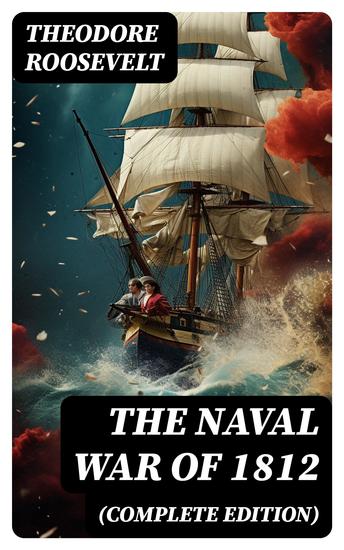
The Naval War of 1812 (Complete Edition) - cover

The Naval War of 1812 (Complete Edition)

Theodore Roosevelt

Editorial: DigiCat

  • 0
  • 0
  • 0

Sinopsis

In "The Naval War of 1812 (Complete Edition)," Theodore Roosevelt examines the pivotal naval engagements that shaped the outcomes of the War of 1812 between the United States and Great Britain. Rooted in meticulous research and vivid storytelling, Roosevelt's comprehensive narrative captures the essence of maritime conflict and national identity in the early 19th century. His literary style deftly blends historical analysis with engaging prose, allowing readers to appreciate the strategic complexities and heroic undertakings of American naval forces, while positioning the conflict within its broader socio-political context. The 26th President of the United States, Theodore Roosevelt was not only a statesman but also a passionate historian and naturalist. His deep-seated interest in naval history was influenced by his upbringing and experiences in the military, particularly his view on naval power as critical to American strength. Convinced of the importance of a strong navy, Roosevelt delved into this subject matter, believing that understanding the past could inform future policies on national defense and international relations. I highly recommend "The Naval War of 1812" to both history enthusiasts and general readers alike. Roosevelt's engaging style and thorough analysis make this work an essential study for understanding early American naval history, and it sheds light on the emerging national character during this formative period.
Disponible desde: 12/12/2023.
Longitud de impresión: 359 páginas.


Otros libros que te pueden interesar

  • Pounded for Her Pleasure - MM Gay Wife Voyeur - cover

    Pounded for Her Pleasure - MM...

    Randy Manners

    • 0
    • 0
    • 0
    I could never have imagined what desires lie beneath. 
      
    He was an old friend of my wife’s from her college. He was in town for just a few days. A lavish night out for my wife and I turned into a mini reunion. I hadn’t realized our date night was engineered to throw us together—not until he made his move. I was taken off guard by my body’s reaction—and by my wife. She had wanted this to happen all along. She had wanted to see my body intertwined with his. She’d wanted to watch as I was taken. And, God help me, I wanted it too. 
      
    The rest of the dinner went on without much of a hitch. Dylan behaved himself—for the most part—sending only the occasional lustful appraisal my way. I assured myself that my growing discomfort and arousal were in anticipation of the hotel room that Sonia and I would be retiring to after the dinner. If this was the kind of tension I would be feeling whenever Dylan was around, I hoped that the two old friends would not include me in their social life anymore. The way Sonia continued to revisit our shared interest in football and video games, it didn’t appear I was getting my wish. My nerves were on edge, and I couldn’t decide if I wanted to get to know my wife’s eccentric friend better or never see him again.
    Ver libro
  • How To Write Your Story in 30 Minutes a Day - Easy prompts for personal history and memories - cover

    How To Write Your Story in 30...

    Deb Graham

    • 0
    • 0
    • 0
    Why Write Your Own Story?It’s a scary thought--What if you die before you tell your life’s story, and your busybody sister-in-law decides to write it for you? Yes, she’s diligent, but she never really liked you, and she surely doesn’t know you as well as you know yourself. No one can tell your personal stories as clearly or as accurately as you can! Now’s the time, before it’s too late. No dry memoir here! In only thirty short minutes a day, you can begin to tell your own history, drawn from your own memories. Thousands of people have written their personal autobiography and found it compelling, even addictive. Share with your children and generations to come. How To Tell Your Story in 30 minutes or less by Deb Graham makes self-exploration easy, with dozens of questions and memory prompts, carefully designed to get you thinking, to jog memories loose in a fun and interactive way. In just a few minutes a day, you can leave a legacy that will last for generations, more important that your Last Will and Testament. It’s as easy as any essay test you’ve ever taken. Easier, because you know the subject matter intimately---it’s about YOU.
    Ver libro
  • History of the Jews - A Concise Guide to the Diaspora Gathering and Persecution of the Jews - cover

    History of the Jews - A Concise...

    Kelly Mass

    • 0
    • 0
    • 0
    Jewish history is a rich tapestry woven over millennia, shaped by the development of a people, their religion, and their culture as they interacted with various civilizations, faiths, and cultures. The earliest reference to Israel can be found on the Merneptah Stele, dated to between 1213–1203 BCE, marking the first historical mention of the ancient Israelite people. However, the religious and cultural narrative of the Jews stretches far earlier. Jewish tradition traces its origins to at least 1500 BCE, with religious texts such as the Torah recounting the story of the Israelites, beginning with the patriarchs Abraham, Isaac, and Jacob. This historical foundation laid the groundwork for the development of Judaism, which began to emerge as a distinct religion during the Hellenistic period, particularly around 323–31 BCE, as Greek scholars began documenting Jewish practices and beliefs. 
    The trajectory of Jewish history has been marked by a series of dispersals and captivities, with the first significant one being the Assyrian exile of the ten northern tribes in 722 BCE. This event set the stage for a larger dispersion that was solidified with the Babylonian captivity in 586 BCE, when the Jewish elite were taken into exile. Following the Babylonian conquest, Jews began to settle throughout the ancient Near East, which would later become a defining characteristic of Jewish existence. The Jewish people continued to spread across the Mediterranean world, particularly within the vast expanse of the Roman Empire, where they maintained distinct cultural and religious practices even as they interacted with surrounding civilizations. This trend persisted throughout Byzantine rule in the eastern Mediterranean, although the influence of Jewish communities diminished in these regions after the Byzantine Empire lost control of the Levant to the Arab Islamic Empire in 638 CE.
    Ver libro
  • The European Union - Unity and Challenges - cover

    The European Union - Unity and...

    Nova Ashford

    • 0
    • 0
    • 0
    The formation of the European Union (EU) is the result of decades of political, economic, and social evolution, shaped by the aftermath of two World Wars and the desire for long-lasting peace and prosperity in Europe. The idea of a united Europe emerged from the devastation of the Second World War, with leaders recognizing that unity among European nations could prevent future conflicts and create a foundation for collective economic growth. 
    The origins of European integration can be traced back to the 1950s, following the end of World War II. The primary motivation was the need to secure peace and ensure stability in a continent scarred by war. The first major step in the process was the creation of the European Coal and Steel Community (ECSC) in 1951. The ECSC, established by the six founding members—Belgium, France, Italy, Luxembourg, the Netherlands, and West Germany—was a pioneering effort in economic cooperation. By pooling coal and steel production, the ECSC aimed to make war between these countries materially impossible, as it would require the cooperation of nations whose economies were intertwined. 
    The next pivotal moment came in 1957, with the signing of the Treaty of Rome, which established the European Economic Community (EEC). The Treaty of Rome sought to deepen economic cooperation and foster a common market, removing trade barriers, creating a customs union, and enabling the free movement of goods, services, capital, and people. This was a significant step towards realizing the vision of a unified Europe.
    Ver libro
  • Illuminati Origins - cover

    Illuminati Origins

    Raphael Terra

    • 0
    • 0
    • 0
    This audiobook has been recorded using Text to speech (TTS). 
     
    This audiobook delves into the enigmatic world of the Illuminati and secret societies, unveiling their history and influence over global affairs. The Illuminati, real and fictional, are portrayed as elusive elites shaping our world. Their origin dates back to the late 1700s with the Bavarian Illuminati, founded by Adam Weishaupt and guided by the enigmatic 'Father of Illumination'. Since then, numerous groups have claimed Illuminati status, their links to Weishaupt's vision uncertain. These legends have fostered a culture of secrecy and fear, intertwining conspiracies of unimaginable power with Illuminati symbolism. Celebrities, musicians, and politicians have been implicated in this narrative, but does the Illuminati truly wield world control? 
     
    This audiobook investigates the historical ties between the Illuminati and secret societies and their impact on global events. We delve into Weishaupt's legacy and explore potentially nefarious activities within these organisations. The audiobook scrutinizes whether these groups possess the power to dominate the world and, if so, contemplates potential countermeasures. 
     
    Join us on this illuminating journey as we plunge into the shadowy realm of the Illuminati and secret societies that exert influence over our world.
    Ver libro
  • The American Operations in WW2: Central Europe - cover

    The American Operations in WW2:...

    History U.S. Army Center of...

    • 0
    • 0
    • 0
    World War II was the largest and most violent armed conflict in the history of mankind. Highly relevant today, World War II has much to teach us, not only about the profession of arms, but also about military preparedness, global strategy, and combined operations in the coalition war against fascism. This book follows military operations of the US Army in Central Europe from 22 March to 11 May 1945. 
    By the early spring of 1945 events favored the Allied forces in Europe. The Anglo-Americans had by January turned back the Germans' December counterattack in the Ardennes, in the famous Battle of the Bulge. The failure of this last great German offensive exhausted much of the Third Reich's remaining combat strength, leaving it ill-prepared to resist the final Allied campaigns in Europe. Additional losses in the Rhineland further weakened the German Army, leaving shattered remnants of units to defend the east bank of the Rhine. By mid-March the western Allies had pushed to the Rhine along most of the front, had seized an intact bridge at Remagen, and had even established a small bridgehead on the river's east bank.
    In the east the Soviets had overrun most of Poland, pushed into Hungary and eastern Czechoslovakia, and temporarily halted at the German border on the Oder-Neisse line. These rapid advances on the Eastern Front destroyed additional veteran German combat units and severely limited Hitler's ability to reinforce his Rhine defenses. Thus, as the western Allies completed their preparations for the final drive into the heart of Germany, victory seemed within sight.
    Ver libro